
Battling Drought & Heat Stress in the Lawn and Landscape
The Summer of ’26 is making a run at one of the toughest on our lawn and landscapes. Most of the Oklahoma City metro area has topped 4 weeks with out a good rainfall (1/4” or more) while the number of 100+ days keep adding up.
Summer in the transition zone (area where you can grow both warm season and cool season grass) is always a challenge for fescue, but when temperatures climb in the 100s and rainfall disappears, it is also a challenge for bermuda and your landscape plants.
Let’s visit this morning about the stresses your lawn and landscape are currently experiencing.
Drought Stress
We entered the summer 10-12” behind annual rainfall and have fallen farther behind since June. If you are not watering, and not only watering, but deep soaking your lawn and landscape, most likely you are experiencing drought stress.
Bermuda and zoysia show the most resistance to drought stress. Tall fescue shows some resistance to drought stress but will always show stress sooner than bermuda and zoysia.
Signs of Drought Stress – First sign is leaf wilting which shows as folded leaf blades and slightly darker, gray-blue color. Footprints start to remain visible longer. As drought stress continues, leaf blades lose all their color turning to straw brown and eventually crispy and desiccated. And, of course, drought symptoms show up sooner on cool season grasses compared to warm season.
As a general rule for soil in our area, your lawn will start showing signs of
drought stress when soil moisture drops below 30-40%.
Soil moisture in non-irrigated areas is currently less than 10%.
Drought Stress Prevention – Water deeply and infrequently rather than daily and shallow. Deep, infrequent watering encourages deeper root growth and a turf that is better able to withstand stress.
Often Asked Question: What does infrequent watering mean?
Simple Answer - not daily.
Long Answer – Place a Hall|Stewart Water Gauge or a container in your lawn. Water until there is runoff. If the container has ½” or water, you need to water 3 times per week to get 1.5” of water on your lawn. Because my lawn is relatively flat and my lawn is aerated annual, I can get ¾” of water on the lawn before I notice runoff. Therefore, I water my lawn every 3 to 4 days.
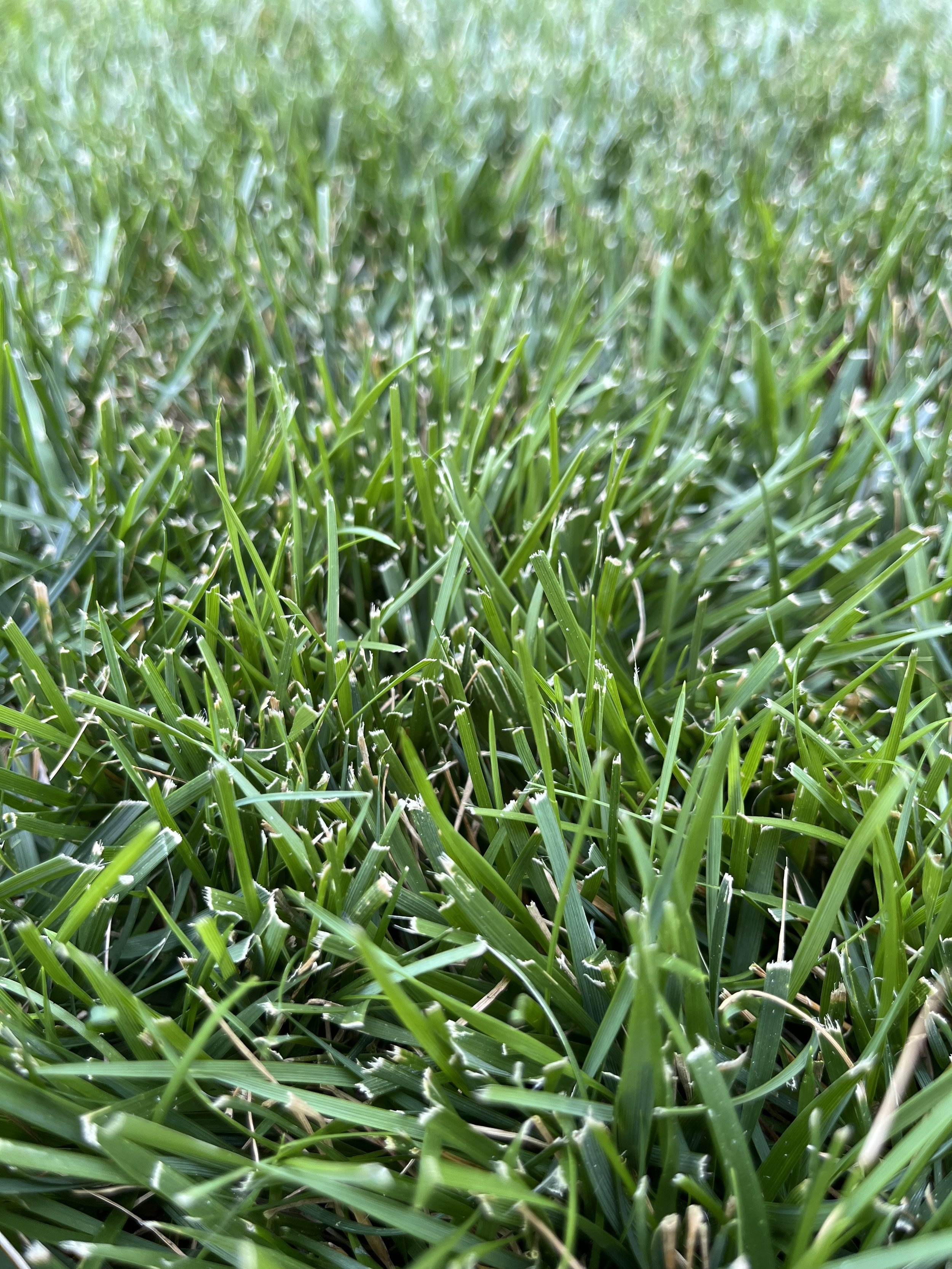
During fescue’s offseason, July & August, the color isn’t as deep and growth slows but still remains green and active.
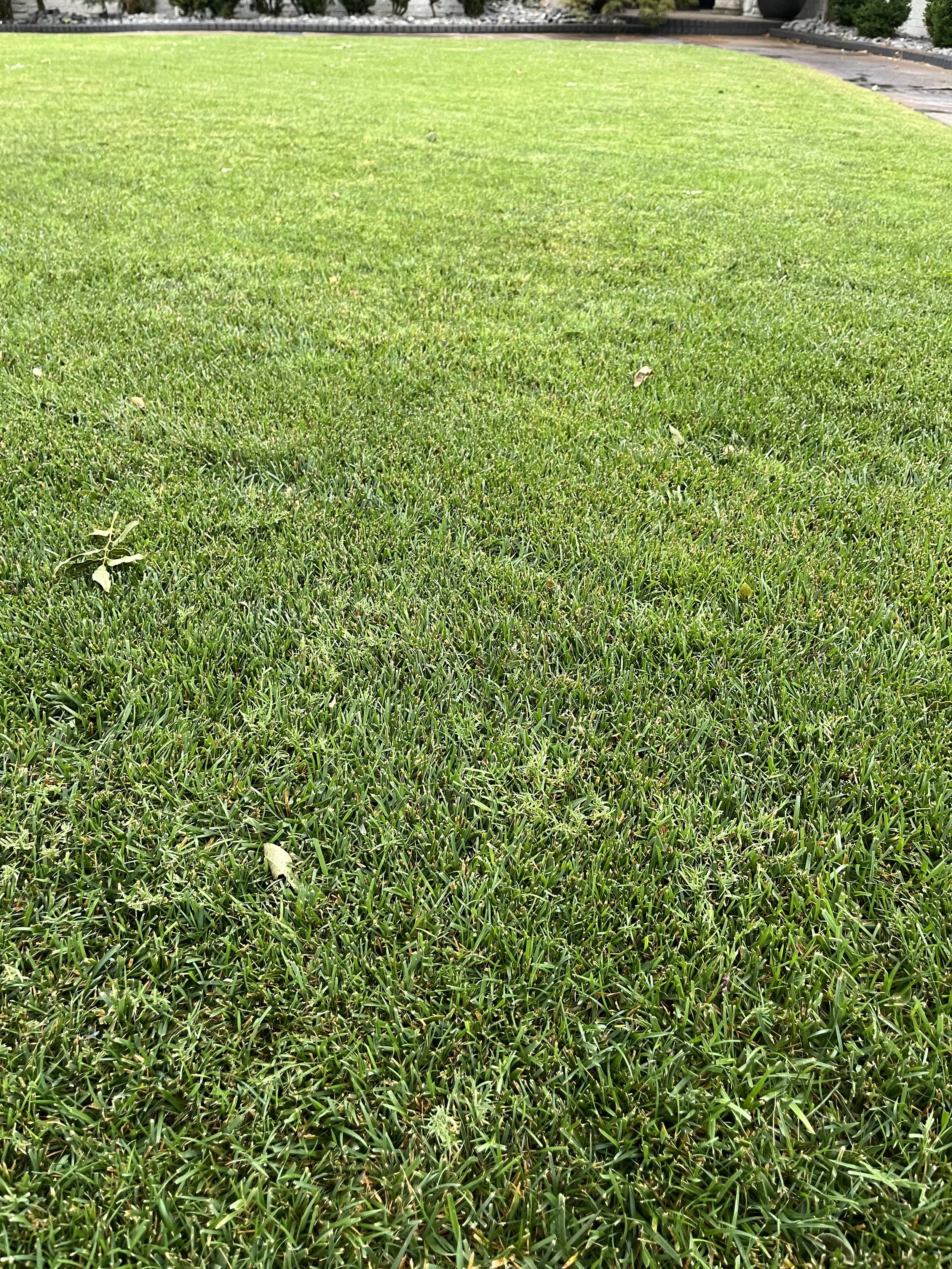
A fescue lawn with a healthy root system can withstand heat stress.
Heat Stress
While drought stress is manageable, heat stress isn’t. Unfortunately, the Summer of ’26 is delivering both.
Heat stress occurs when the plant (lawn, tree, shrub, perennial, etc.) burns more energy through respiration than it can provide through photosynthesis.
The imbalance is made up through stored energy in the root system until it is depleted.
As the heat stress lingers, root dieback occurs.
Heat Stress Temperature Thresholds: Fescue begins to experience stress when temperatures are consistently in the 90s and even more so when nighttime temperatures remain high. For bermuda and zoysia, photosynthesis continues even when temperatures increase into the low 100s.
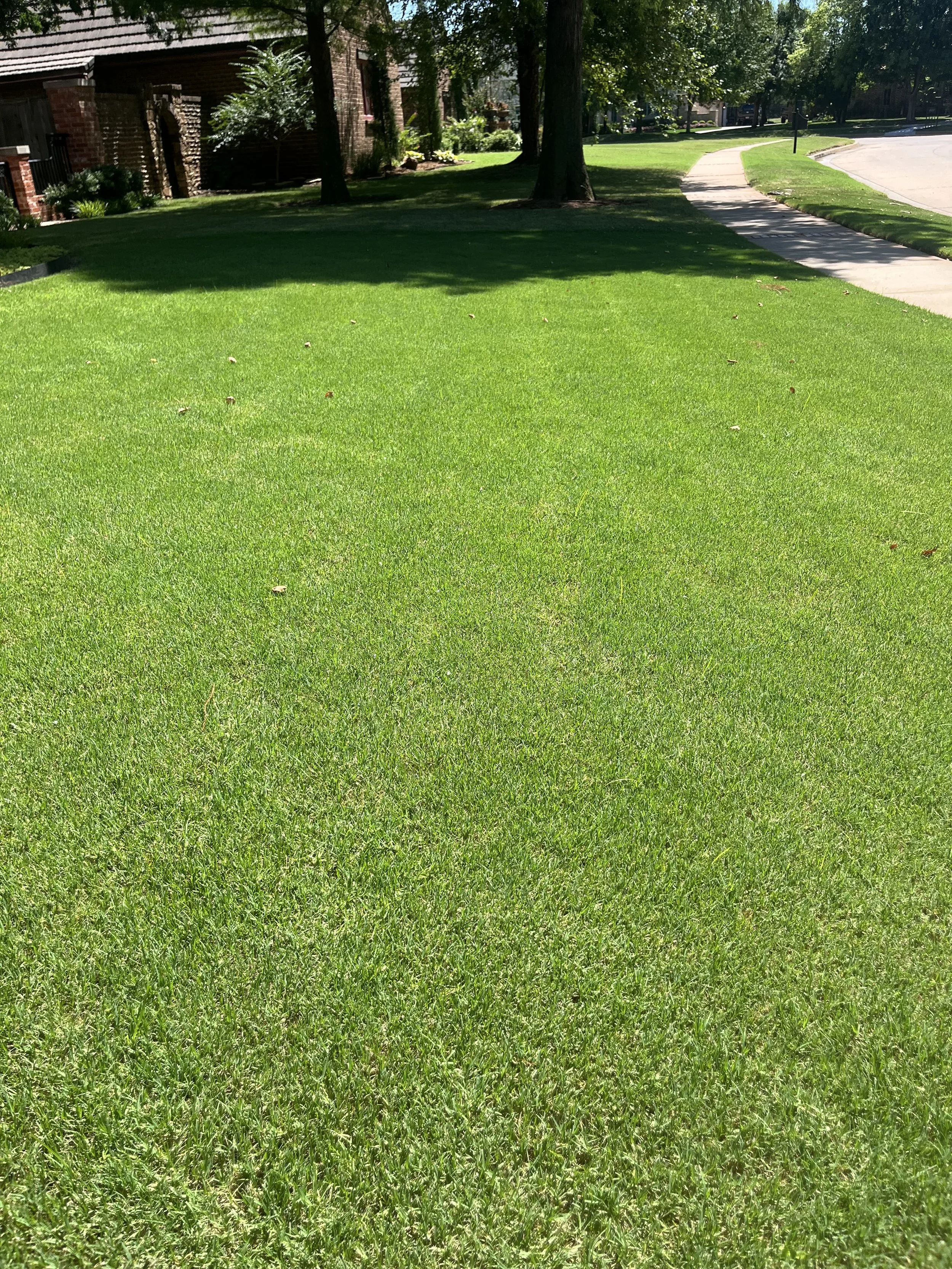
Photosynthesis continues in the heat for bermuda resulting in a rich green color as long as there is sufficient moisture.
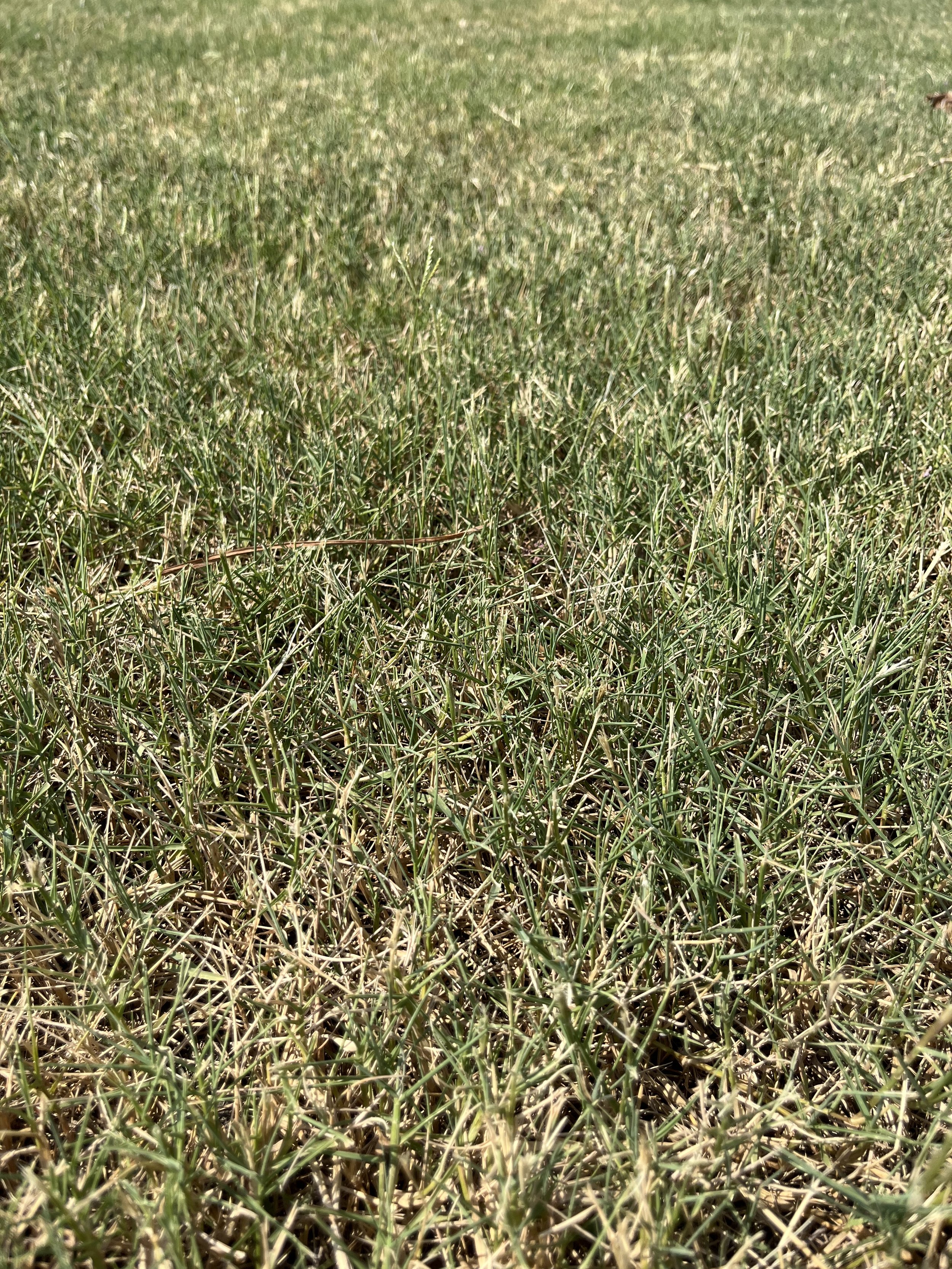
With little to no soil moisture left, non-irrigated bermuda lawns are moving from gray-blue color tones toward straw browns. As soon as sufficient moisture retunes they will regain color.
How To Tell The Difference Between Drought Stress and Heat Stress
For fescue, heat stress is a typical July and August occurrence. We commonly refer to this time of year as fescue’s off-season. As temperatures rise and the turf burns more energy through respiration than it can provide through photosynthesis. A fescue lawn with a healthy root system, even though it will lose some of its rich green color and growth will slow, it will remain green.
For bermuda or zoysia, drought stress is more common than heat stress in central Oklahoma. It is hard to tell the difference between drought stress and heat stress by looking only at the turf. The answer lies in the roots. Check the soil moisture using a soil probe, moisture meter, or simply slide a shovel a 4-6” into the soil. If the soil is moist the problem is heat stress.
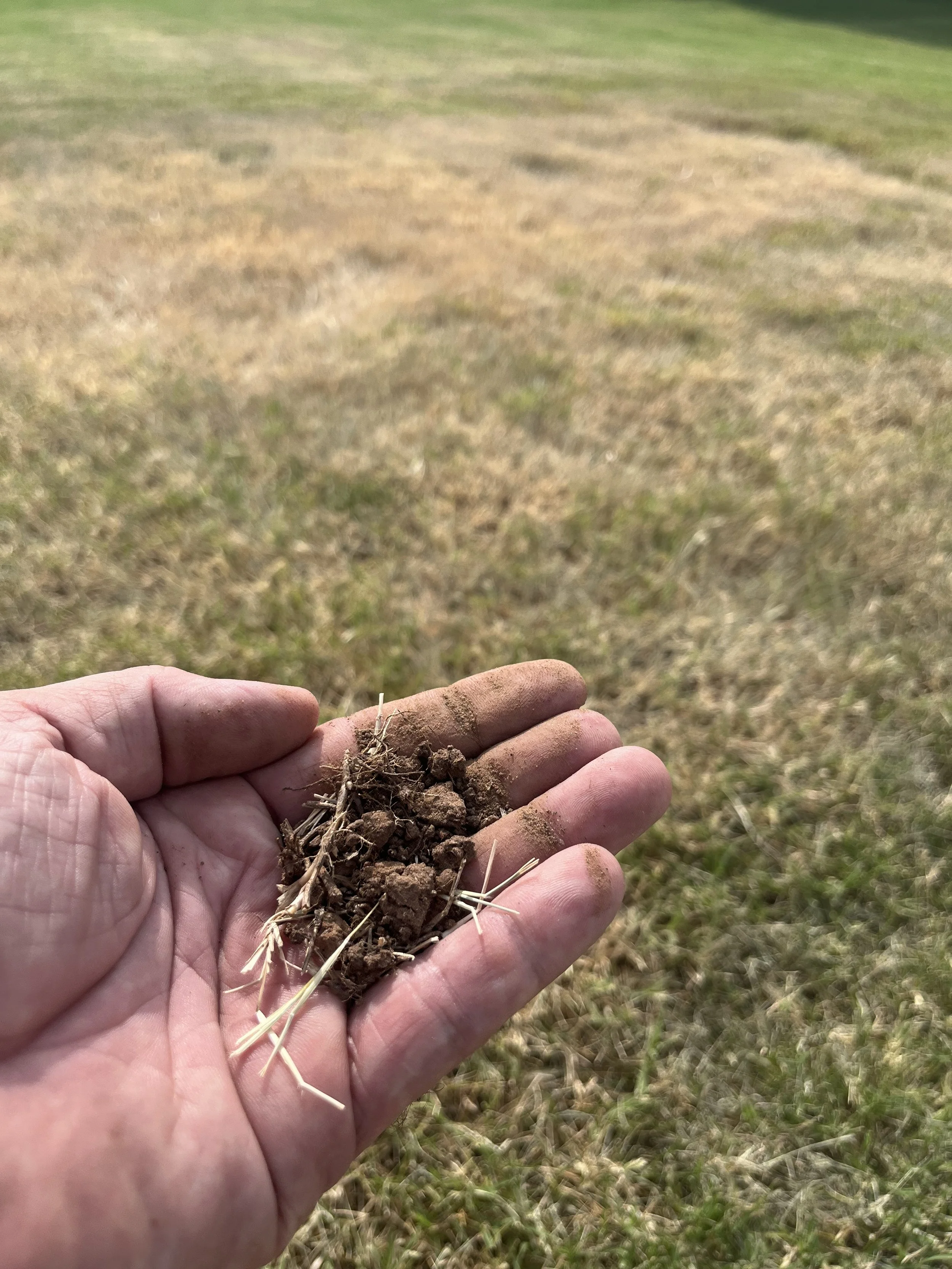
Drought stress or heat stress? Checked below the surface and discovered it is drought stress.
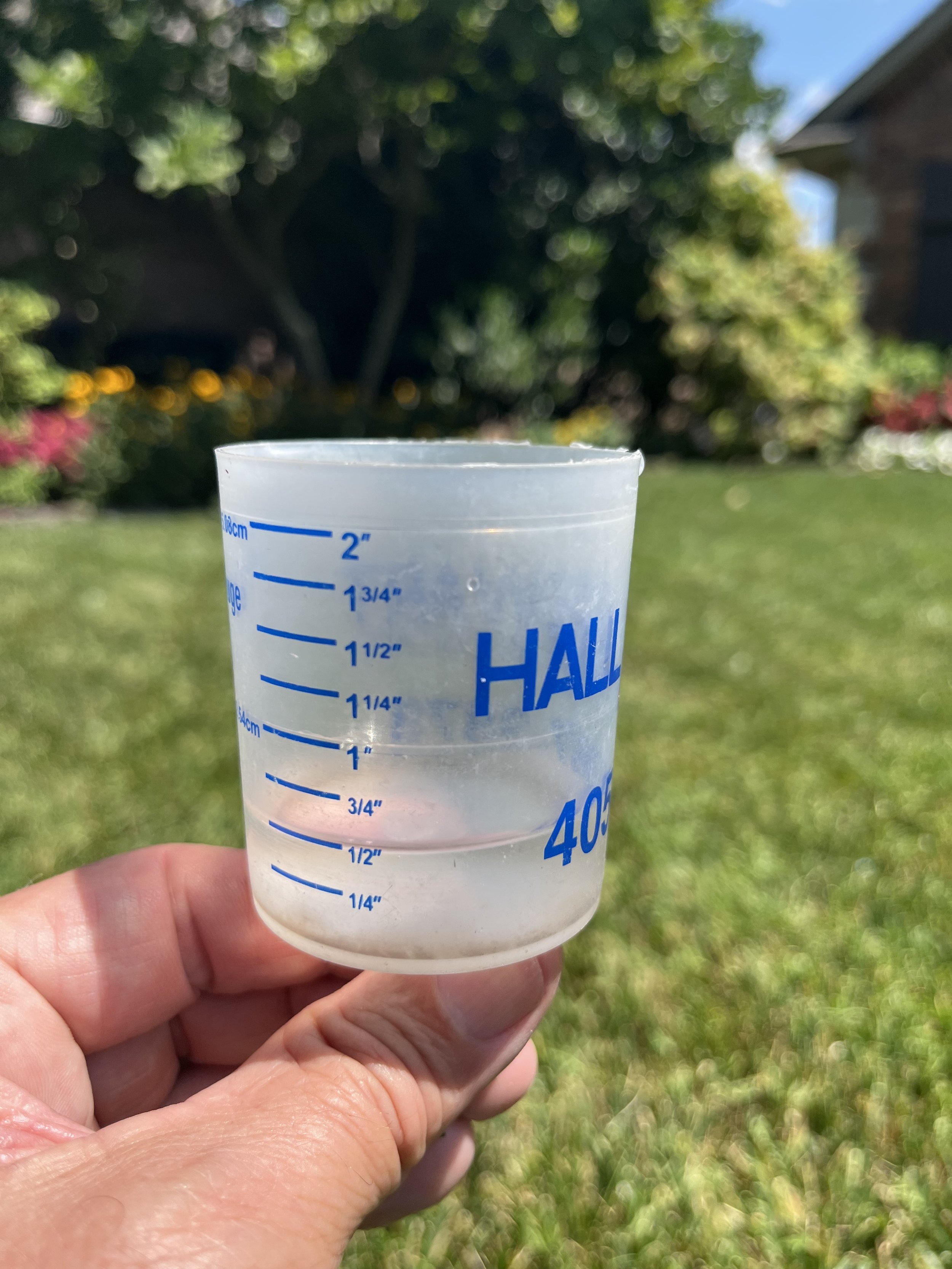
Place a Hall|Stewart Water Gauge in your lawn. Run your irrigation. Check the amount in the gauge. If you have 1/2”, run your irrigation 3 times per week.
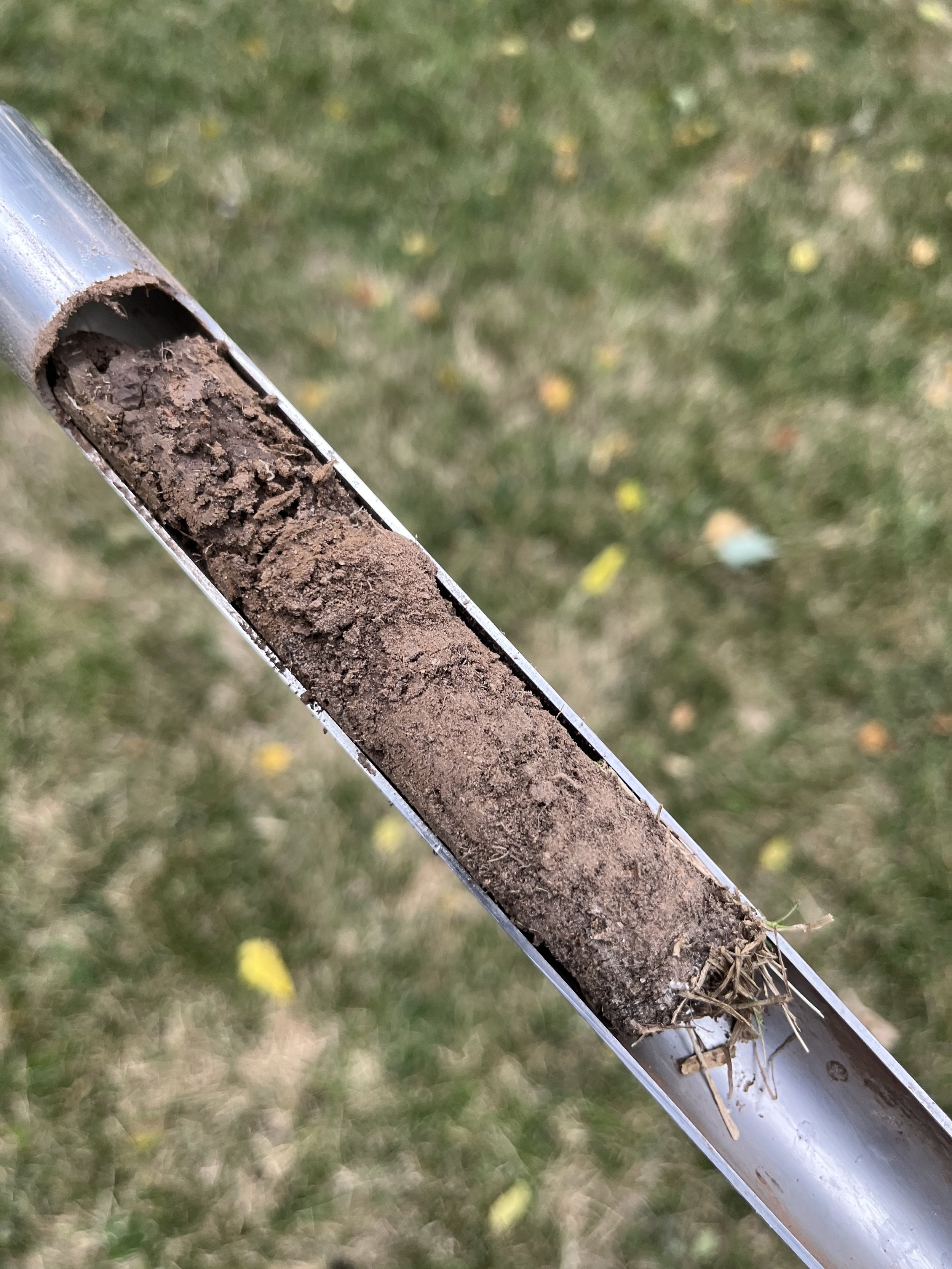
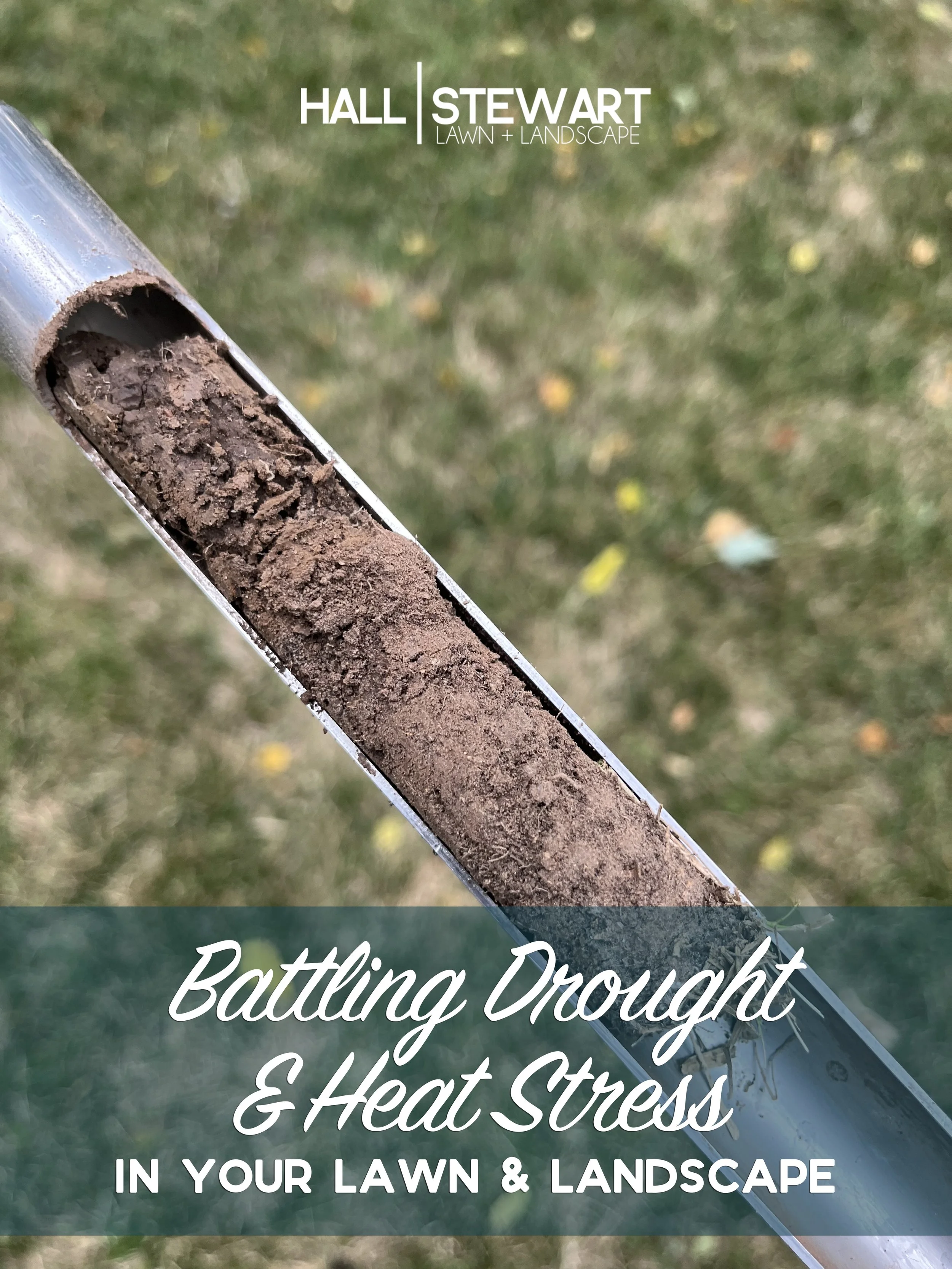
A core with no moisture in the soil pulled from a lawn on Friday in Edmond revealed the lawn was suffering from drought stress.
A Stronger Root System Is The Solution For Heat Stress
Your lawn’s ability to withstand heat is directly proportionate to the health of the root system. If you have good watering practices and your lawn still struggles as soon as the summer heat sets in, it is time to test your soil.
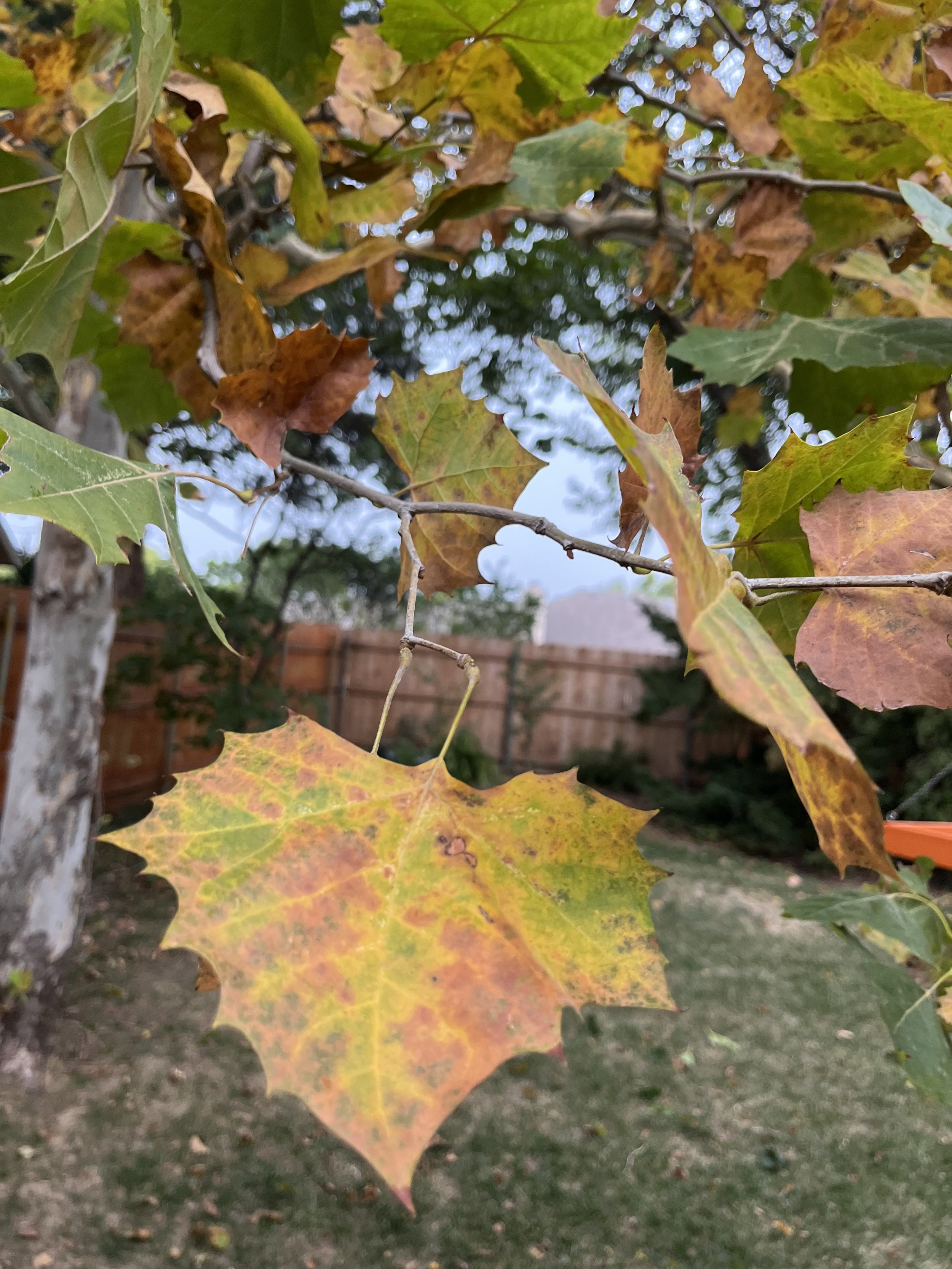
Yellowish, fall color tree leaves in August is not a good sign. It is a sign of drought stress.
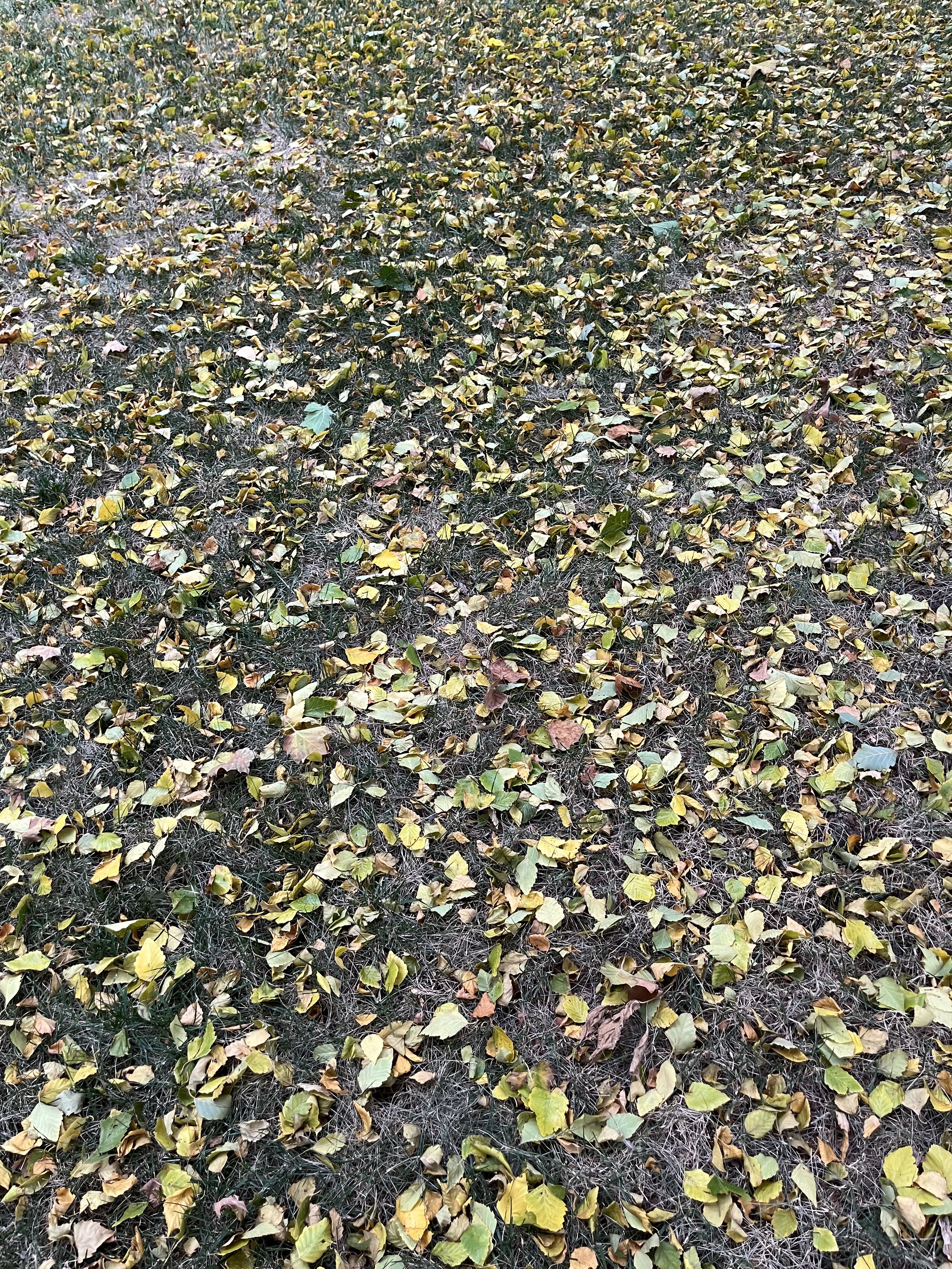
Leaf drop in August is a sign your trees are in a drought stress condition.
Your Trees Are Feeling The Stress Of The Drought And Heat Too!
Drought stress on trees typically follows these steps:
Temporary Wilting – Wilting and drooping leaves in the afternoon on a 95+ degree day isn’t a problem as long as the following morning the leaves have returned to normal.
Permanent Wilting – Wilting and drooping leaves in the morning and all day long.
Yellowish and/or Fall Color Leaves – Fall color is not a good thing in July and August!
Leaf Scorch – Leaf margins have a brown or burned appearance.
Defoliation – Leaves begin dropping from the top of the tree and the ends of branches.
Long-term drought results in dead branches, thin canopies, unusually small new leaves, increased pest problems, and trees that are slow to close wounds.
Supplemental watering during periods of drought and heat is very important.
Depending upon the species, a full-grown tree can use up to 250 to 500 gallons of water per week when temperatures are high.
A 10-year-old tree in your landscape is looking for 50 gallons of water every day.
A tree’s need for water is high on hot days because 90% of the water a tree takes in is being lost through transpiration.
What is transpiration?Water is absorbed by the roots, moves up the trunk to the branches out to the leaves where the water is released as water vapor. Transpiration is not all bad. The water vapor cools the leaves 10-15 degrees as it is released.
Do not assume if your grass is green that the trees in your lawn are receiving enough water. Trees and grass are competing for the same water. Deep soaking is required to get enough water for both the turf and tree roots.
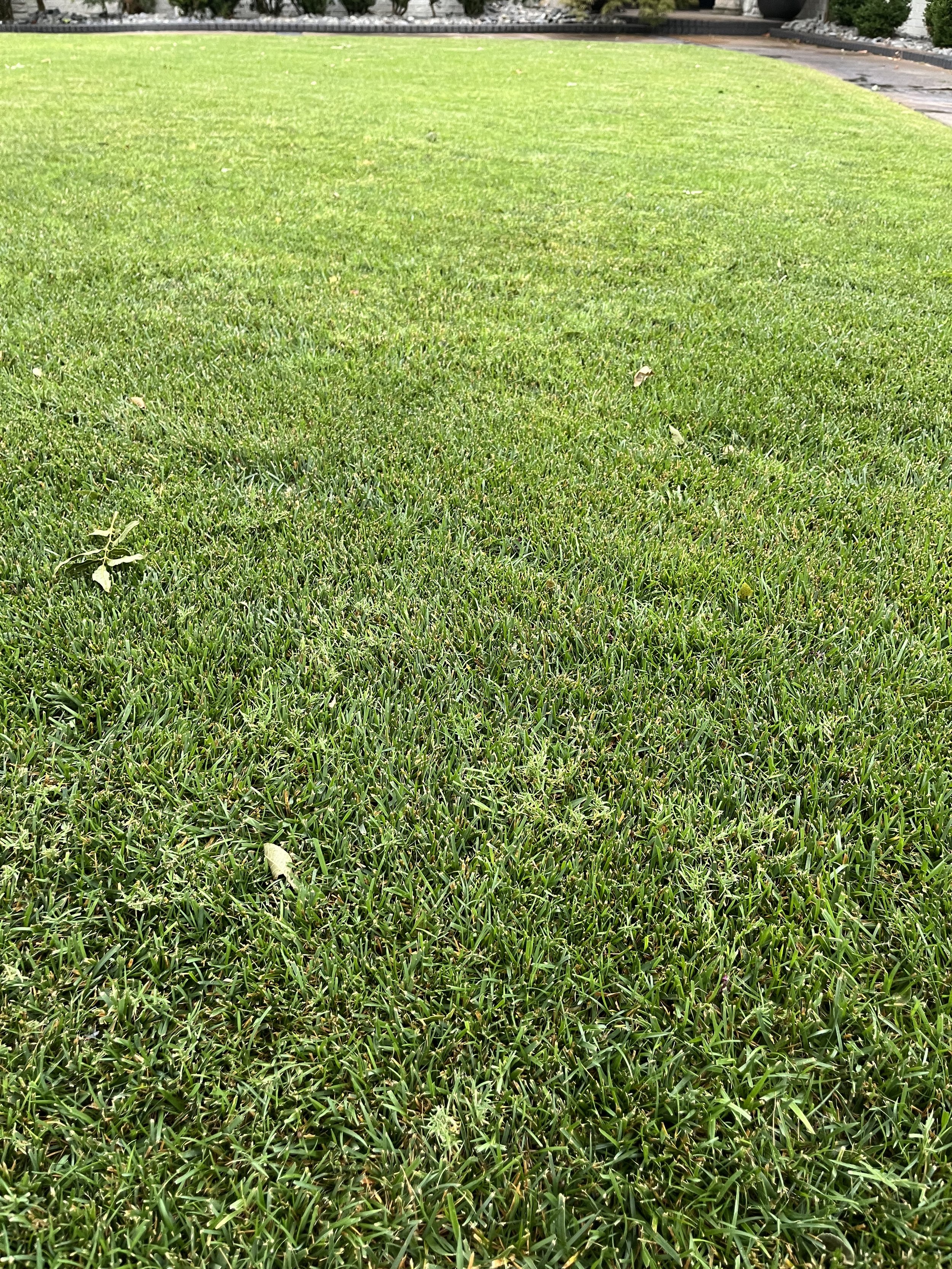
A fescue lawn with a healthy root system can withstand heat stress.
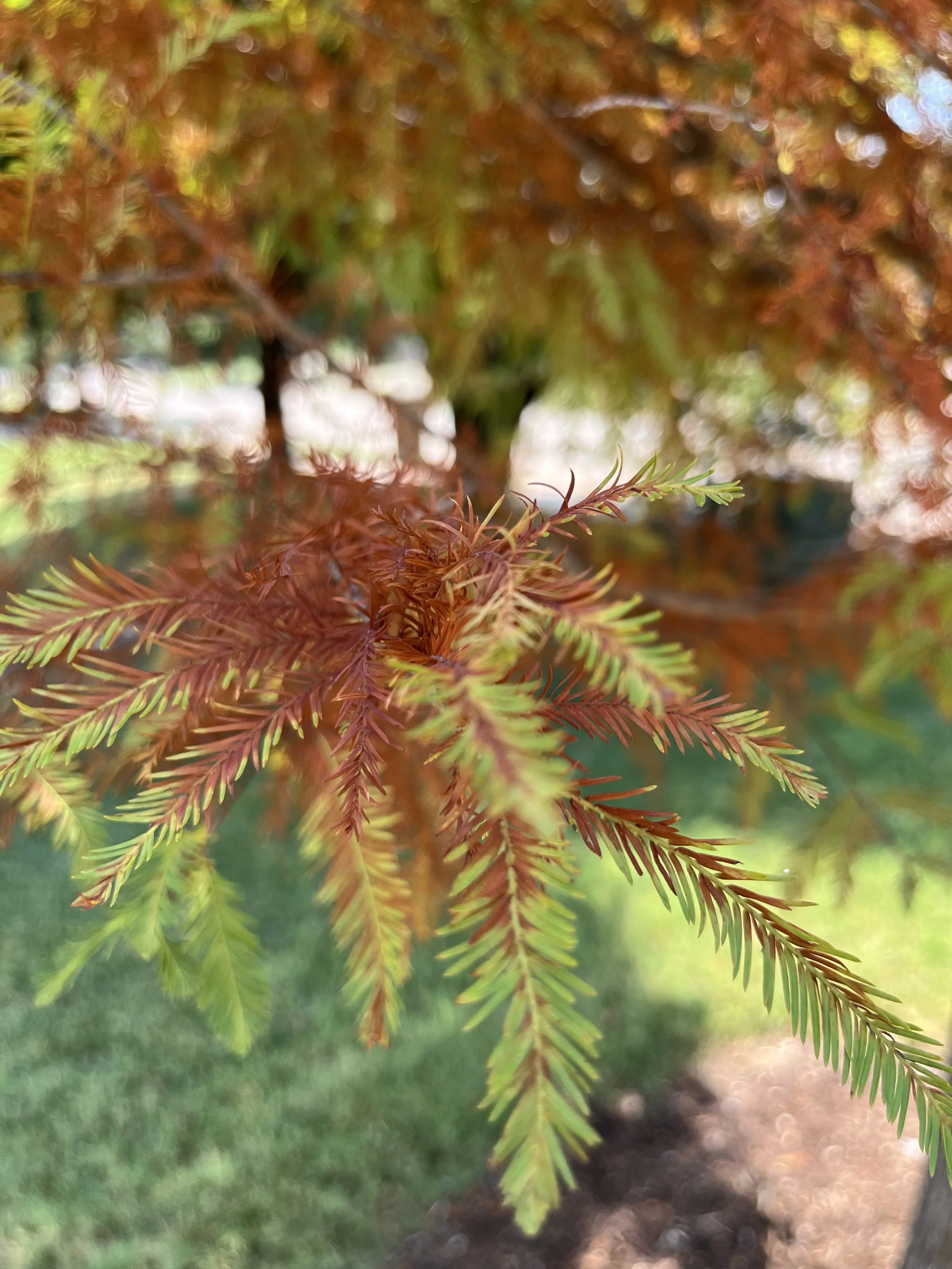
Brown foliage on a Bald Cypress is a sign of drought stress.
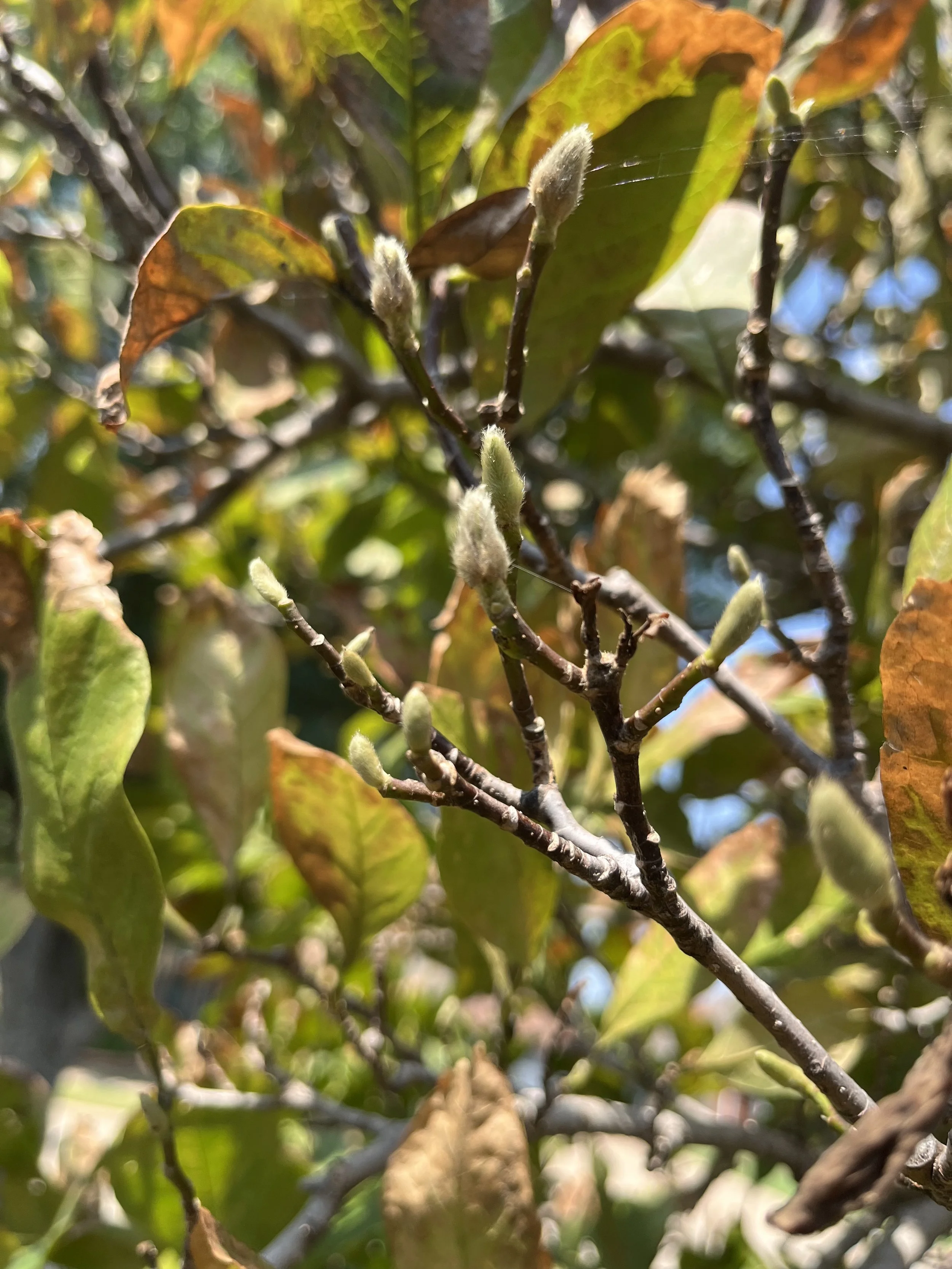
A healthy tree can drop leaves due to stress and rebud as soon as the stress is removed.
Mature Tree Survival
Most healthy, mature trees (trees with at least a 6” wide trunk and have been planted for at least 2 years) can sustain a drought without supplementary water because of their large root system. Trees that are weak because of previous stress will be the first trees to show signs of drought stress.
How do you know if your mature trees need supplementary watering during a drought?
Water if there are visible signs of drought stress.
Water if the area under the tree canopy is dry. A good way to test dryness is to take a large 6-8” screwdriver and press it into the soil in a few locations under the canopy of the tree. If screwdriver doesn’t easily slip into the soil, it is time to start watering.
Watering mature trees:
Water the entire area under the canopy of the tree.
Water deeply every 3-5 days in 95+ degree weather.
Allow 1-2 days between deep soakings for the area to dry. Roots need air as much as they need water. When the soil is saturated all the air is replaced with water and root damage will occur.
Daily shallow watering is not helpful. The most active tree roots are in the top 12” of the soil. The goal is to get water 12” deep.
Place small containers around the area to measure the amount of water. Water long enough to get at least 1-2” of water on the area per week.
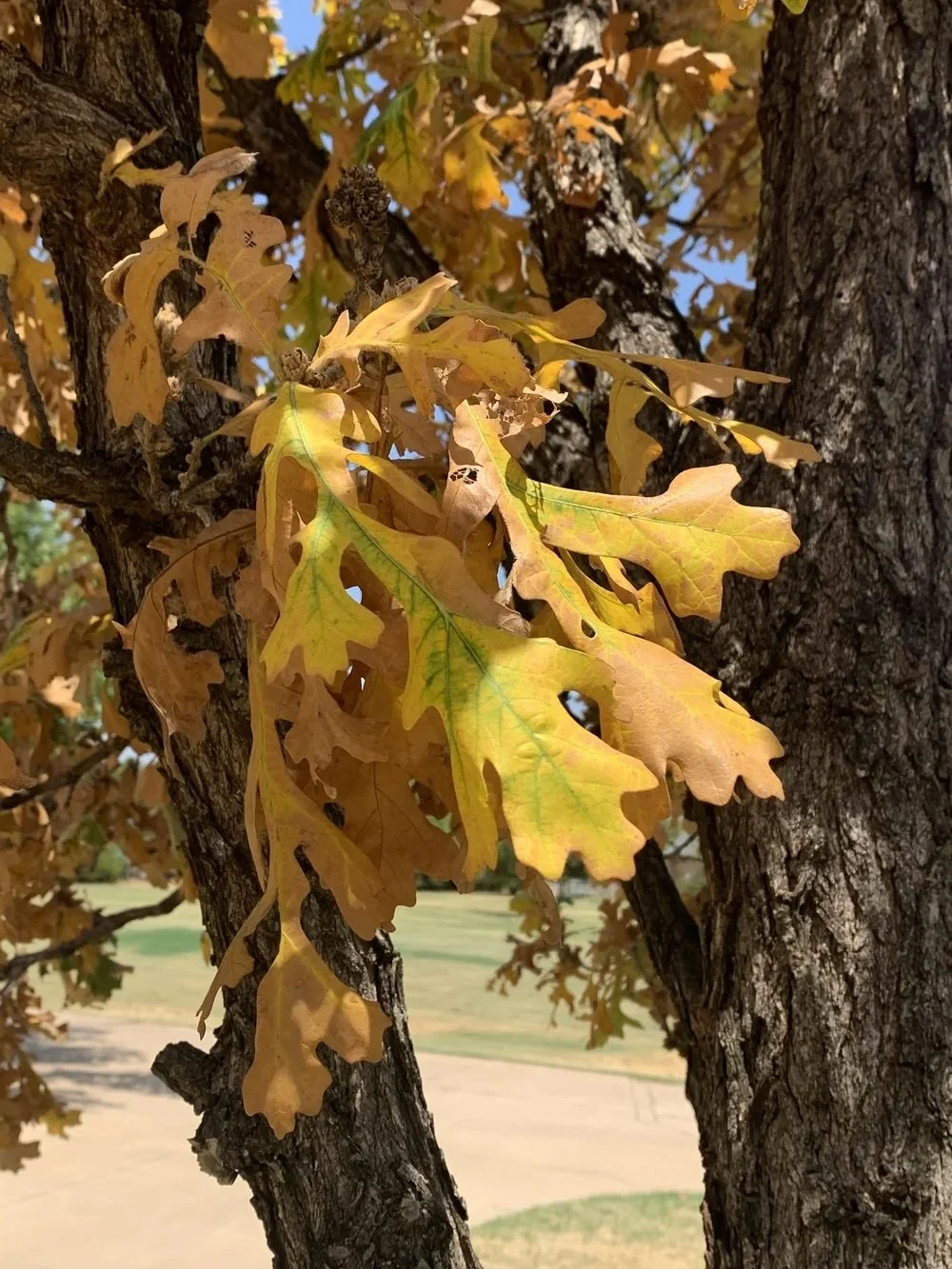
Yellowing or fall-colored leaves during the growing season is a sign that drought stress is advancing. Deep soaking of the entire area under the canopy of the tree every other day should be started immediately.
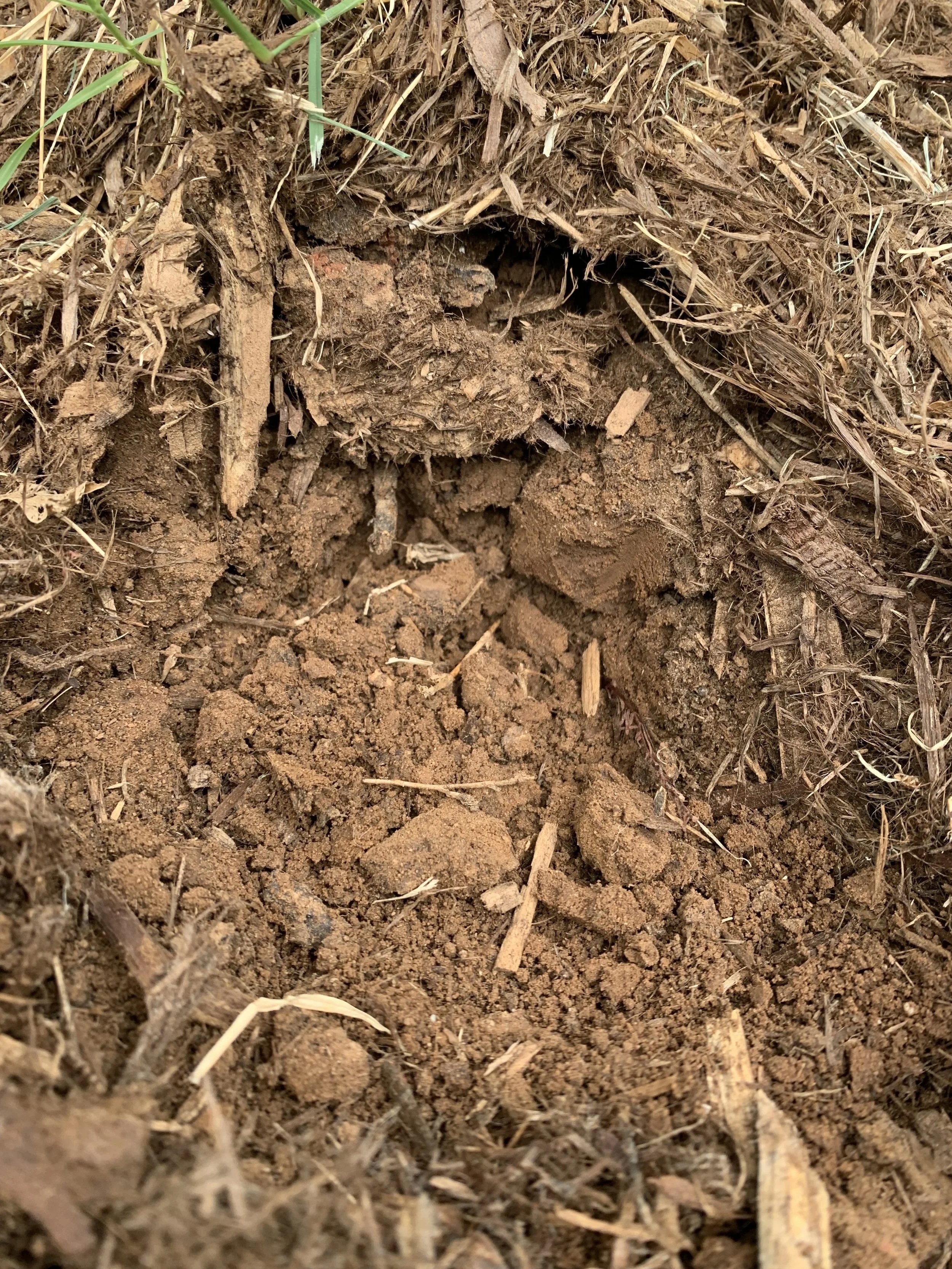
Even during a drought soil around a tree should be moist enough you can easily slip a 6-8” screwdriver into the soil.
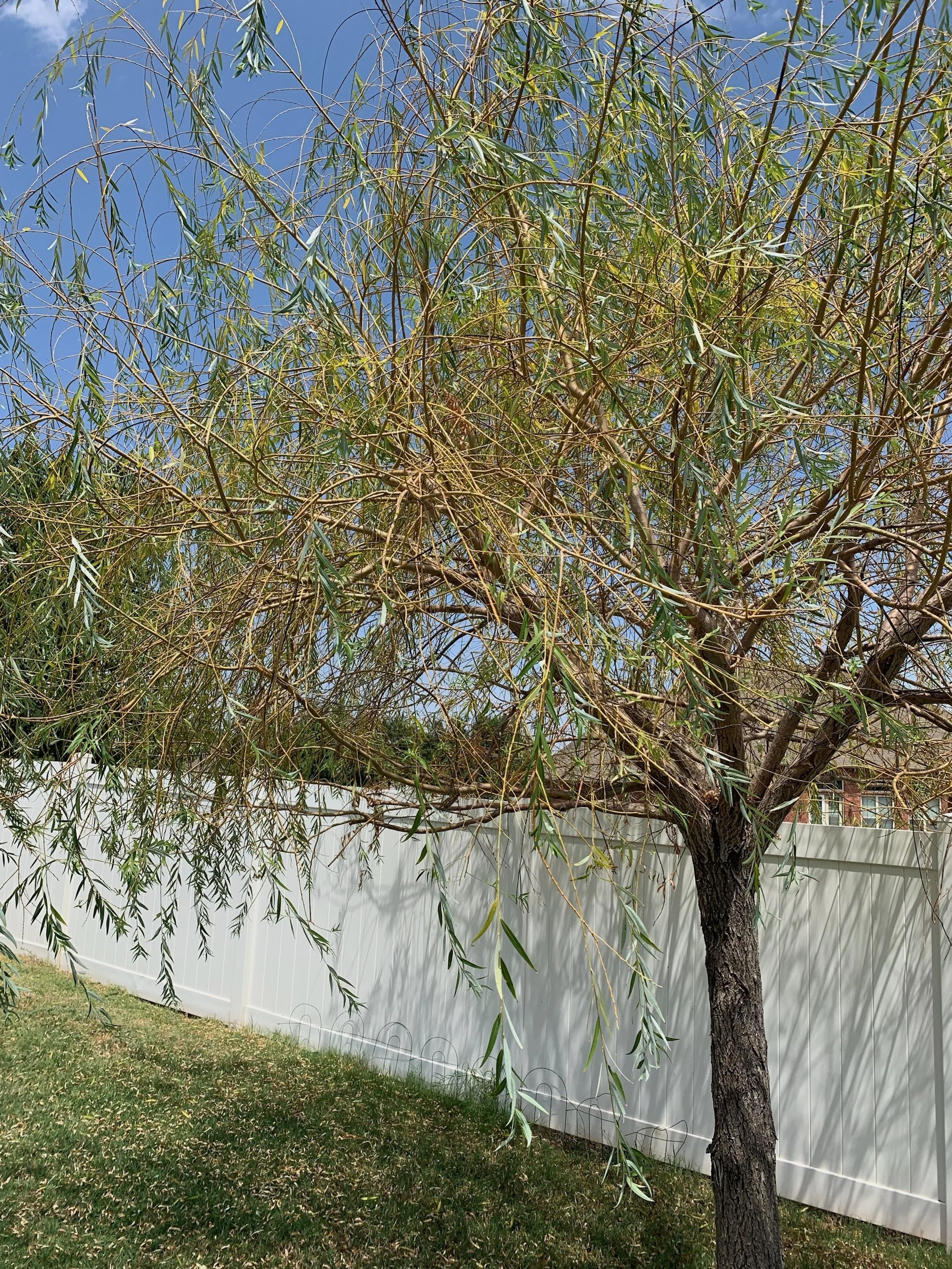
Willow trees love moisture. It is not uncommon for willows to be one of the first trees to show drought stress by dropping excess leaves. Some leaf drop is good during a drought and part of a trees defense system to survive.
Young Tree Survival
Trees with trunks that are smaller than 6” in width or have been planted in the last two years are showing signs of drought stress if they have not received supplementary water the past few weeks.
Watering young trees:
In excessive heat and drought trees that have been planted in the last 30 days, need to receive at least 10 gallons every other day. Even if you have an irrigation system, additional watering is required during the heat of the summer.
Trees planted anytime in the last two years need at least 10 gallons of water every 2-3 days during our current weather pattern.
Treegator bags are a good tool for watering new trees. The original Treegator holds 20 gallons of water that slowly drips out over two days.
During the first two years of a tree’s life, maintain a grass free 2-3” thick mulched area around the tree.
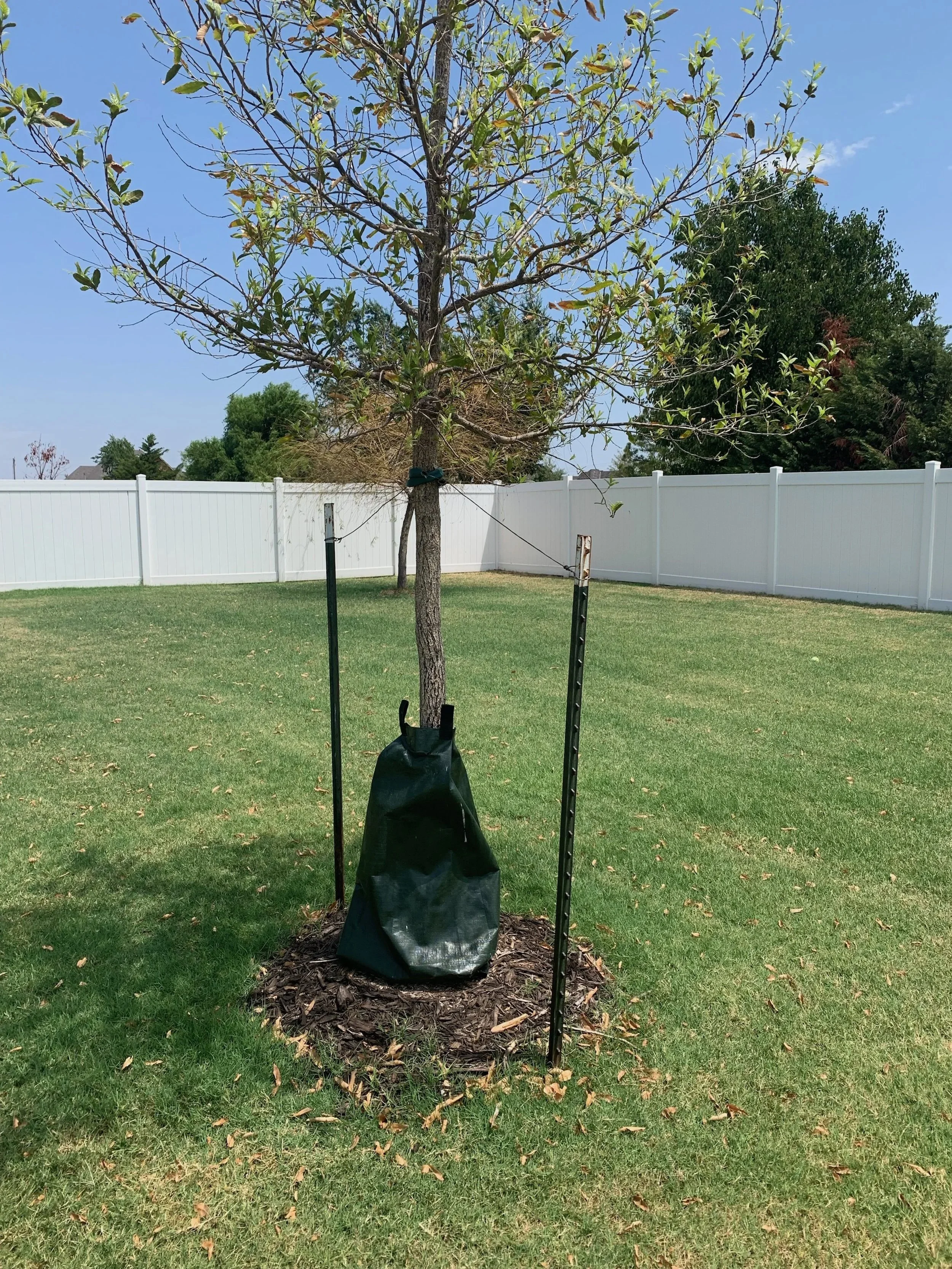
A 20 gallon Treegator bag is a good tool for deep soaking any tree planted in the last two years. The bag will slowly release water for two days. Refill the bag every 3-4 days during hot weather.
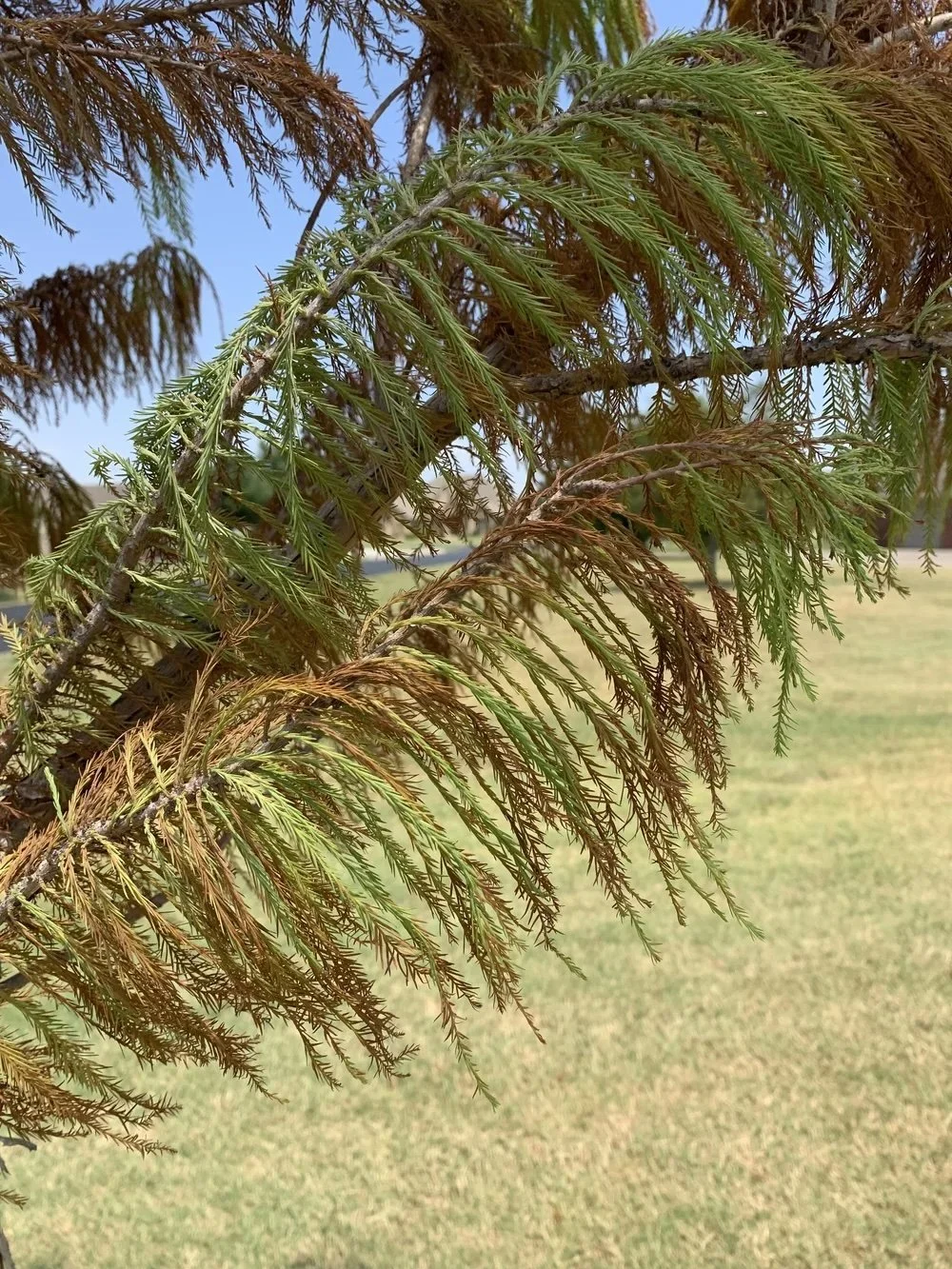
Permanent wilting is underway on this bald cypress. Supplemental watering is needed to reverse drought stress.
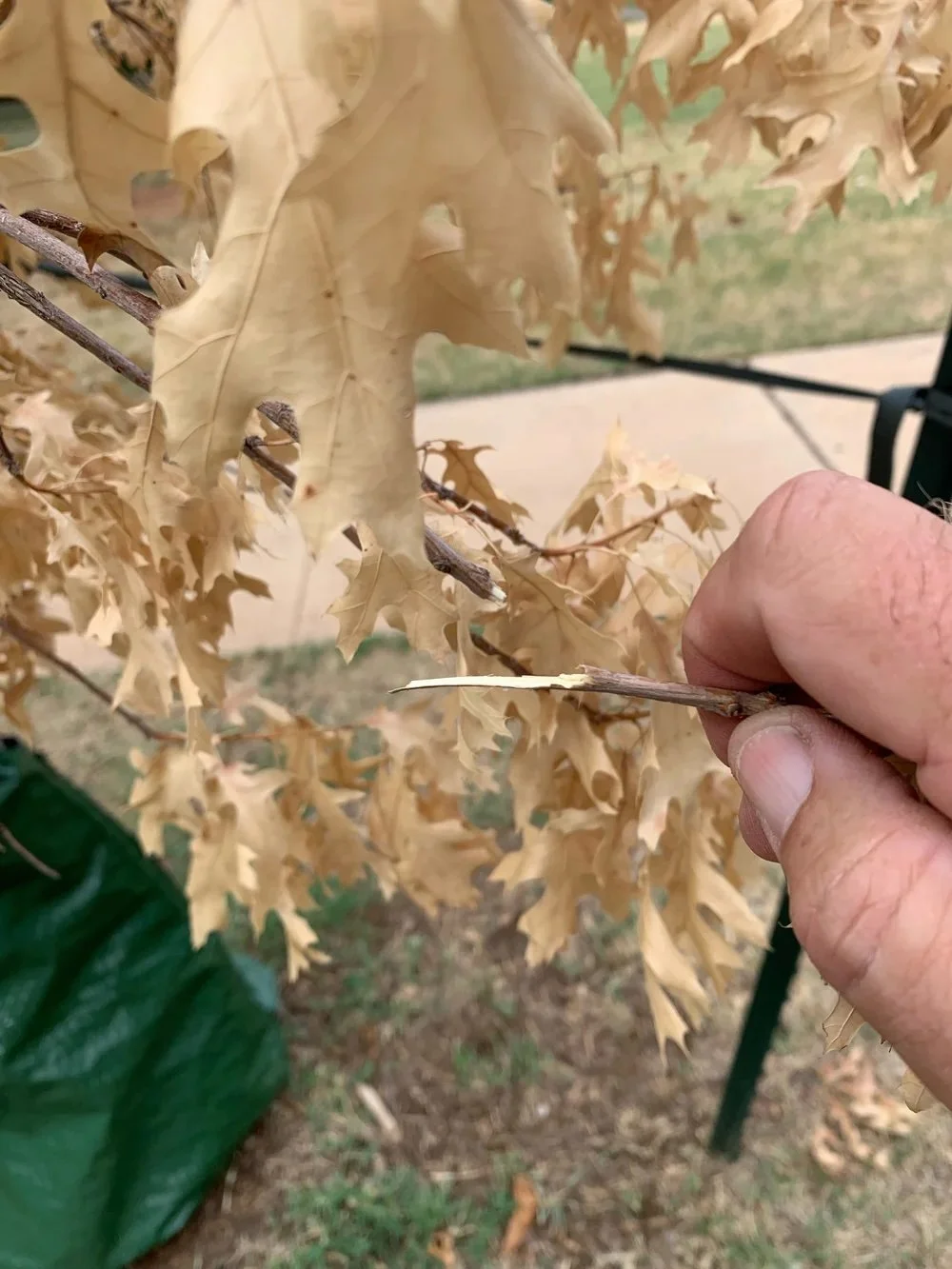
Often when leaves turn brown during a drought and the leaves remain on the tree it is a sign the tree does not have enough moisture to put on new buds. In this case the ends of the branches are brittle and the chances of recovery are slim.
Most tree varieties, if healthy, can drop all their leaves during a drought and rebud once rain returns.
Once rain moisture returns energy stored in the roots is used to produce new leaves. As the tree gains leaves the photosynthesis process starts again rebuilding energy in the root system.
A tree has a good chance of survival if enough energy can be stored in the root system before the tree endures more stress. An extreme winter, insect or disease stress before the tree has a chance to replenish energy could be detrimental to the tree.
Drought alone may not kill your trees, but if may be the final blow to a tree that is already under stress. Most trees die from a combination of stresses, such as, drought followed by pest or disease issues, or drought followed by winter injury.
Finally, increase inspection of trees the rest of the season, through the fall and next spring. Drought stressed trees are prone to insect damage.
Remember, your trees and your lawn are competing for the same moisture. And right now, there may not be enough for both. Each week the drought continues, the need to supplement water your trees increase.
Your investment in your lawn and landscape is significant.
Our goal is to help you have your best possible lawn and landscape regardless of the environment conditions.
If you are concerned about any part of your lawn and landscape, please let us know.
Lorne Hall
Hall | Stewart Lawn + Landscape
(405)367-3873