
Great Landscape Plantings Have 3 Levels

Stroll through any neighborhood and you will find a wide variety of landscapes. You are sure to find the predictable landscape where a row of shrubs along the foundation is used to soften the line between the lawn and the house. Other landscapes, by adding a few plants of color and texture, will catch your attention a little more. But, ever so often, you will discover a lawn and landscape that invites you to slow your pace and take it all in.
What makes the difference?
Why do some landscapes just feel better?
Why do some just grab your attention?
There is a landscape design concept that will make a landscape standout nearly every time…
Great landscape plantings contain three levels: a front, a middle, and a back.
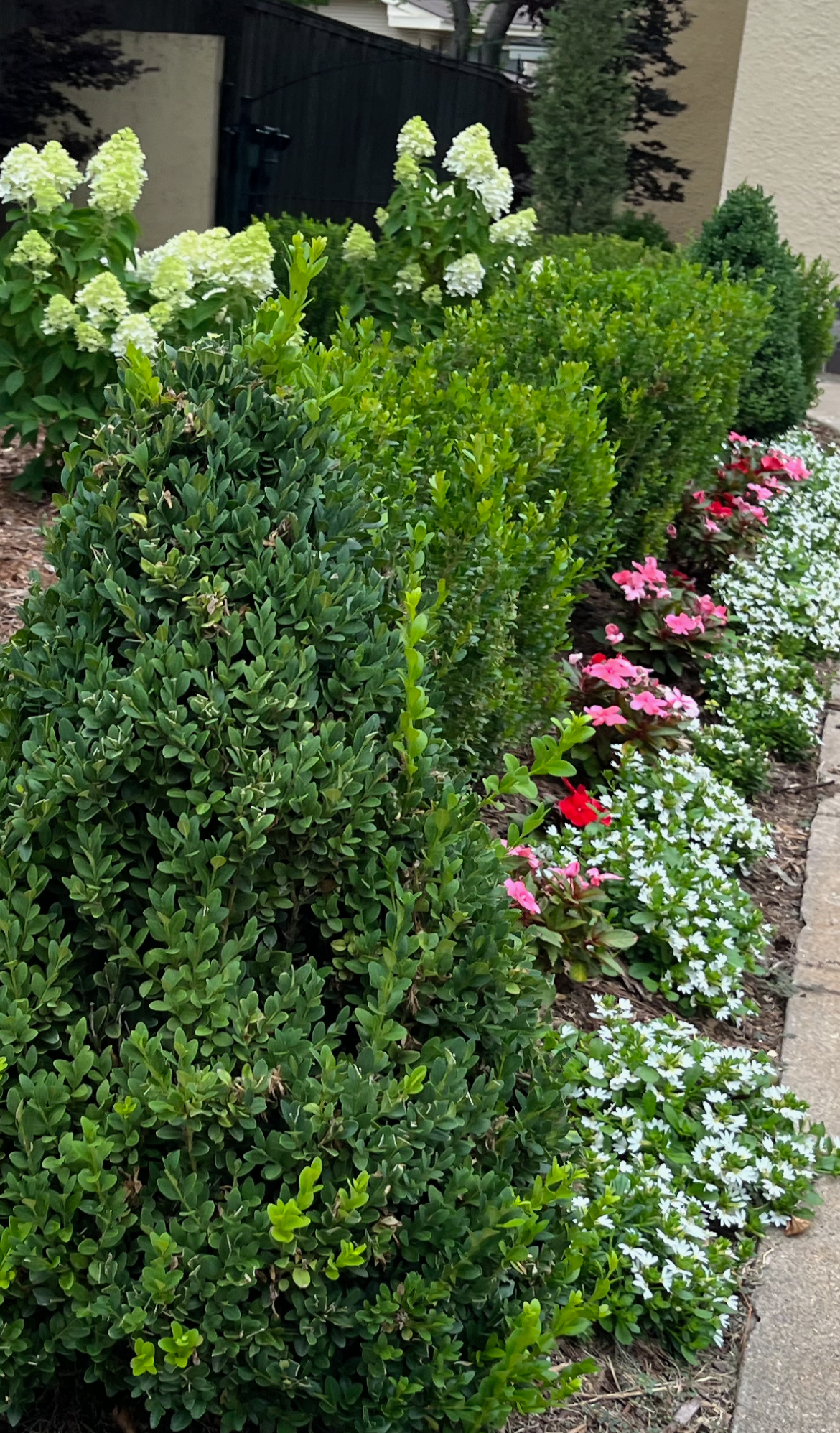
A good combination is Limelight Hydrangea in the back, Boxwoods in the middle, and seasonal color in the front.
Let’s start with some basic design math:
Front – No more than 18” in height. Low ground covers, perennials, annual color and small plants.
Middle – Perennials, annual color and smaller shrubs with enough height to start creating levels. 18” to 3’ in height.
Back – Shrubs and small trees over 3’ in height.
Note - Read the plant label and believe what it says about plant height and growing conditions. Remember plants perform their best if they are allowed to grow to their natural height and form. If you have only 4’ of height for your back level, don’t plant a shrub with a mature height of 10’ with the idea you will keep it pruned. Even if you are diligent with your maintenance, the plant will never look as good as it would if it could grow naturally.

A newly planted landscape with boxwood and hydrangea for the back. Spirea, drift roses and perennials in the middle, and annual color in the front.
Walls and fences don’t count as the third level. To get the impact, you need three levels in front of the object.
When selecting plants, don’t go for all evergreen plants or all flowering plants. A mixture of evergreens with interesting leaf shapes and colors will add more interest.
The levels don’t have to be in a continuous, linear run of all the same plant material. A layer can contain a mixture of plants. Often the middle level works well with a few specimen plants of interest, or groupings of perennials. Every landscape should include a few surprises.
It is also good to repeat a few shrubs or colors. Even when your goal is an informal landscape, some repetition helps draw all plants together into one landscape planting.
Plantings should have something of interest in every season. Consider one level planted in mostly evergreens, another in perennials, and another in annual color. The higher the visibility, more perennials, seasonal color, or blooming plants are recommended. Curb appeal increases as color increases.
Always welcome guests with flowers. A border of annual color along your front walk with a splash of more color near your front door creates a warm greeting.

Even in patio pots, planting for three levels adds interest. This pot contains a variegated euonymus for height, penta for the middle, and trailing periwinkle.
A few ideas to get you started:
Large ornamental grasses in the back, flowering shrubs in the middle, with a ground cover boarder in the front.
Crape myrtle in the back, evergreen shrubs in the middle, and annual color in the front.
Evergreens for the back with a mix of perennials in the middle and ground covers in the front.
Limelight hydrangeas in the back, a row of boxwoods neatly trimmed in the middle, with annual color in the front.
A shady area idea is azalea in the back, hosta in the middle, and dwarf mondo in the front.
Garden trends are seeing a resurgence of classical flower plants such as roses, hydrangeas and peonies. With so many new innovations, using these as one of your layers will give a nostalgic feel to your landscape.
A great resource for ideas and plant materials is Monrovia.com. Monrovia has been a leader in landscape plant material since it was established 100 years ago in 1926 by Harry Rosedale, a Danish immigrant. I am sure you will find their website a great resource. The content in this email is a combination of information from Monrovia and our years of experience in the local landscape industry.

Dwarf Globe Blue Spruce used as a mid level shrub adds color and interest to a landscape.

Espaliering a plant, such as Pyracantha, on a wall or fence is a great way to create levels in small spaces.
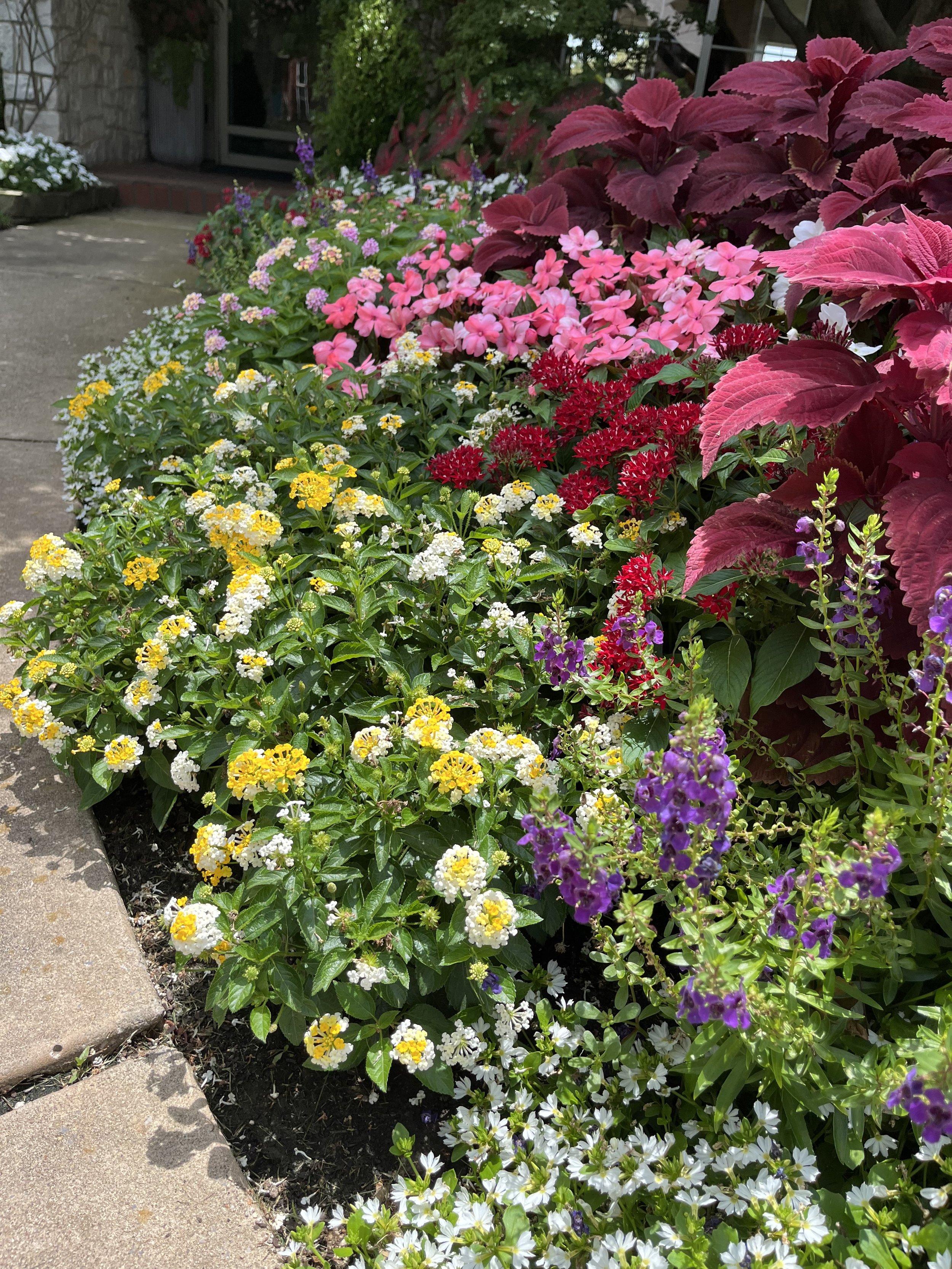
When planting larger seasonal color, the concept of planting in three levels will add more depth and interest to your landscape.

Annuals, perennials, flowering shrubs and evergreens planted in levels to add interest.
Height variation in landscape plantings, incorporating a mix of shrubs with different heights, adds depth and dimensions to your landscape.
Larger plants, particularly when you have the room, are great for adding interest and will soften the hard lines of walls and fences. They also are a great way of creating a natural screen or a free-standing boarder. The more space you have the bigger you can go with the back level.
If your space is limited and you still want to gain height, a climbing vine or shrub against a wall or fence is a great solution. Also consider using a flowering tree, boxwood, or pyracantha in an espaliered form.
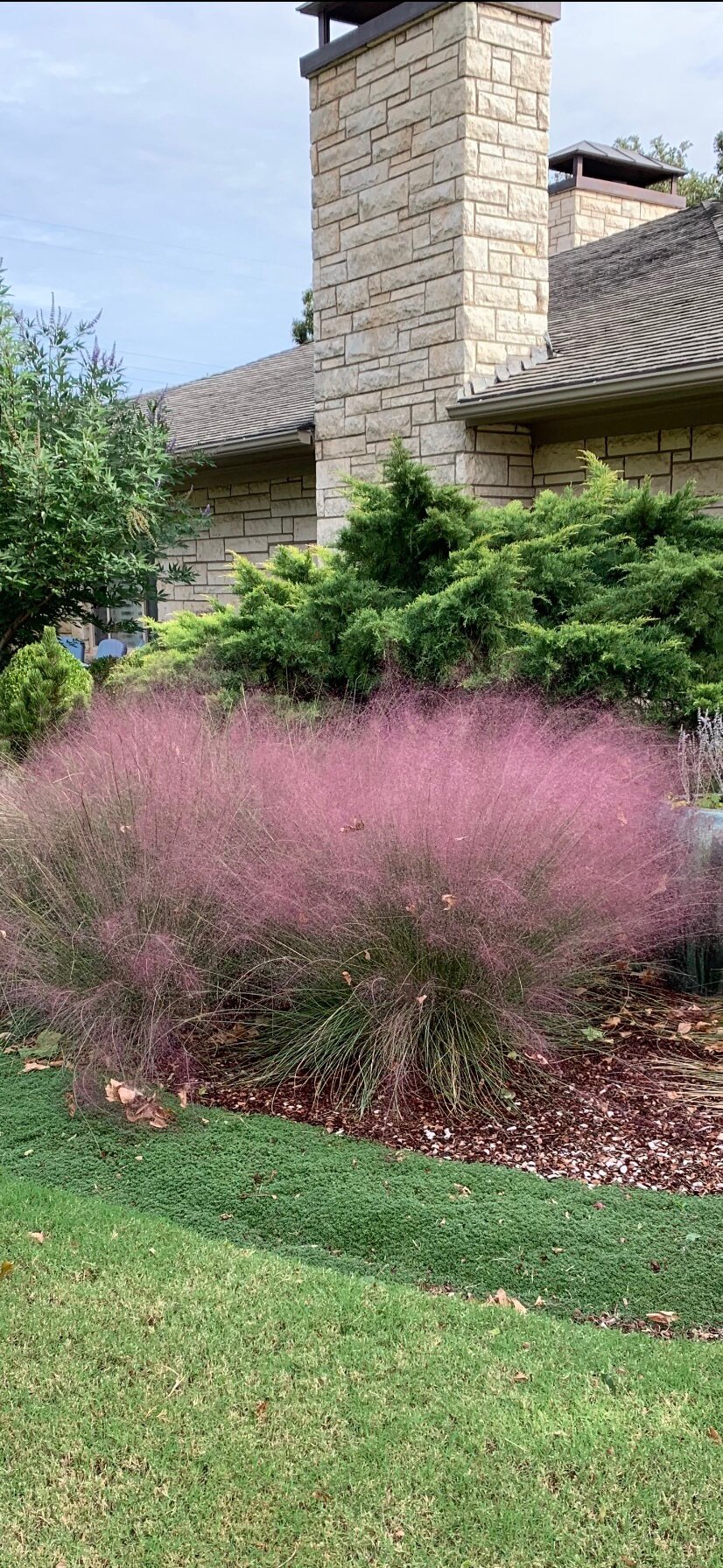
Need a low maintenance landscape option with three levels? Plant Pink Muhly Grass between groundcover and standard Juniper varieties. Little to no trimming will be required.

Large landscape containers are another way to create levels in the landscape.

Annuals planted in front of perennials to create levels.
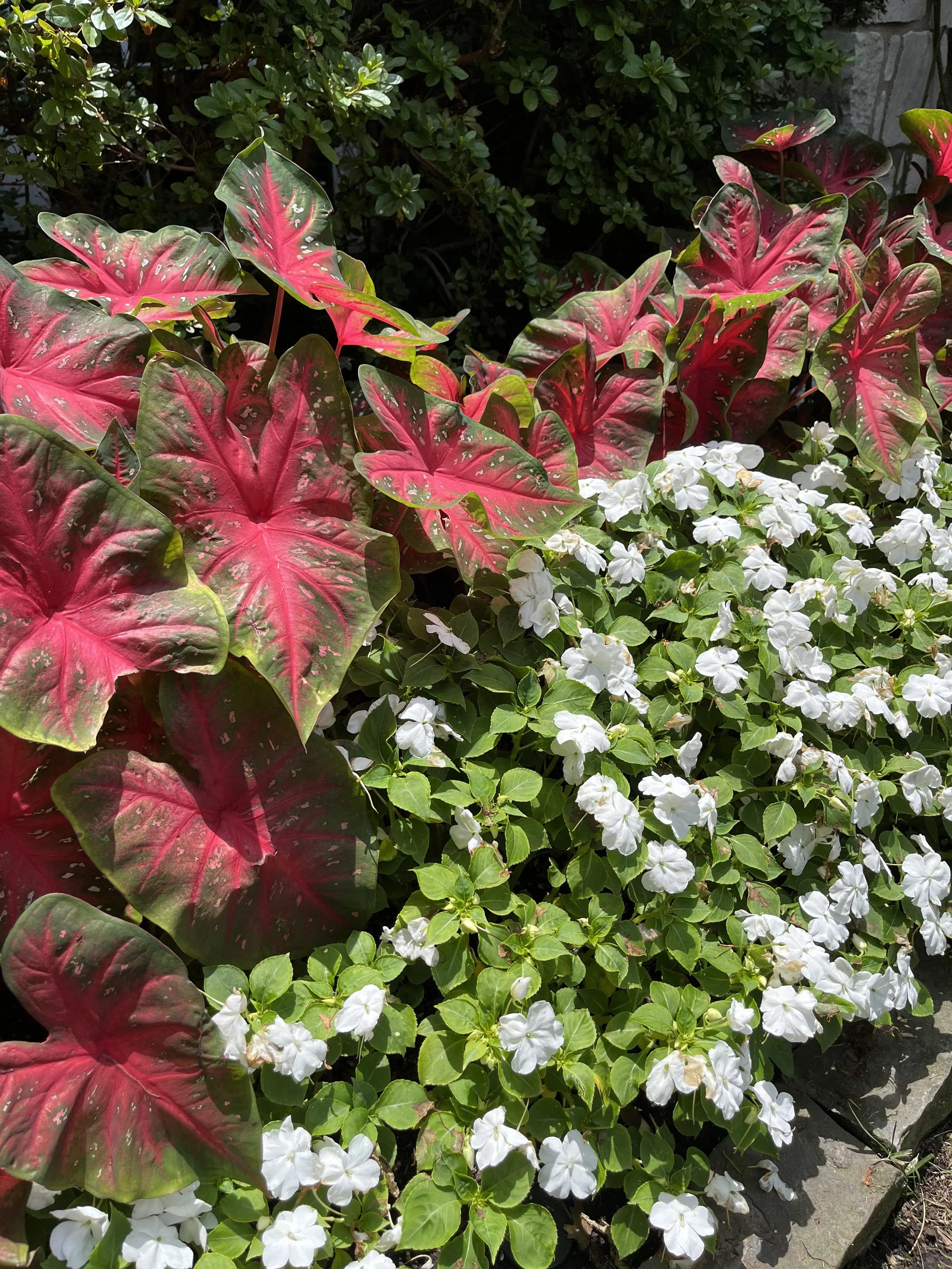
Front layer - Inpatients
Middle layer - Caladiums
Back layer - Azaleas
Best time to plant:
Fall is the best time to plant most plants. In the fall, plant materials benefit from cooler days while the soil temperatures are still warm enough root growth continues. The result is a plant that has a stronger root system the following summer.

Japanese Maple, hydrangea and ferns are a great way to create three levels in shade gardens.

Grasses make a great middle level when creating landscape plantings.

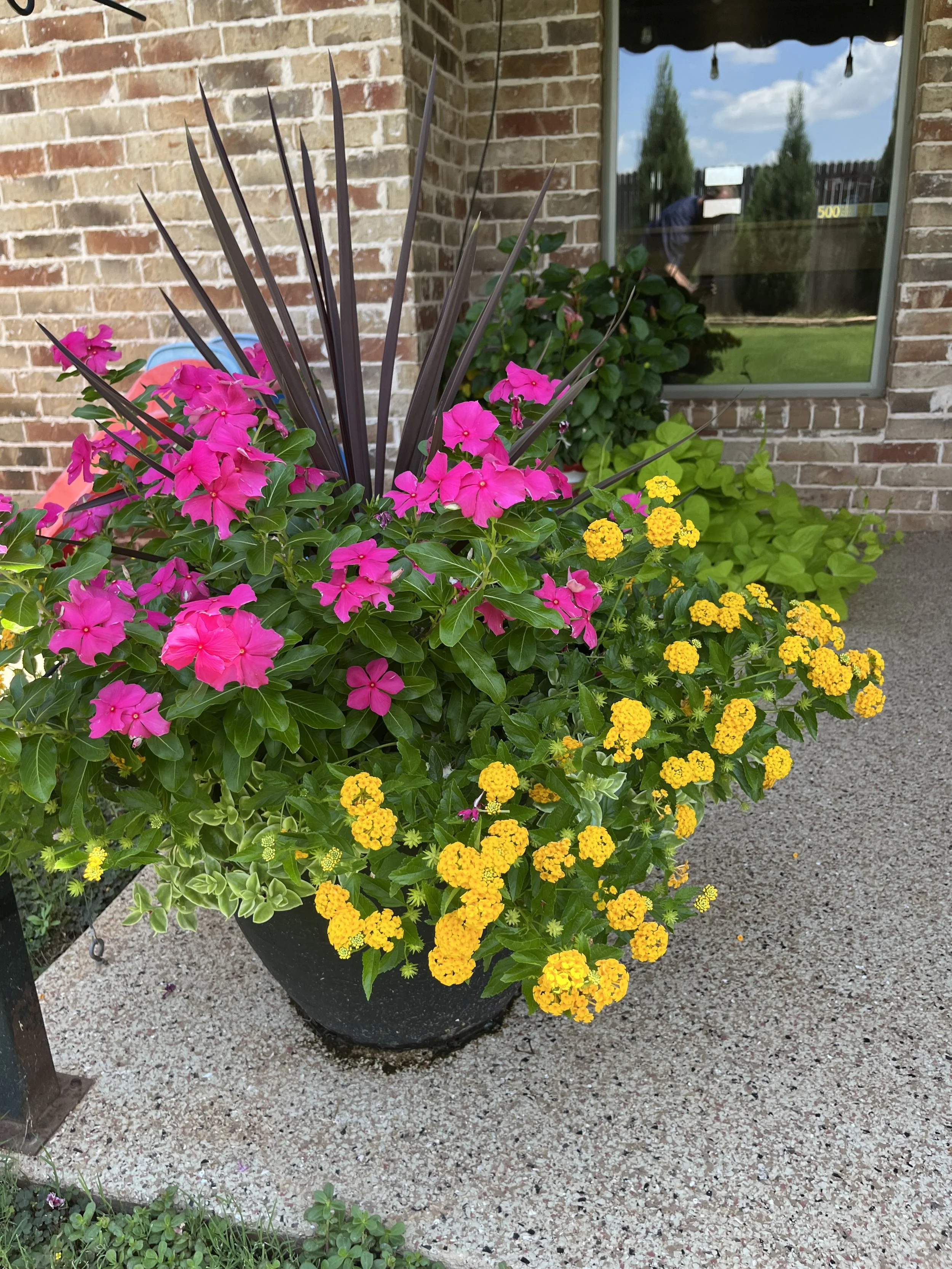
The design concept works for pots. Sometimes you will hear a designer refer to pots have a thriller, a filler and a spiller. The thriller in this pot is a cordyline. The filler is periwinkle. And the spiller is lantana.
Summer planting:
But what if you don’t want to just dream about landscapes, you want to plant now. Is it ok to plant during the summer?
Even though fall is the best time to plant new landscaping can be added year-round in central Oklahoma. Avoiding extreme heat (or cold) and drought is best. But successful planting in the summer is possible with a little extra effort.
Follow these tips when planting in the summer:
Container-grown plants are best for summer planting because there is less transplant shock than with balled and burlaped or bare root plant material.
Dig a whole that is twice as wide as the plant container and 25% deeper.
Mix organic compost with the soil you removed from the hole, place some of the mixture in the hole, firm up the soil in the bottom of the hole and place the plant with the top of the soil around the plant 1-2” higher than the surrounding soil.
Backfill 1/3 of the soil around the plant with the compost and soil mixture, lightly firm up and then fill the rest of the hole with water.
After the water drains from the hole, backfill with your soil mixture forming a small saucer around the plant while being careful not to place any soil on top of the plant root ball.
Fill the saucer with water and let it soak into the soil.
Mulch around the plant with 2 to 3” of quality, natural mulch to help keep the soil moisture and temperature consistent.
Deep water daily for the first two weeks when planting in the heat of the year. Don’t let the soil around the plant get too dry for the rest of the summer. But, at the same time, you don’t want to over water, so check soil moisture often. The soil should be moist, but not so moist you can make a mud pie.
For trees, the best practice is to use a tree gator around new trees planted during the summer.
The goal is to keep the plant alive and healthy until fall. Don’t expect much new growth until next spring.
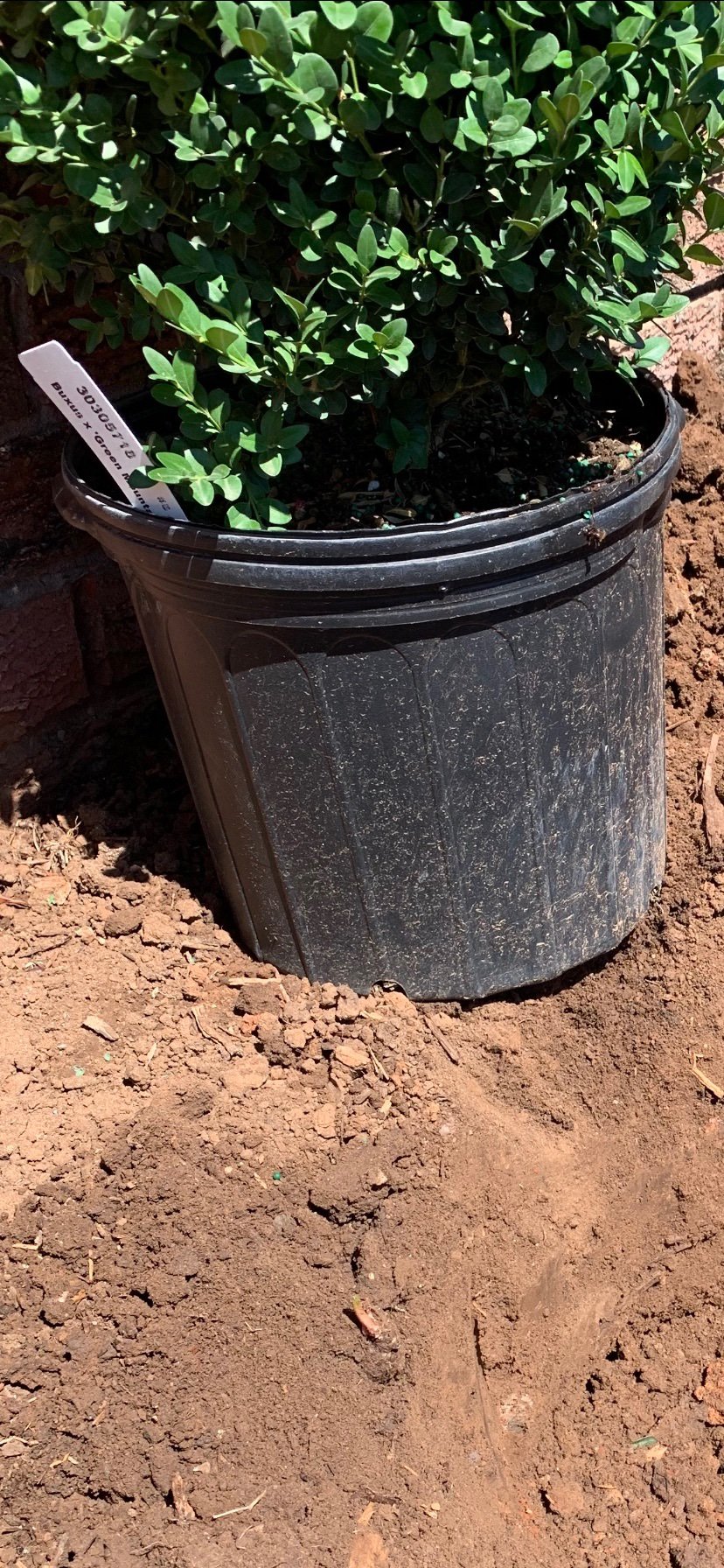
Container-grown plants are best for summer planting because there is less transplant shock than with balled and burlaped or bare root plant material.

Mix organic compost with the soil you removed from the hole, place some of the mixture in the hole, firm up the soil in the bottom of the hole and place the plant with the top of the soil around the plant 1-2” higher than the surrounding soil.

Place the shrub with the root ball 1-2” higher than the surrounding soil.

Fill the rest of the hole with water allowing time for the water to be absorbed into the soil before backfilling.

Finish the planting with 2-3” of quality, natural mulch.

Dig a whole that is twice as wide as the plant container and 25% deeper.

Place some of the compost soil mixture in the hole and lightly stamp it down.

Backfill 1/3 of the soil around the plant with the compost and soil mixture, lightly firm up and then fill the rest of the hole with water.
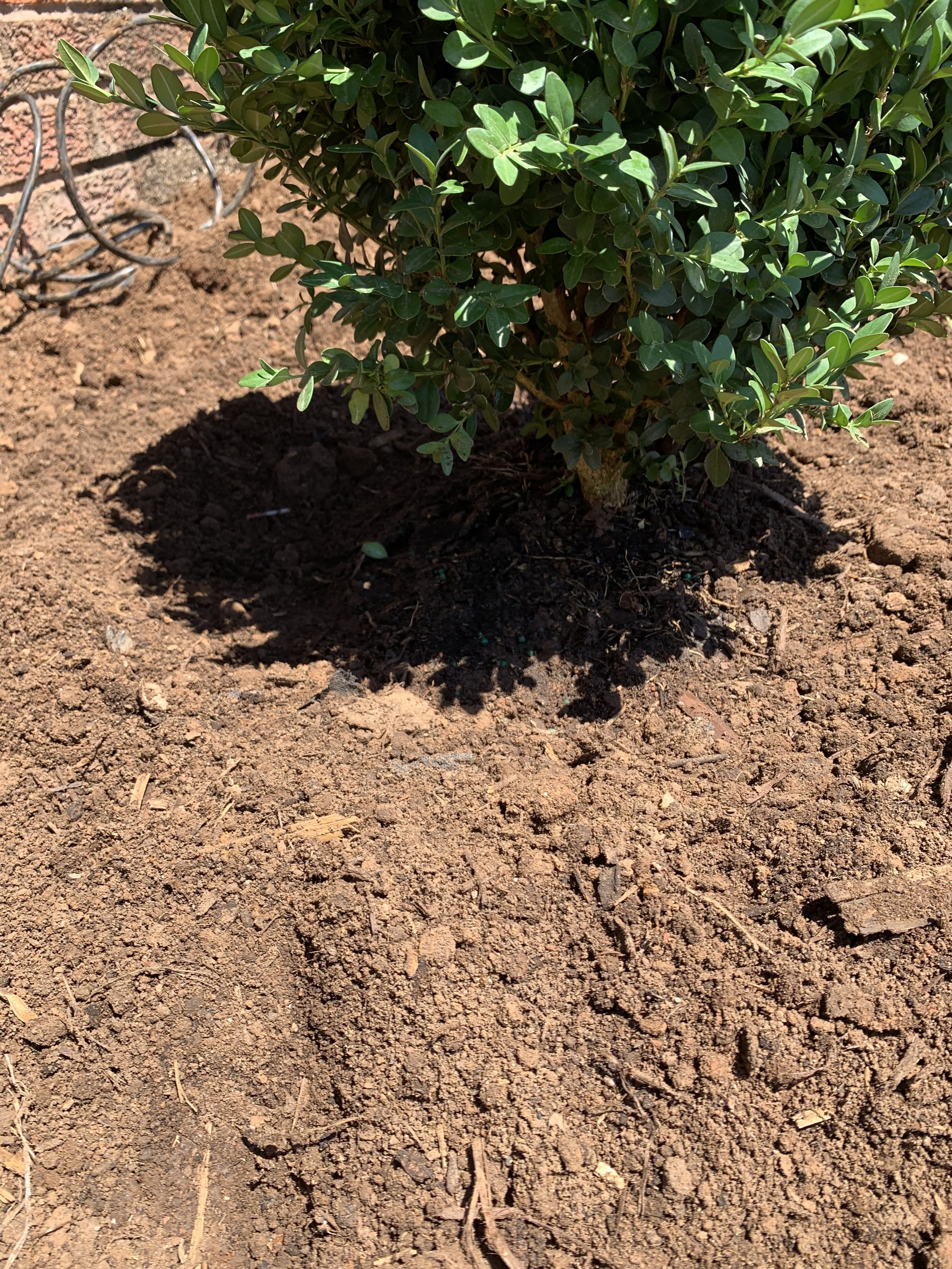
Backfill the hole being careful not to add soil to the top of the plant’s root ball, lightly pack the soil, create a small saucer ring from the soil, and fill the saucer full of water.
What are your best landscape ideas?
What are your favorite plants?
We would love to hear what is working well in your landscape.
Stay cool.
Keep landscape dreaming.
Lorne Hall
Hall | Stewart Lawn + Landscape
(405)367-3873