
The Masters & Tips on Growing Azaleas in Central Oklahoma

This was a bucket list kind of week!
Wednesday morning at 5:30 AM, I was standing in the crisp morning air a few yards outside the north gate of Augusta National eagerly awaiting the 7:00 AM opening of the Masters.
The line was full of “bucket list checking” golf fans anticipating their day at one of the most coveted events in all of golf. For the over 40,000 patrons, Wednesday at The Masters, it was their chance to spend the morning watching a favorite golfer on the final day of practice and take in the afternoon Par 3 contest.
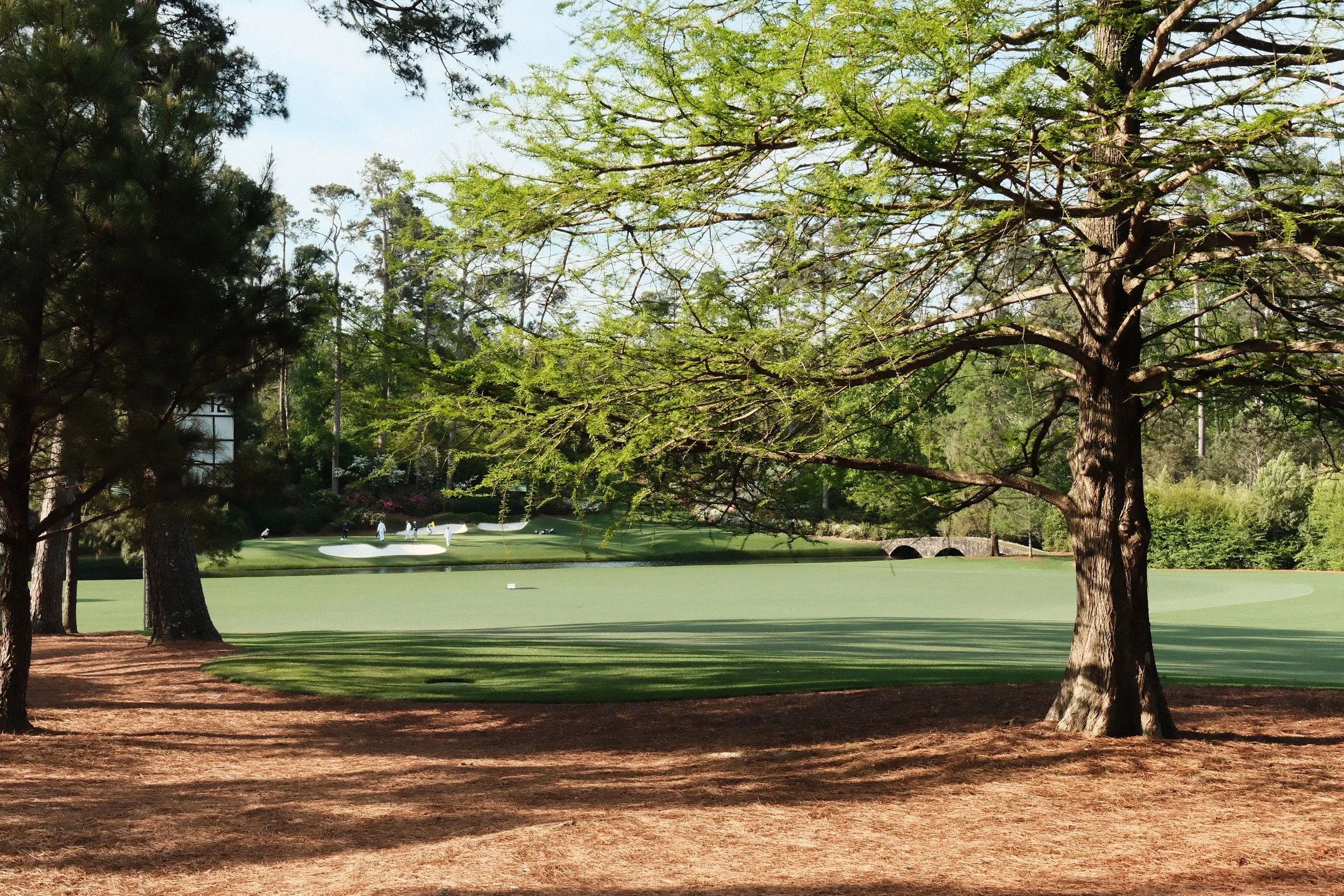
But, for me, it was a chance to spend the day walking the best maintained landscape I have ever set foot on. Yes, I enjoyed watching Scottie Scheffler play through Amen Corner. And yes, all the while, I secretly wishing I was standing in the middle of the fairway asking questions of the turf professionals in charge of creating such an immaculate turf. Through the day questions kept coming to mind I wish I could ask the turf pros, questions about their mowing practices, questions about how often they aerate, questions about their irrigation techniques, questions about the herbicides, about the fertilizer…..All day long, the questions never stopped running through my mind.
Excellence is inspiring.
Witnessing the world’s best golfers practice their craft is inspiring.
Walking turf so perfect that at times you thought “this can’t be real” is inspiring. (I actually overheard one patron telling another patron the turf was artificial.)
That’s the thing about excellence. It doesn’t matter if it is a professional athlete at the pinnacle of their career or it is the guy behind the scenes, the person who’s name you will never know, practicing his craft creating the world’s best turf, it is inspiring.
All excellence is inspiring.
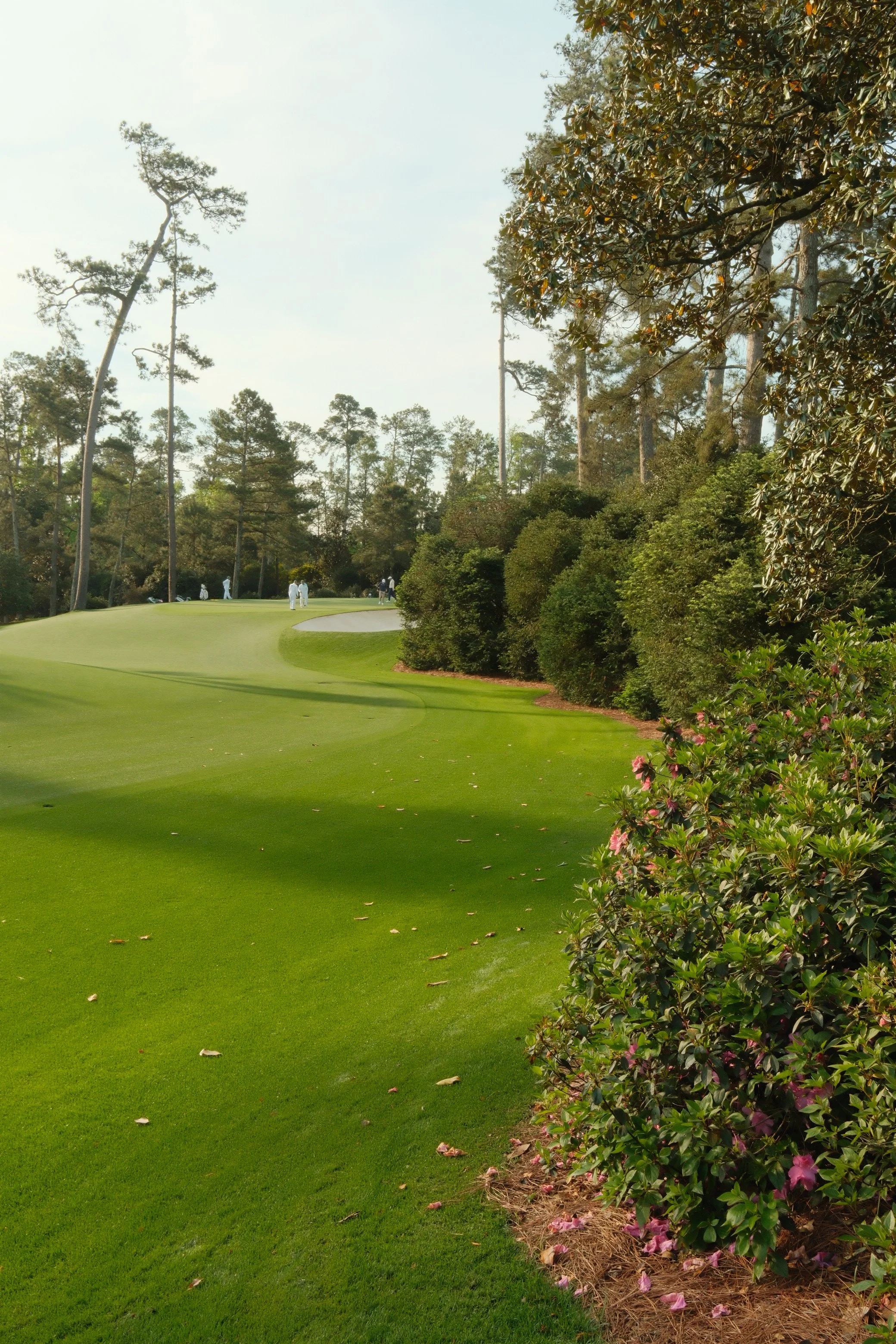

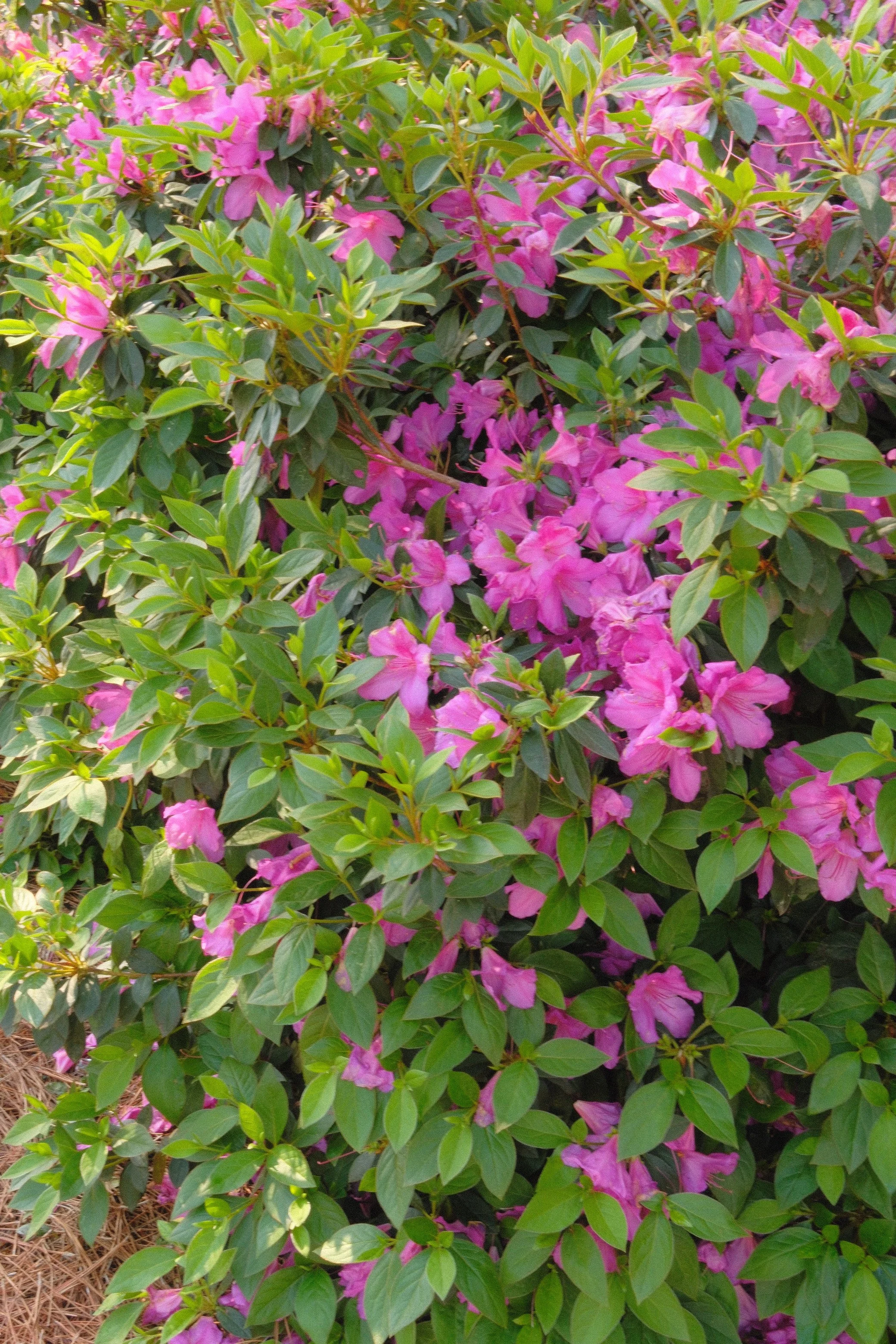
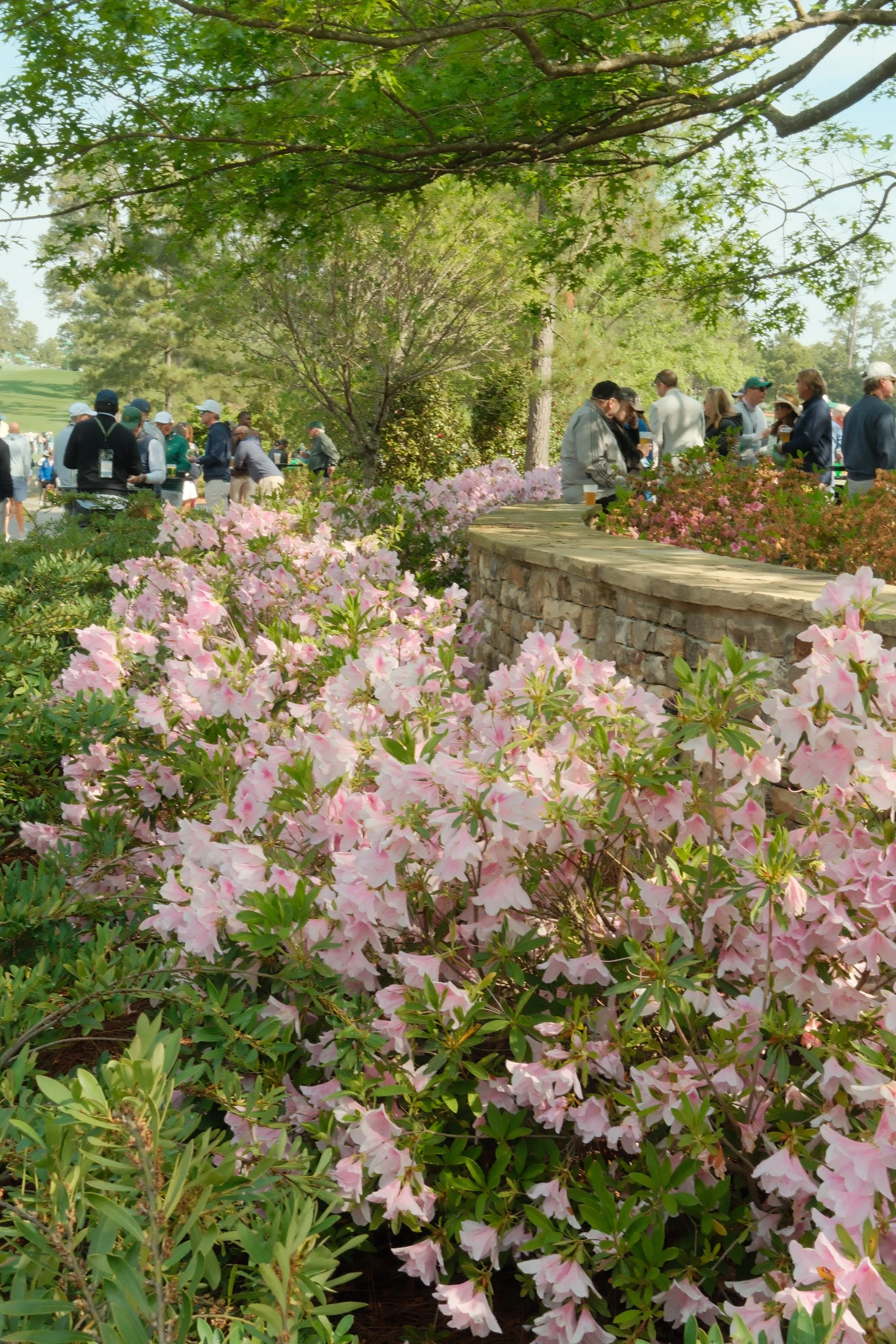
My Day at The Masters was about more than turf.
Augusta National is known for its azaleas.
Just like Oklahoma, the weather in Augusta this spring has been warmer and dryer than normal resulting in an azalea floral display that was just past peak for Masters week.
I was asked if I was disappointed. The answer was yes, but only just so slightly. Even though the azalea show was just past peak, the excellence of the landscape did not disappoint. With over 365 acres of lawn and landscape, I did not witness a single unhealthy, less than perfect plant. Every plant was a specimen. At home, it doesn’t matter how hard I try; it always seems impossible to keep all the plants looking perfect. But at Augusta National, everywhere I walked, every direction I looked, the landscape was filled with wonderfully perfect plants.
A very good friend, who visited The Masters a few years ago told me, “You will not find a blade of grass out of place.” He was only half right. There wasn’t a blade of grass out of place and there wasn’t a shrub that wasn’t perfect!
August National’s commitment to an excellent landscape is inspiring.
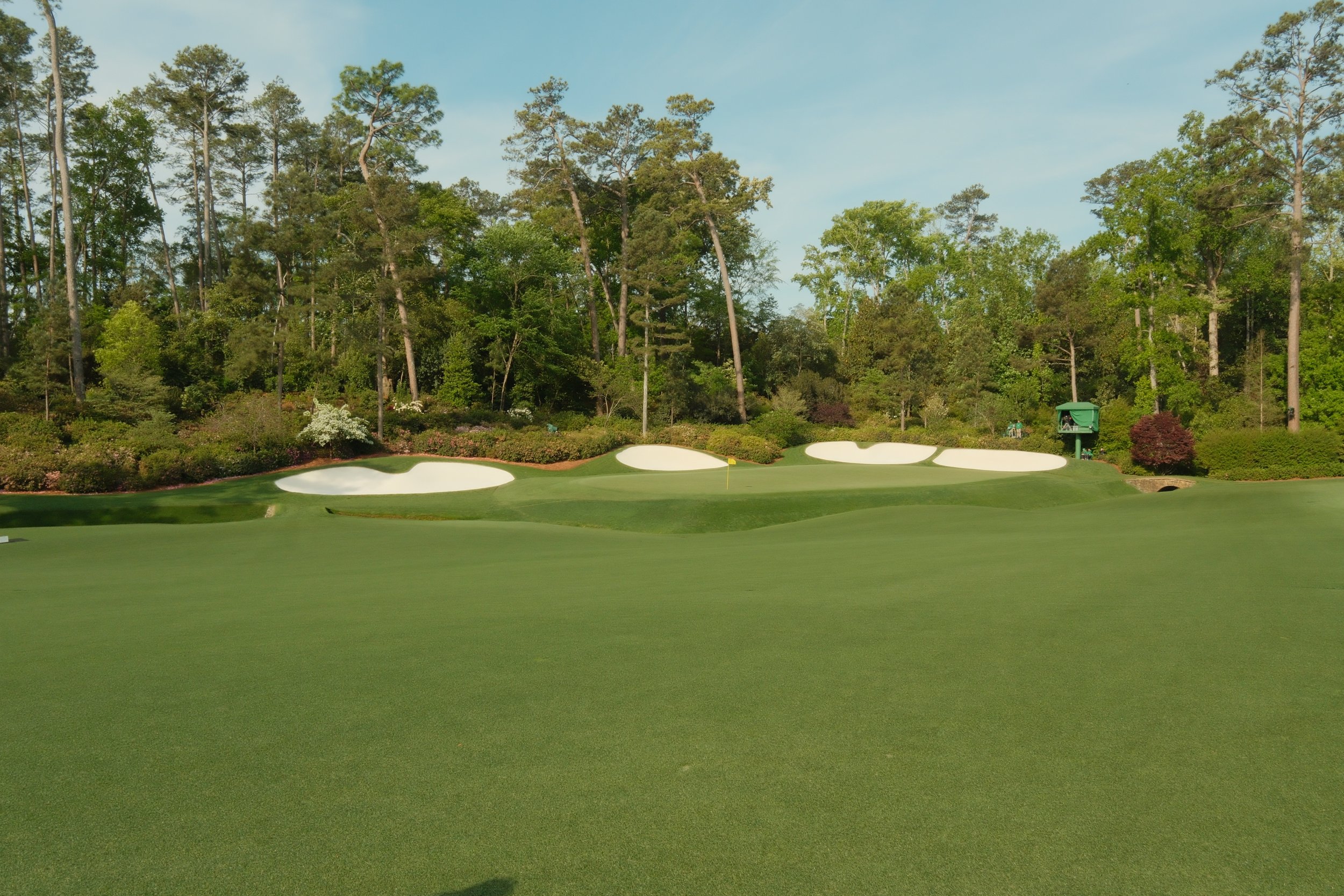
Every year Oklahoman’s watch The Master’s and are inspired to have their best lawns and landscapes.
Common belief is that azaleas just don’t do well in central Oklahoma.
This is a myth. Azaleas can be grown in Oklahoma City.
But they require thinking differently about your landscape and a commitment to make it happen.
Azalea success in central Oklahoma won’t happen if you just dig a hole just anywhere in your landscape and drop in an azalea.


8 Things You Need to Know to Grow Azaleas in Central Oklahoma
Soil preparation is key. Azaleas require well drained acidic soil (5.0-6.0 pH). Central Oklahoma is known for tight clay alkaline soils (6.5-7.5 pH). The first step is to remove all the existing Oklahoma clay and replace it with a mixture of pecan hulls, peat moss, and pine bark. No soil. That is correct – azaleas do best when the native soil in our area is removed. My favorite mixture is 1/3 pecan hulls, 1/3 peat moss, and 1/3 pine bark. But you will have success with a 50/50 mixture of any 2 of the 3.
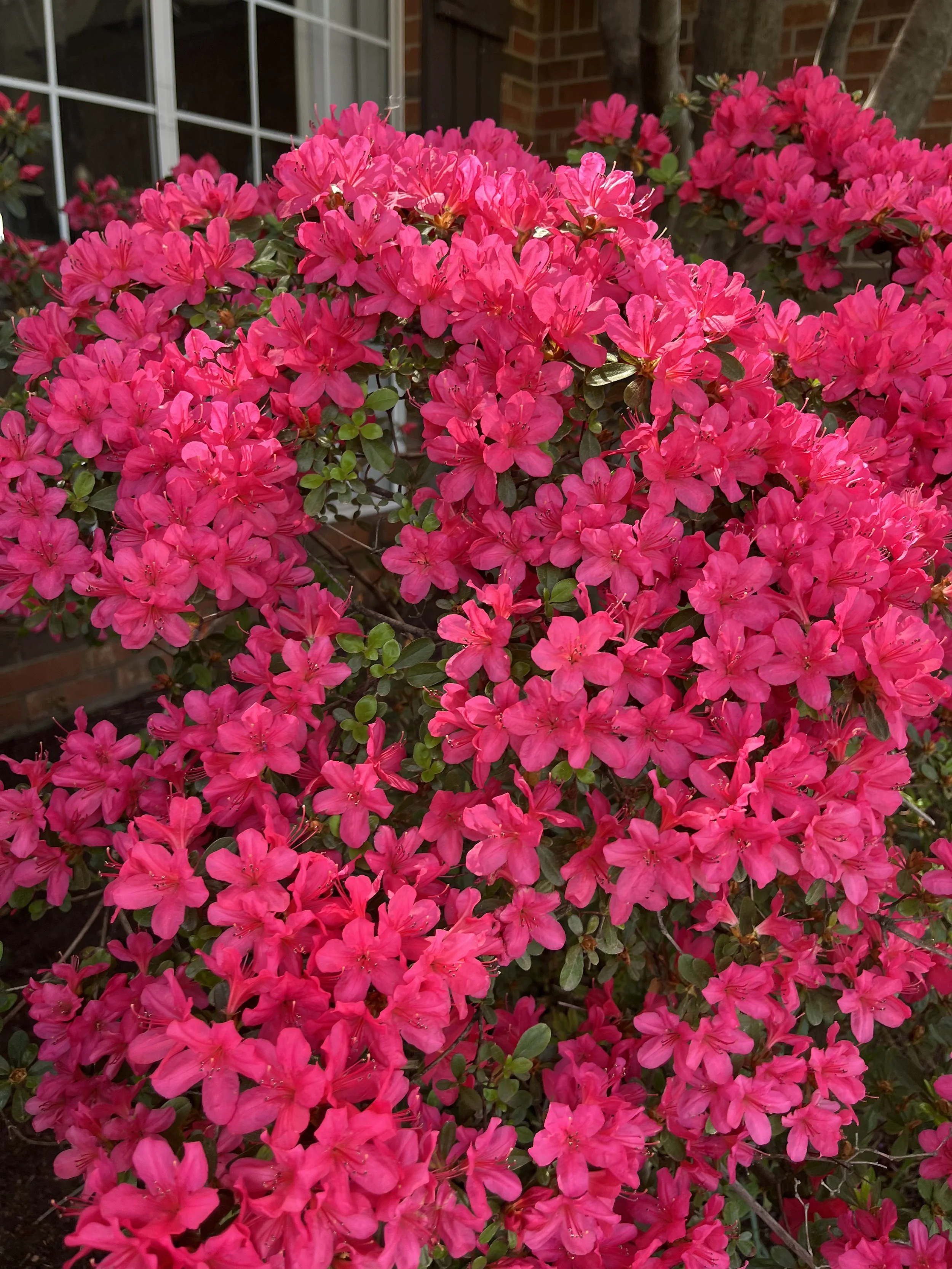
20 year old Hino-Crimson Azaleas planted in a raised bed in a mixture of pecan hulls, peat moss, and pine bark with all the native soil removed.

2. The size of the hole you dig is important. The standard for planting most trees and shrubs is a hole twice the size of the plant root ball. But when planting azaleas dig the hole 3 to 4 times the size of the plant root ball. You don’t need a very deep hole – it only needs to be 6-10” deeper than the level of the root ball once it is planted. Azaleas roots are shallow and like to grow out. So, think wide and not deep when digging.
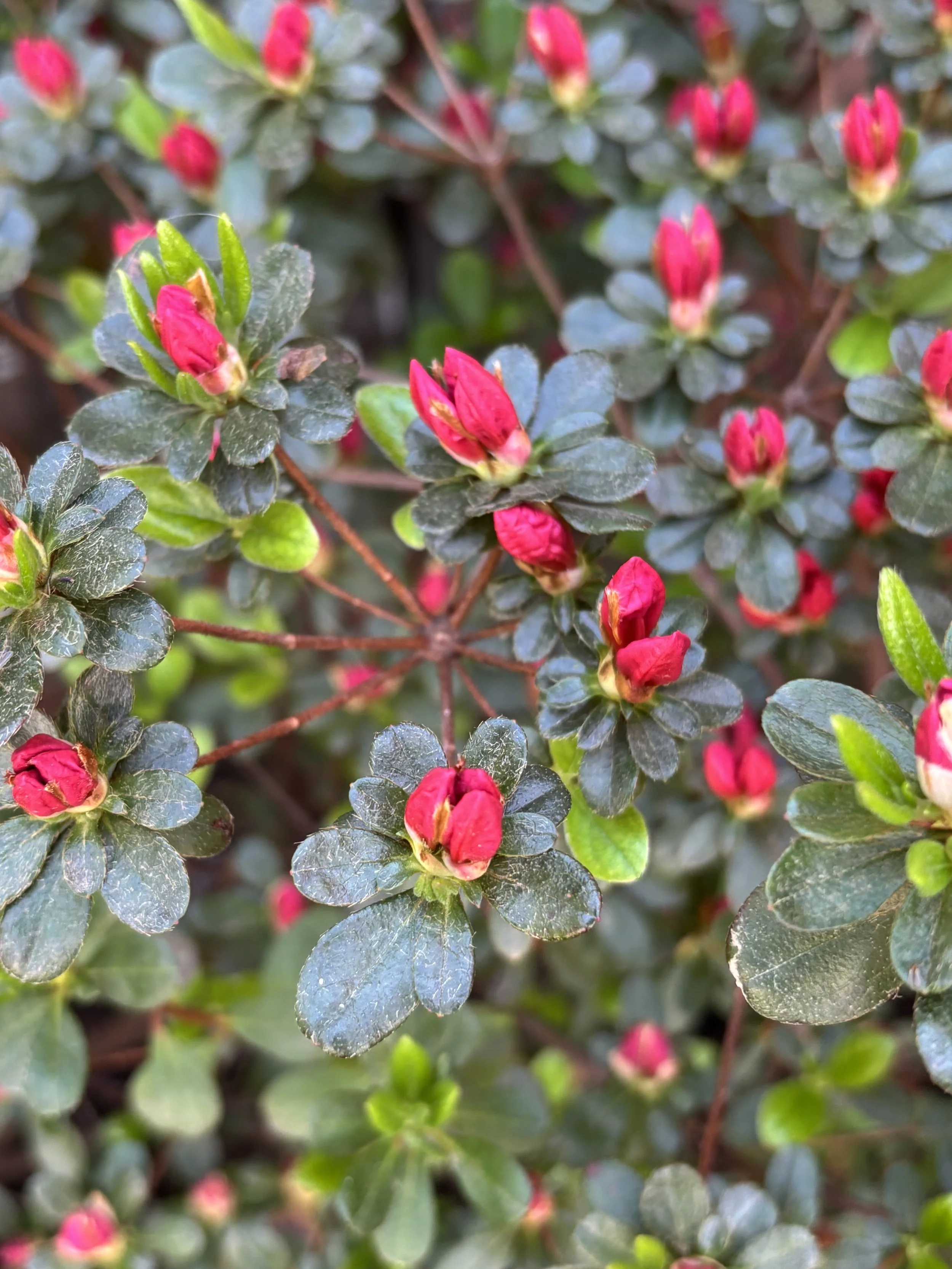

3. Raised beds are best. Azaleas like moisture but they do not like to have their roots sitting in water. The best way to achieve a well-drained planting in tight soil is to raise the planting. A great option is to install a 4-12” stone boarder to gain height. Or incorporate a berm in the landscape planting for your azaleas. When placing the shrub, keep the top of the root ball 1-2” above the grade and gently slope your planting mixture away from the shrub. The number one reason azaleas die is from root rot.

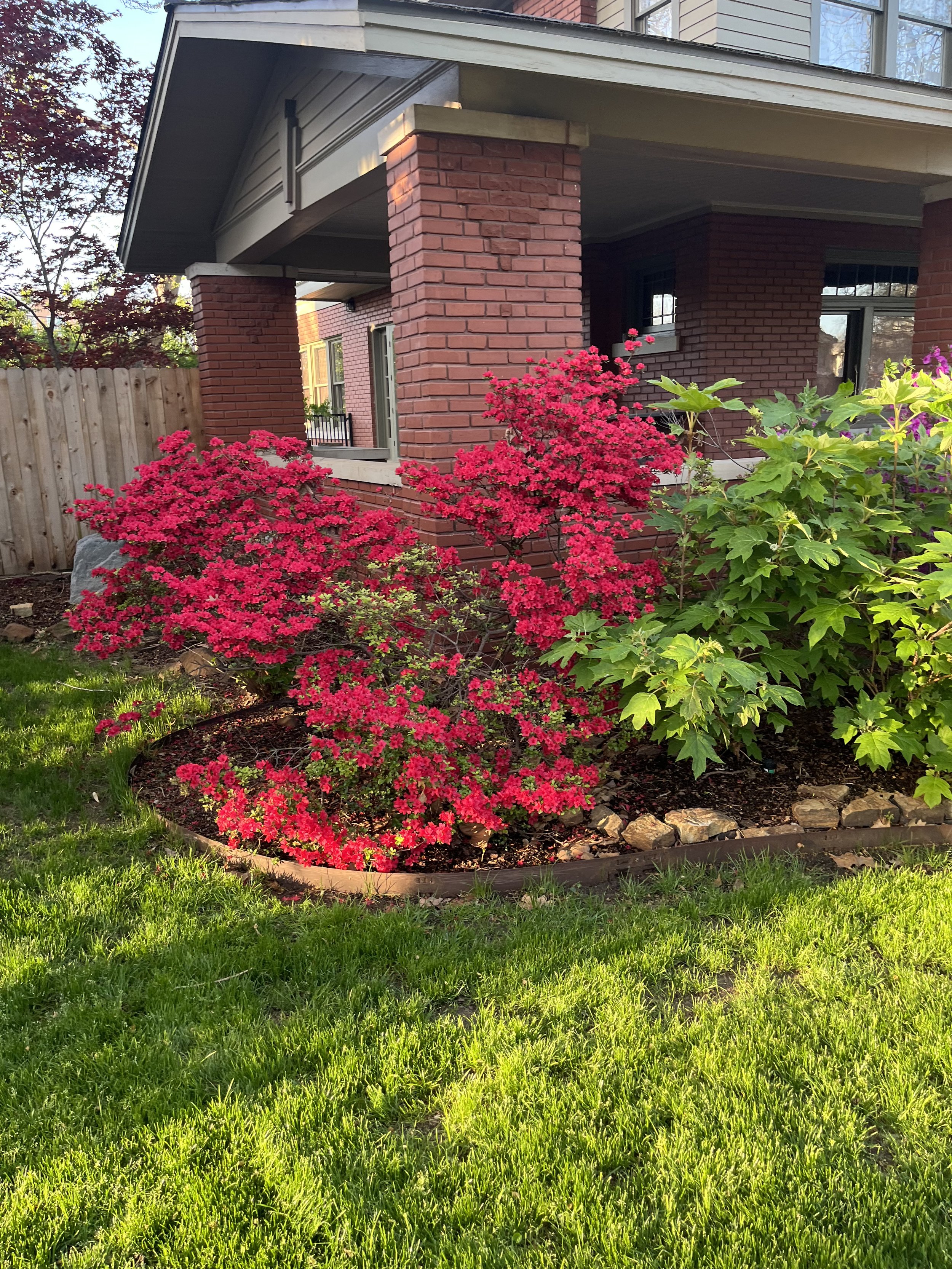
4. Plant in the shade. Azaleas need mostly shade. They like the morning sun and filtered sunlight. A great place for an azalea is under large trees, particularly oak and pine. Pine needles and oak leaves will add acid back to the soil. If you lack large shade trees, plant them on the north and east sides of your home. Never plant azaleas where they will be exposed to the hot afternoon and evening sun. Also, avoid windy locations.
Red Ruffle Azaleas that have been lightly pruned over the years to maintain their natural shape.

5. Consistent water. When we are receiving sufficient rainfall azaleas do not need any additional water. But, when temperatures rise and moisture declines, regular watering is very important. Try to provide 1 – 1.5” of water per week during the summer months. Due to their shallow root structure, roots can dry out quickly. When temperatures are in the 90s or higher, water every other day with a deep soaking.

6. Avoid soil cultivation. Cultivating the soil will disturb the shallow roots. Control weeds by hand pulling and by mulching with 2-4” of pecan hulls, pine bark, or pine needles. These mulches will increase the acidity of the soil, cool the soil, and retain moisture.
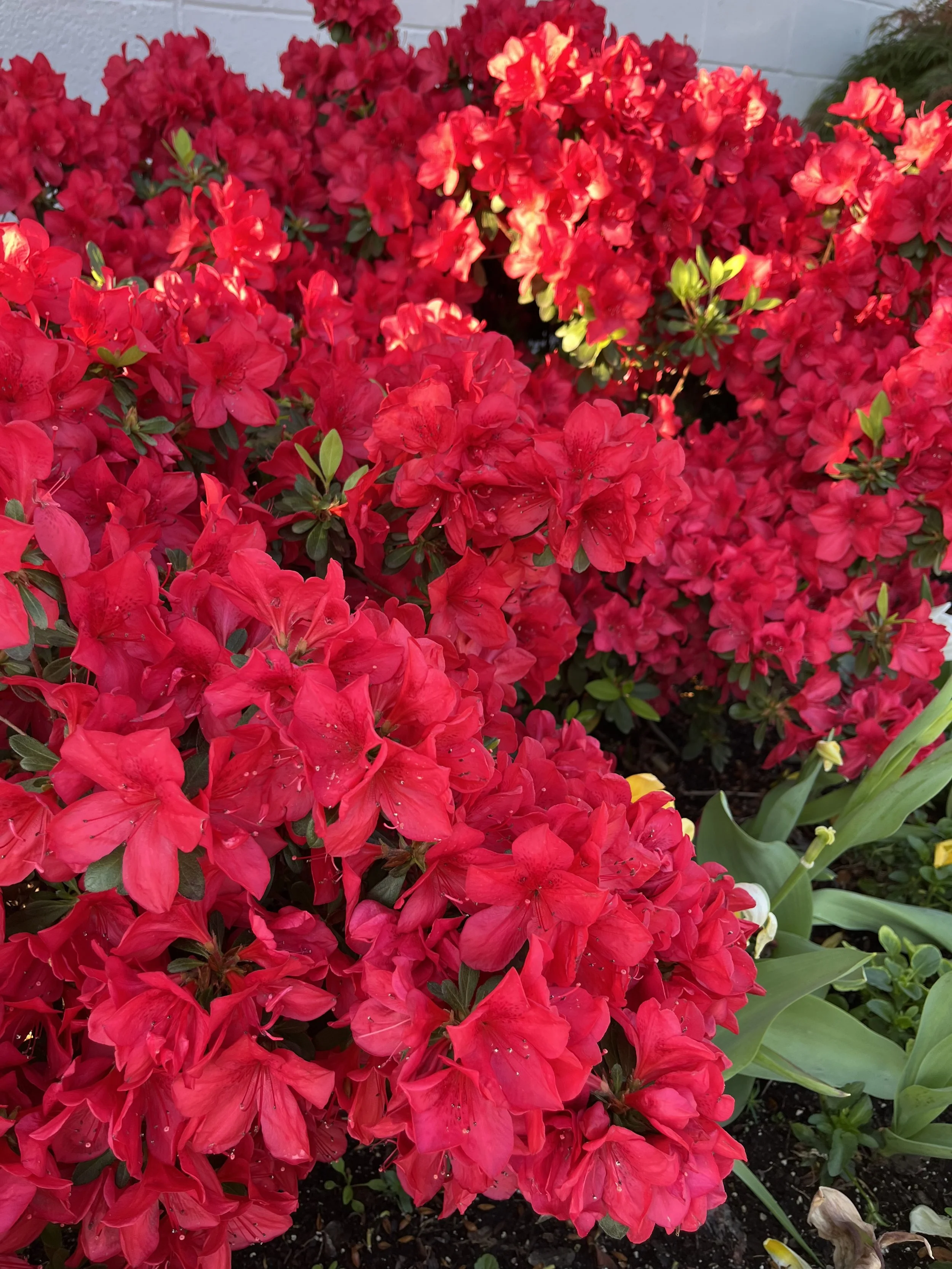
Encore Autumn Ember Azaleas at the Hall | Stewart office this spring.

7. Correct pruning. Prune azaleas after the blooms drop in May or June. Do not prune after July 4th because you will be removing next spring’s blooms. Azaleas respond well to having branches that have grown too long pruned back to the branch. This will help maintain a natural shape of the plant and maximize blooms next spring. Sheering is not recommended. Dead wood can be removed anytime.

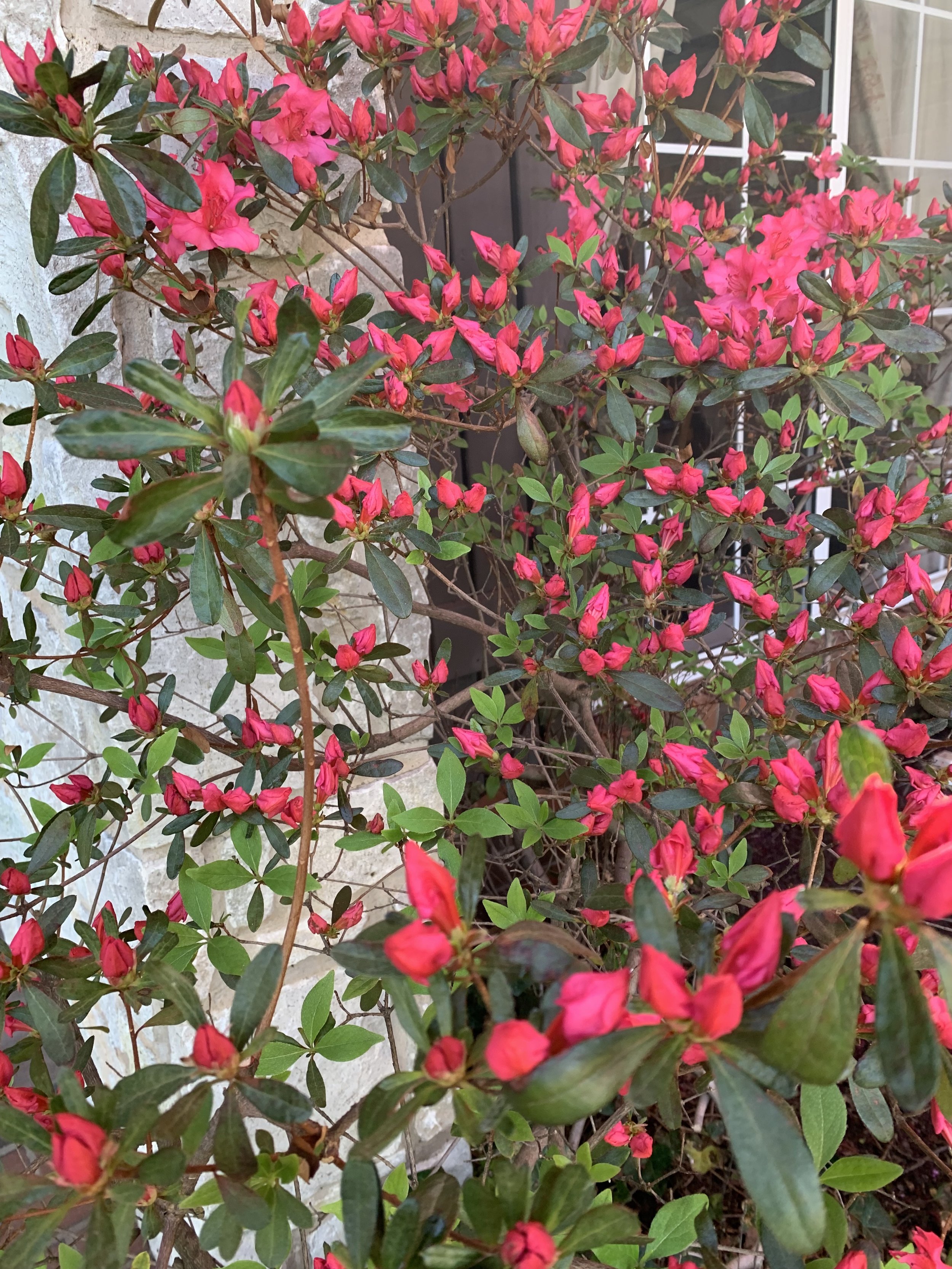
Azaleas just starting to bloom.

8. Feed them. Fertilizer applications after blooming in May and June are best. Fertilizing in early spring isn’t recommended as it will promote leaf growth and reduce the number of blossoms. Use an azalea/camellia/rhododendron food with trace elements for acid growing conditions. Miracle-Gro Water Soluble Azalea Plant Food and Ferti-Lome Azalea/Evergreen Food Plus are a couple of good examples.

Encore Azaleas have the added benefit of a fall bloom.

When it comes to azaleas, there are a lot of varieties and colors to choose from. Traditional azaleas that do well in Central Oklahoma include Hino-crimson and the Ruffles series. Over the past few years, the Encore varieties have become very popular and performed well. Traditional varieties are heavy spring bloomers. Encore Azaleas bloom in the spring with a second lighter bloom in the fall.
Here are a couple of good sources for azalea varieties: https://www.monrovia.com/search/?q=azalea and https://encoreazalea.com/the-collection/
I planted Hino-Crimson and Red Ruffle Azaleas at our house 25 years ago using the methods above. Every spring the colors are stunning. This time of year, you can’t drive down our street without slowing to steal a glance.
“Azaleas are the one plant that will cause a traffic jam.” Allan Storjohann
When planted correctly and maintained well, you won’t regret the time and effort you put into growing azaleas.
Lorne Hall
Hall | Stewart Lawn + Landscape
(405)367-3873
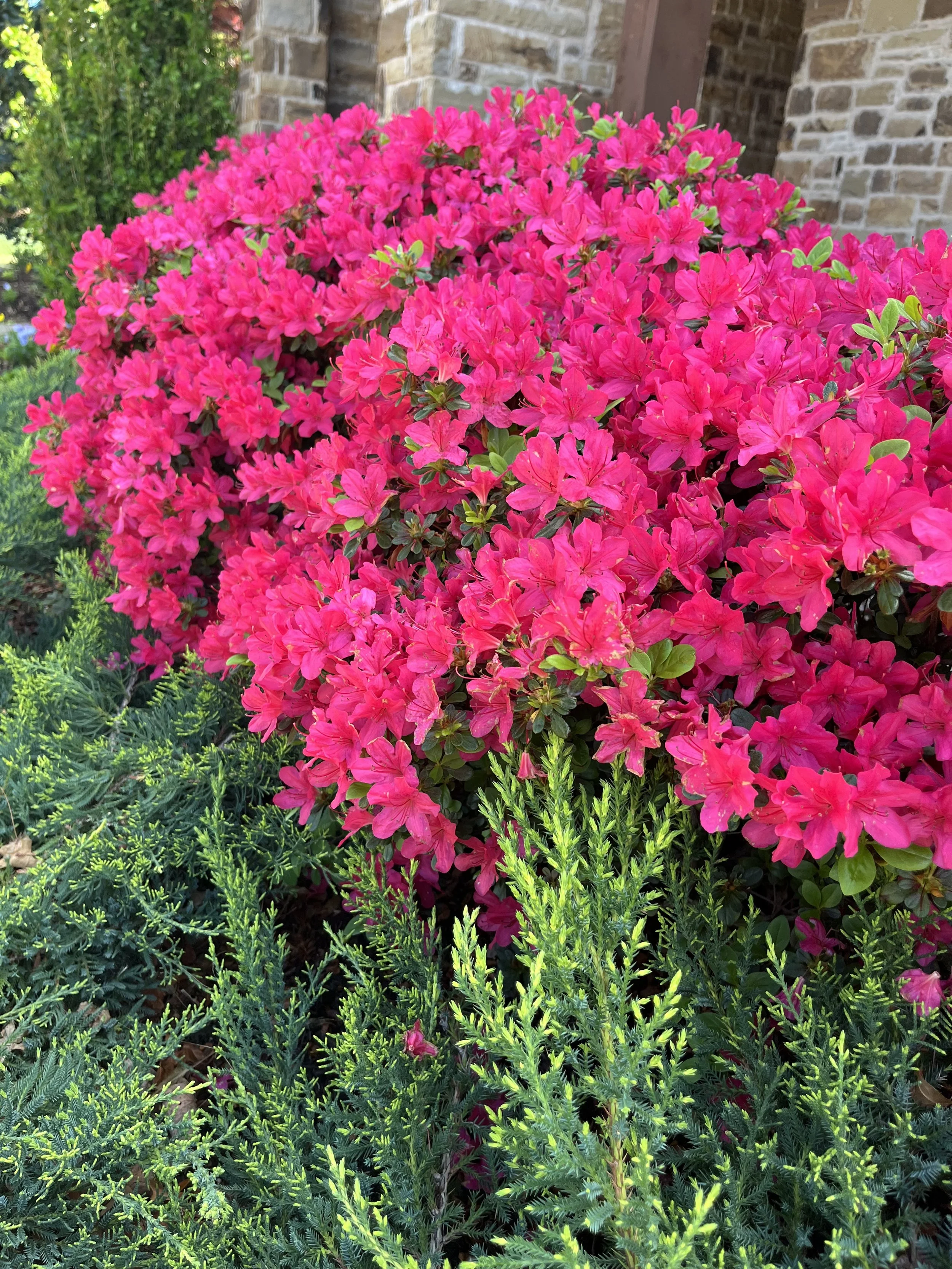
Picture from this week of a NW OKC landscape of Azalea ‘Hino Crimson’ planted in 2021 in a mounded bed of pecan hulls, peat moss, and pine bark.