
January Lawn + Landscape Tips
Happy New Year to Your Lawn & Landscape!
For those who are always in pursuit of their best lawn and landscape, January is the month to review the year just completed and plan for the season to come.
Besides reviewing and planning for the season, there a few critical things to do in January that will make a big difference in the success of your lawn and landscape in 2026:
Top of the list for January: Make sure your lawn and landscape has sufficient moisture!
Moisture
The biggest challenge for your winter landscape is lack of moisture. The Oklahoma City metro area is currently on week 6 without a good rainfall. December was our second driest December on record. One of the most critical aspects of plant winter survival is good soil moisture. Through the winter keep an eye on rainfall and soil moisture. Anytime we go 7-10 days without any moisture, rain, or snow, be prepared to water. Evergreen plants, both needle and broadleaf, are most susceptible to winter damage when we have a dry winter. Don’t forget to inspect containers, raised plantings, and plantings under the eaves of your house are the first to become too dry.
Irrigation Best Practice – If your system has a rain/freeze sensor and if your system does not need to be winterized (Backflow has heat protection), set your system to run through a cycle one time per week in the afternoon.
If it is above freezing and it hasn’t rained, the system will run through a cycle.
Mulch
A great landscape practice for improving survivability of your landscape plantings is a fresh layer of mulch. A 2-3” layer of mulch will provide insulation for your plant roots, retain moisture, and moderate soil temperatures.
Lawn Pre-Emergent
Your best chance to have a weed free lawn in 2026 is to apply a pre-emergent in January or February. The purpose of a pre-emergent is to prevent weed seeds from germinating. The next weeds to germinate in your lawn will be the ones that haunt you all summer. Spring and summer weeds will start growing as soon as soil temperatures start to warm in early March.

A great time to control grassy weeds in dormant Bermuda is January and February .

Nonselective herbicides can be used while the turf is completely dormant to control any weeds that are actively growing.
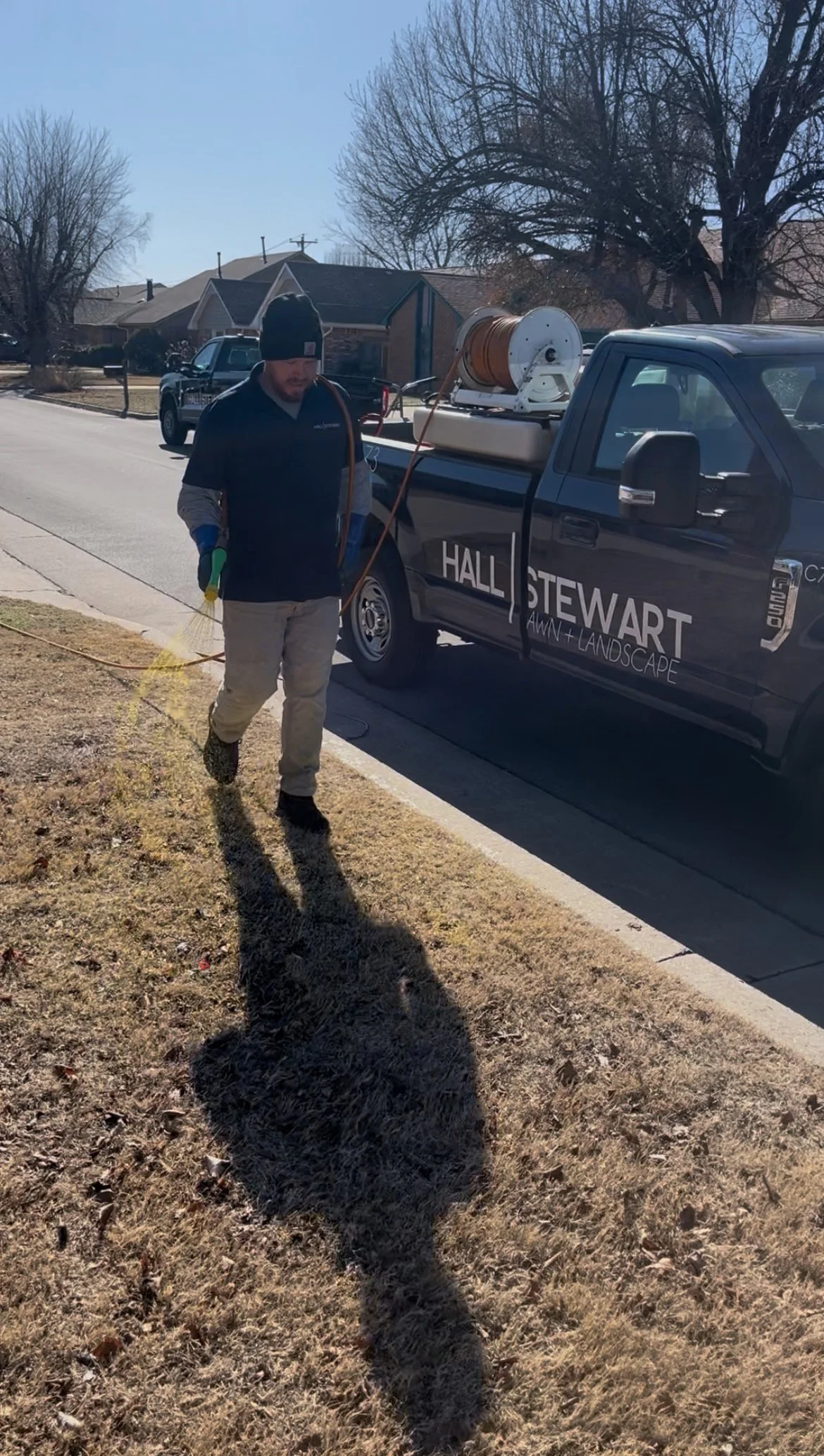
Your best chance for a weed free lawn this season is to apply a pre-emergent in January or February.
If you are a subscriber to a Hall | Stewart’s Lawn Care Program, we will be visiting your lawn very soon to apply the critical first application of the year to prevent spring and summer weeds.
Lawn Post-Emergent
If you have a warm season lawn (Bermuda and Zoysia), now that we have received freezing temperatures it is one of the best times to gain control of troublesome grassy and broadleaf weeds. Nonselective weed control (herbicides that control anything that is actively growing) can be used while the turf is completely dormant. Now is also a good time to control broadleaf weeds growing in fescue, but do not use a nonselective herbicide on fescue. Always read the labels, know your turf type, and only apply herbicides labeled for your turf type.
Tree Trim
During winter dormancy, tree trimming is a great practice. Remove low hanging branches, crossing branches, and branches growing into the interior of the tree. Also, remove branches that may compete with the central leader.
For more information on tree trimming, visit our post from December 7th, Winter Tree Pruning – Improve Your Landscape Investment.

Dormant Oil
During January and February, one of the best things you can do to prepare your landscape plants for the season is to treat them with a dormant oil. Dormant oils smother overwintering insects (aphids, scale, mites, etc.) that often are some of the most difficult to control.
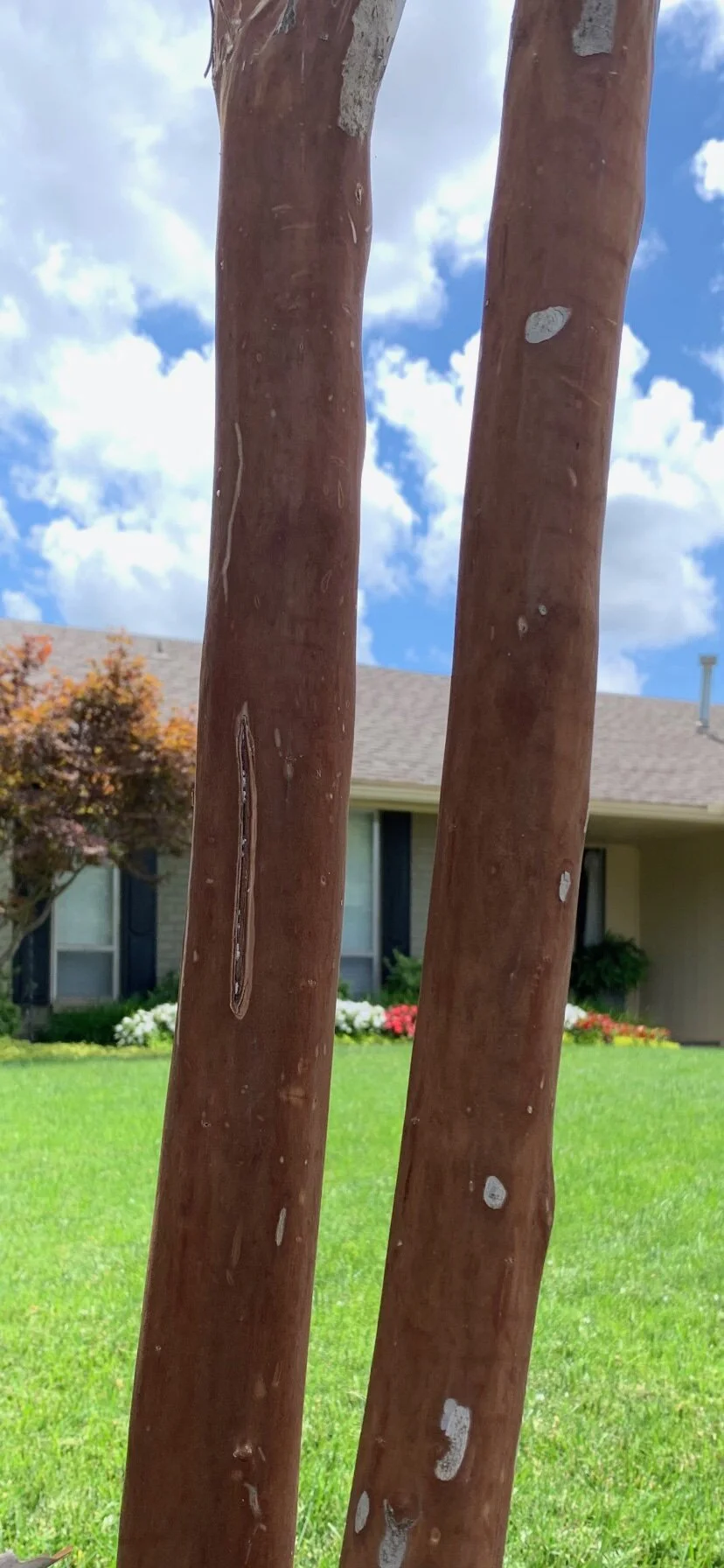
Crape myrtle bark scale activity has increased over the past few seasons. Scale is a white insect with a hard shell that appears on the bark. Dormant oils applied in January-February is the first step for controlling the pest. If your landscape includes crape myrtles, you need a dormant oil application every year.

When leaves accumulate in the corners of your lawn during the winter they become a collecting place for insects and disease.
Soil Test
If your lawn, shrubs, or trees struggled in 2025, now would be a great time to check the soil pH and nutrients.
Key soil measurements that determine soil health include pH, total exchange capacity, organic matter and nutrients.
Unhealthy Soil = Sick Lawn & Landscape
Soil Test Results + Recommendations = Healthy Lawn & Landscape
When key soil measurements are out of balance, your lawn and landscape will not respond correctly to fertilizer and weed control applications.
Give Hall | Stewart a call and we will gather a sample and take it to the lab. With soil test results, we will formulate a custom plan to return your lawn to a healthy condition.
Leaf Clean-up
Keep your lawn and landscape clear of leaves through the winter. If you allow leaves to collect on your fescue lawn, in the corners and around objects, you will find the fescue thinner in the spring. Also, leaves are a collecting place for insects and disease over the winter.

Mower Maintenance
During the mowing off season take your lawn equipment in for annual winter service. Most lawn equipment stores offer specials during January on oil changes, lubrication, blade sharpening, and repairs. Annual preventive maintenance often keeps you from experiencing the frustration and hassle of repair issues during the growing season and extends your mower life.
Set Lawn and Landscape Goals for 2026
Here are a few practices that may be just what you need to take your lawn and landscape from good to great in 2026:
Aeration – Our best lawns, the ones with the healthiest root system, thickest turf, best weed resistance and most drought tolerant are the ones that receive annual aeration.
Soil Test – If your lawn is slow to respond to fertilizer and weed treatments, it could be that you have a soil imbalance. A simple test will tell us what we need to know to create your best lawn.
Fall Overseed – Annual fescue seeding any area of your lawn that does not receive at least 5 hours a full sunlight daily to eliminate thinning and bare areas is an important step in having a great lawn.
Watering Habits – Make it a goal to learn the best way to water your lawn. A healthy lawn and landscape is watered infrequently and deeply. Frequency and length of watering is different for every lawn. Set aside time early in the season to discover the best way to water your lawn.
Landscape Refresh – From seasonal color plantings to your front landscape to your outdoor living spaces, what needs to be refreshed this year?
Plant Health Care – Your landscape represents an important investment in your property. Annual inspection and treatment of your trees and shrubs is a good practice.
Lawn and Landscape Journal – Make it a habit of taking lawn and landscape pictures and making notes through the seasons. Every season, every year is different. Having good notes helps you adjust to changing conditions from season to season.
If you have any questions, or if you need help making 2026 your best lawn and landscape year, please give us a call (405)367-3873, or simply respond to this email.
One Important Winter Note – Avoid walking on fescue lawns when temperatures are below freezing or there is frost as it will cause damage that will last into the spring.
Lorne Hall
Hall | Stewart Lawn + Landscape
(405)367-3873