
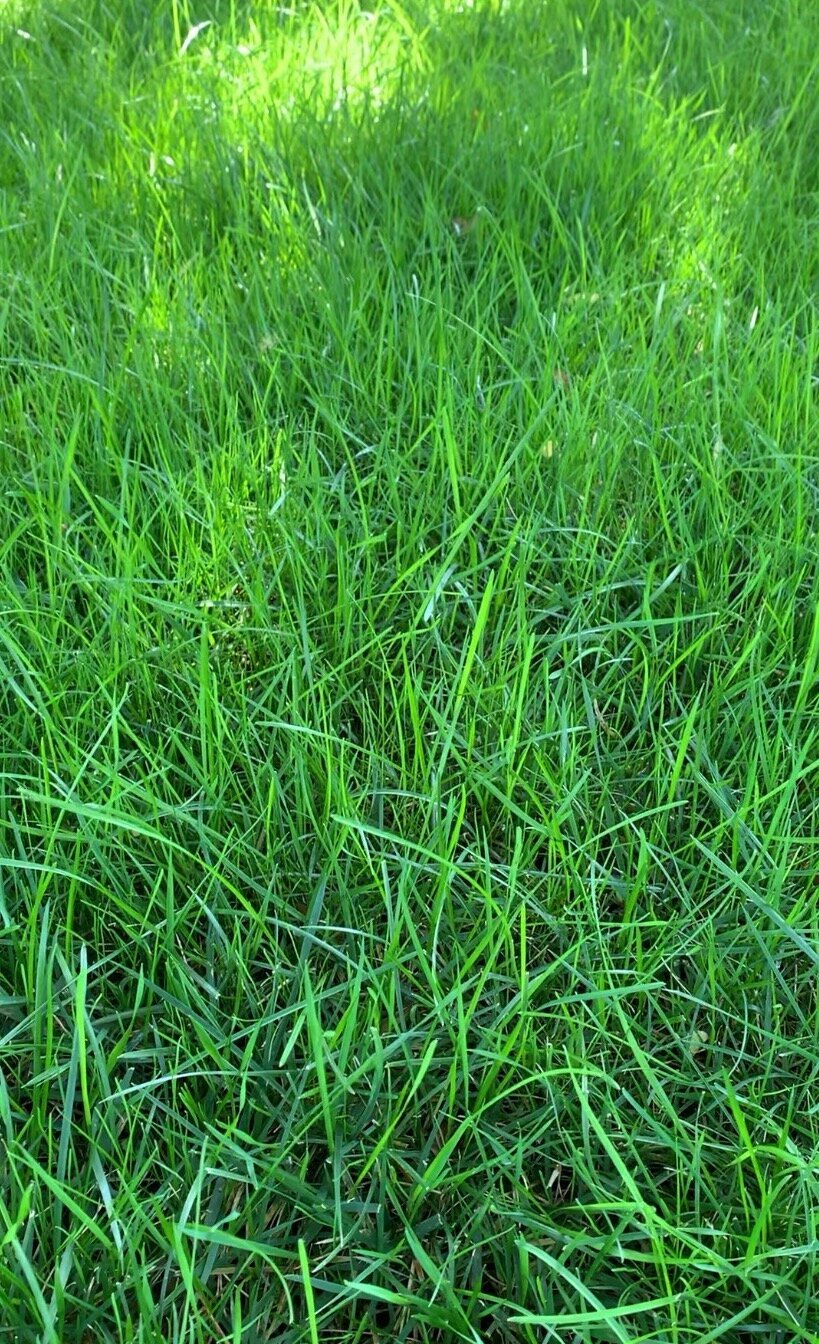

The most feared weed... Crabgrass!
Crabgrass is so well known — it’s the most talked about and most feared of all weeds. Most people are so captivated with the fear of having crabgrass take over their lawn that it is common for them to refer to any weed as the dreaded “Crabgrass!”

Crabgrass is so well known — it’s the most talked about and most feared of all weeds. Most people are so captivated with the fear of having crabgrass take over their lawn that it is common for them to refer to any weed as the dreaded “Crabgrass!”
With March as the critical point in preventing crabgrass, I thought we should hold a quick educational seminar on crabgrass.
What is crabgrass?
It is a summer annual grassy weed. This means that it dies every year and comes back from seed the next year. Just like the name suggests, it spreads low to the ground. It is yellowish to light green in color. Crabgrass is a prolific grower and if left unattended will rapidly dominate turf. It can be found in almost every turf and landscape setting during the summer months if not properly managed.
What is the crabgrass life cycle?
Crabgrass germinates every spring when soil temperatures reach 55 degrees for 2-3 consecutive days. Typically, this occurs in central Oklahoma during the first week of March. This year, soil temperatures are lagging with a current temperature of 50 degrees in central Oklahoma. Last year, crabgrass germination started the last week of February. During late spring and summer, crabgrass grows faster than turf grass and thrives under stress conditions of drought, heat. and low soil fertility — when turf is struggling. Crabgrass dies in the fall after the first hard frost. But before it dies, one mature crabgrass will produce thousands of seeds.

Crabgrass seedling

Early Summer Crabgrass

Mid-Summer Crabgrass
What is the best way to control crabgrass?
Prevention is the key to crabgrass control. A pre-emergent herbicide must be applied before soil temperatures reach the magical 55 degrees. If Forsythia is blooming, it is a clue that crabgrass has started to germinate. In addition to applying a pre-emergent, thick turf development is the key to reducing your exposure to crabgrass. Sunlight is required for crabgrass to germinate and a thick turf will limit the amount of light reaching the soil surface. A good turf maintenance program during the season consisting of regularly mowing, correct amounts of water, timely fertilizer, and annual aeration will produce a think lawn that is less susceptible to crabgrass invasion the next spring.
Will one pre-emergent application be enough?
Pre-emergent herbicides work by creating a barrier over the soil surface. The barrier gradually weakens over the season from foot traffic, mowing and periods of heavy rain. The edges of the lawn are the first to breakdown. Additionally, crabgrass will continue to germinate throughout the season. It is recommended that a second application be made in April through May for season long prevention.
If crabgrass is only a warm season weed, then what are the weeds in lawns now?
Just like crabgrass is a summer annual weed, there are also winter annual weeds. The most popular winter annual weed is poa anna. It is a cool season grassy weed that first germinates in early fall about the time we get our first few cool nights. To have a clean lawn coming out of winter and going into spring, two fall pre-emergent applications need to be put on your lawn – one in early fall and one in late fall.
If you haven’t put a pre-emergent on your lawn yet this spring, is it too late?
This year, because of the cooler weather it isn’t too late. But, you must get it done very soon! Also, it is never too late to start preventing weeds. Weeds are always germinating. Even if you are late with the application, it is better than not doing it at all. Additionally, the best pre-emergent herbicides will control annual weeds in the first stage of growth. Always use a quality product or service for the best results.

The Best News About Crabgrass
If you are a subscriber to a Hall | Stewart Lawn Care Program, either the 7-Step Weed Control & Fertilizer or the 4-Step Weed Control Only, you have already had your 1st Pre-emergent Application to prevent crabgrass this year!
If you are not a subscriber to a Hall | Stewart Lawn Care Program, please contact us. We want to make sure you receive timely pre-emergent herbicides to stop weeds before they start wreaking havoc on your lawn. Preventing weeds is much easier on your lawn than trying to control them after they are up and growing. Once weeds take root harsher products must be used that may slow turf development.
If you have questions or would like additional information about crabgrass and how to prevent it from taking over your lawn, please contact us at (405)367-3873.
Lorne Hall
Hall|Stewart Lawn + Landscape
Don’t let your Crape Myrtles fall victim to Crape Murder

Crape myrtles are a must have plant for nearly every landscape. They are one of the longest blooming plants in our region, have attractive branching and bark, and provide great fall color.
Crape Myrtles require some pruning every spring, but way too often Crape Myrtles are trimmed incorrectly, too severely, in late winter to early spring.
Why do so many cut crapes back to 4-5’ every year?

Three Reasons for Bad Crape Myrtle Pruning
It is simply what everyone does to their Crape Myrtles in the spring. Have you ever wondered if it is the best practice? It pains me to see so many beautiful Crapes cut back to ugly stubs every spring. This practice ruins the natural form of the plant. Southern Living termed the practice as “Crape Murder” decades ago, but yet it continues as the common practice.
The wrong variety was selected for the location and pruning is needed to control the size. Varieties include large tree types that grow 20’ or larger, medium varieties 12-18’, 6-12’ small varieties, and dwarf varieties. When you select the right size for your planting area and are not forced to prune heavily to contain the plant, you will find you will have a healthier plant resulting in less disease and more blooms.
They believe the myth that crape myrtles bloom more if they are severely pruned every year. Flowers are produced on new growth every year even if they are not pruned. Actually, without heavy pruning you will have more branch area resulting in more summer blooms.

Crape Murder destroys the natural beauty of the plant. Mature crape myrtles have wonderful smooth and molten bark with graceful shapes. You will never experience this quality if you murder them every spring.
This Crape Myrtle fell victim to Crape Murder.
Best Pruning Tips
Know what your goal is before you start. You can always prune more, but once you have pruned, you can never prune less.
Remove last summer’s seed pods from the ends of the branches with hand pruners.
Remove all the smaller branches growing toward the center of the plant. This will allow more air and light to reach the center of the plant which will increase blooms and reduce disease.

Great pruning… this Crape Myrtle didn’t fall victim to Crape Murder.
4. Make cuts back at the main branch and don’t leave stubs.
5. Remove any unwanted branches from the base of large shrub or tree from varieties. Typically 5-7 trunks, free of any branches for the first quarter or third of the plant results in an attractive landscape plant.

First leaf buds on a pruned Crape Myrtle in late March.
Crape Myrtle Insect and Disease Issues
Scale – The last two years many Crape Myrtles in central Oklahoma developed bark scale. This problem is relatively new to our area, but has been a nuisance in Texas for a few years. The insect is invasive and results in a black mold along the branches and trunk. Although the scale is rarely fatal to the plant, they are responsible for stunted growth, reduced flowering and loss in aesthetics. Best control is achieved with a dormant oil in the spring followed by contact insecticide applications in late spring and early summer when pest populations increase.

Powdery Mildew – Best identified as a power-like dusting that develops in late spring and early summer on new leaves. It will result in reduced blooming and misshaped leaves when untreated. Warm days, cool nights, low wind circulation, and excessive moisture on the leaves are the culprits. Best practice is to plant Crape Myrtles in areas where they will receive plenty of light and air movement. If you notice powdery mildew, fungicide applications will be required to control the spread of the disease.

Aphids – Traditionally, they have been the major pest for Crape Myrtles. A few aphids are not a problem and do not require treatment. But, if populations increase they can cause damage. Application of a dormant oil in the late winter or spring is the best preventive step to control aphids and is recommended. If aphid populations become a problem during the season, repeated applications of an insecticide will be required to gain control.

Please let us know if we can help you with any Crape Myrtle issues — from plant selection, proper pruning, and care.
To insure you have a summer full of wonderful crape myrtle color, call (405)367-3873 to schedule a dormant oil application this week!
Lorne Hall
Why is a Spring Pre-Emergent So Important?

There are many reasons for weeds. Weeds can be the result of poor growing conditions due to lack of moisture, weeds are typically worse when soil is compacted, and weeds are always more prevalent in thin turf.
But, there is one very important thing that will make the biggest difference in the amount of weeds you have this year – the early spring pre-emergent lawn care application.
Hall | Stewart Lawn + Landscape has been actively applying the early Spring Pre-Emergent for the past few weeks. Our goal is to make sure all of our clients have taken the necessary step to prevent weeds this year.
We get involved in a lot of conversations about weeds and wanted to share with you a few of the most common questions.
Why is the early spring pre-emergent so critical?
Summer annual weeds come up every year. They germinate, grow, reseed, and die all in one year. They can be booth grassy weeds and broadleaf weeds. A quality pre-emergent herbicide will prevent many types of weeds. But, the most aggressive annual grassy weed is crabgrass. If you had a single crabgrass plant in your lawn last year, or your neighbor’s lawn had crabgrass, or your neighbor’s neighbors had crabgrass, there is a real strong chance you will have crabgrass this summer if you do not apply a pre-emergent to your lawn this spring.

Why am I so sure you will have crabgrass if you skip the early spring pre-emergent application?
A single crabgrass plant produces thousands of seeds. Because crabgrass is so prolific, even the nicest lawn in your neighborhood last summer can be full of crabgrass this summer if a pre-emergent is not applied this year.

Mid summer lawn that did not have any pre-emergent in the spring.

Because crabgrass is fast growing and spreads quickly, it can have a dominant presence in your lawn by May without a spring pre-emergent.
What is the best timing of the first lawn care application?
With thousands of seeds laying dormant in the soil, as soon as conditions are right, germination will begin. Germination of crabgrass occurs typically in mid March in central Oklahoma. The key determination is soil temperature. When soil temperatures consistently reach 55 degrees germination occurs. This week, soil temperatures in the Oklahoma City area are in the mid-40s. For the best prevention of summer annual weeds, your first lawn care treatment needs to be applied by the end of February.

Will one pre-emergent application per year be enough?
Crabgrass is one of the first annual weeds to germination each spring, but it does not germinate all at once. Germination of seed will continue throughout the summer. Other summer annual grassy weeds such as, goosegrass, foxtail, and sandbur will germinate soon after crabgrass. Knotweed and spurge are summer annual broadleaf weeds that will germinate even later. Summer annuals germinate from mid-March through early summer. Most pre-emergent herbicides will not provide coverage the entire summer growing season. The herbicide creates a blanket over the soil to prevent seeds from germinating. Rain, irrigation, foot traffic, all combine to break down the herbicide. Therefore, full summer control is only obtainable if you repeat the application again in late spring: April-May, approximately 6-12 weeks after the first application.
Does a pre-emergent need to be applied as a liquid or can it be spread as a granular?
Pre-emergent herbicides come in both forms and for the best results the product needs to be applied evenly to the lawn to create a weed barrier. With either product, watering the product into the root zone is important. Always follow directions. When doing it yourself never over apply a pre-emergent as it can stunt root growth.
Why are pre-emergent sprays green?
Actually they are not. Some lawn care companies add dye to their herbicide to use as a marking pattern. We are not a proponent of using a dye. Most pre-emergent herbicides have a light coloring that aid the lawn care professional in applying the product evenly to the surface. We find dyes messy, they give the natural landscape an artificial look, and add an unnecessary chemical to your landscape.

Most importantly, if you have not applied a pre-emergent to your lawn yet this year, please do not delay.
If you need assistance in making sure your lawn is weed free and healthy this season, please call Hall|Stewart Lawn + Landscape at (405)367-3873.
Lorne Hall
