
Best Practices for Successfully Establishing Fescue

The Summer of ’26 continues to climb up the rankings as one of the hottest and driest for the Oklahoma City metro. Take a stroll through any neighborhood and you will see the proof. Soil moisture disappeared weeks ago leaving many lawns and landscapes looking more like a desertscape than a typical Oklahoma landscape.
The problem is not just the heat stress your lawn and landscape is feeling, but the drought stress as well. In the last 6 weeks (42 days), only 9 days have not topped 100 degrees. In the same 6 weeks, most of the metro has had only a .25” of rain.
It is the combination of the prolonged heat and the drought that has been so hard on your lawn and landscape. If we were having 100 degree days and had anything close to the average August rainfall of 3.25”, our lawns and landscape would be looking fine going into fall. Or, if August temperatures had consistently dropped to the mid-70s at night while topping off at 95 in the afternoons, even with below normal rainfall, staying caught up on the watering would have been much easier.
The turf that has taken the combination of heat and drought the hardest is fescue. Fescue, a cool season grass, goes into heat stress when temperatures are consistently over 90. When fescue is experiencing heat stress, it can no longer grow normally and is dependent upon energy the turf has stored in its root system.
What we have witnessed this summer as the tough conditions have persisted without any periods of reprieve is less mature fescue lawns, fescue lawns without good watering practices, and fescue lawns with unhealthy soil have suffered the most. While fescue lawns that have been overseeded most falls for several years, fescue lawns that are watered with deep soaking techniques, and fescue lawns with well balanced, healthy soil are surviving the Summer of ’26.
But, even if this summer had been more average in either heat or rainfall, fescue still goes through a summer offseason. July and August are never the best months for fescue. Fescue, because it is a cool season grass, will always be a little off in the heat of summer. Fescue lawns are the best-looking lawns March through June and again through the fall, while bermuda lawns win the “best looking” award in the heat of the summer.
So, whether your fescue has struggled through this summer or whether it is hanging on, the absolute best time to refresh fescue is an 8-week window starting now through the end of October. Nighttime temperatures are starting to decrease, and day length is becoming shorter, signaling the start of the overseed season. The goal is to have germination and root development before the colder temperatures of November arrive.
If you are disappointed in your fescue this summer, now is not the time to throw in the towel.
Now is the time to action, overseed your fescue, and reclaim the lawn you want.
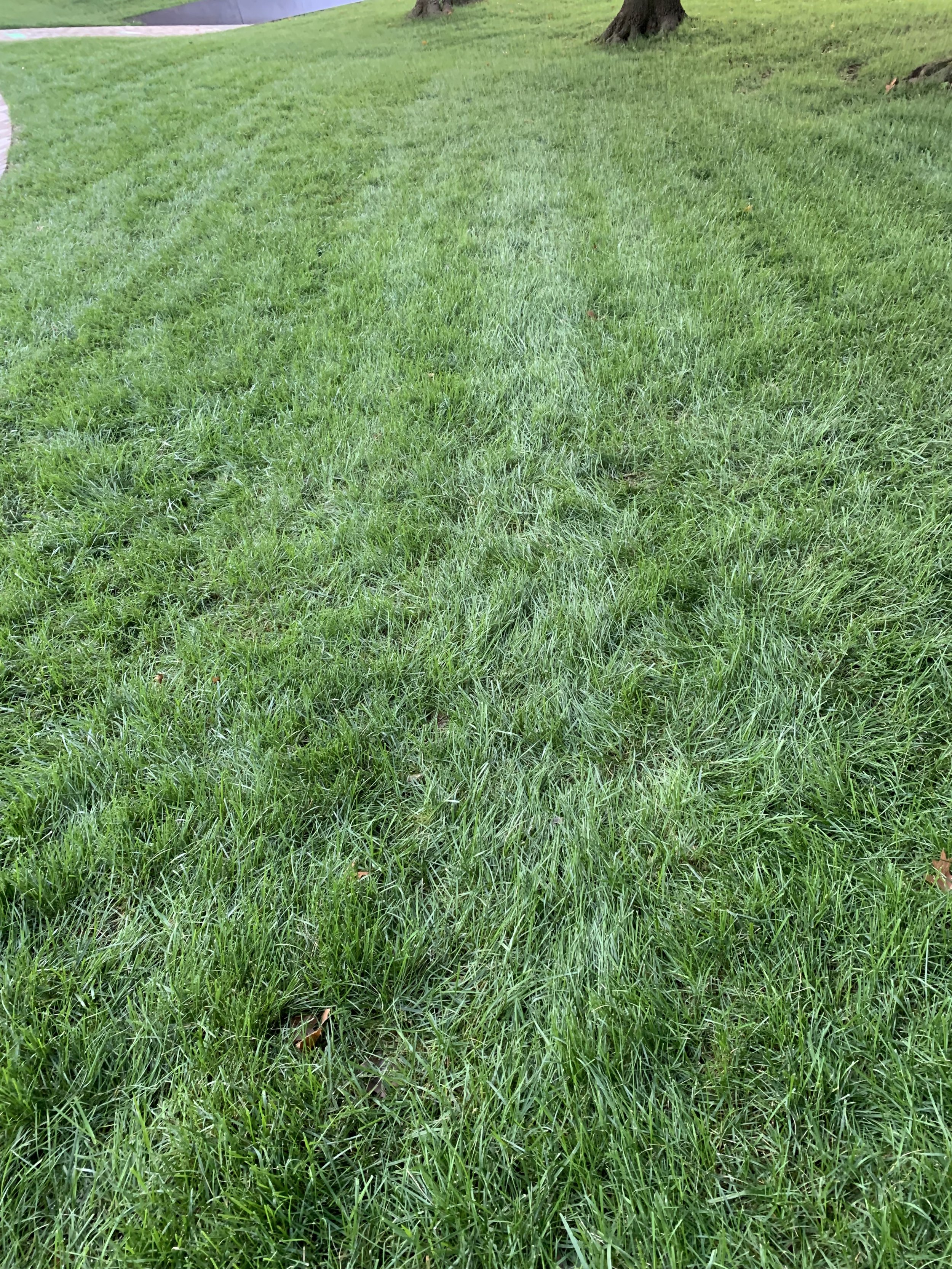
As the temperature cools and moisture returns, fescue lawns will regain cooler and health.

Small, shady areas in your lawn where there is low air movement and shade are prime candidates for annual fall seeding with fescue.
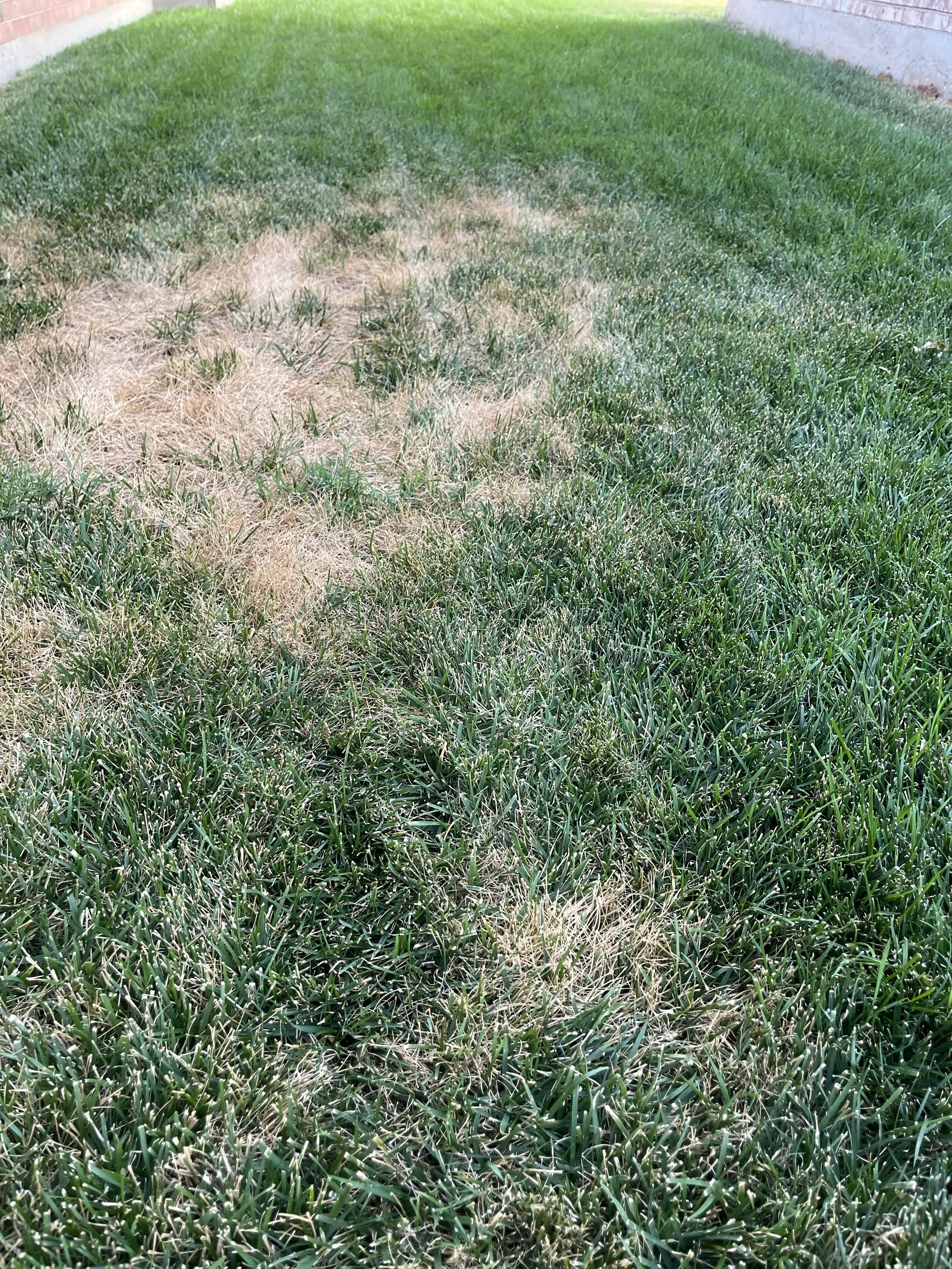
It has been common to find stressed areas of fescue from uneven water distribution this summer.

If you have heavily shaded areas it is common to need to overseed in the fall, regardless of the summer weather conditions.
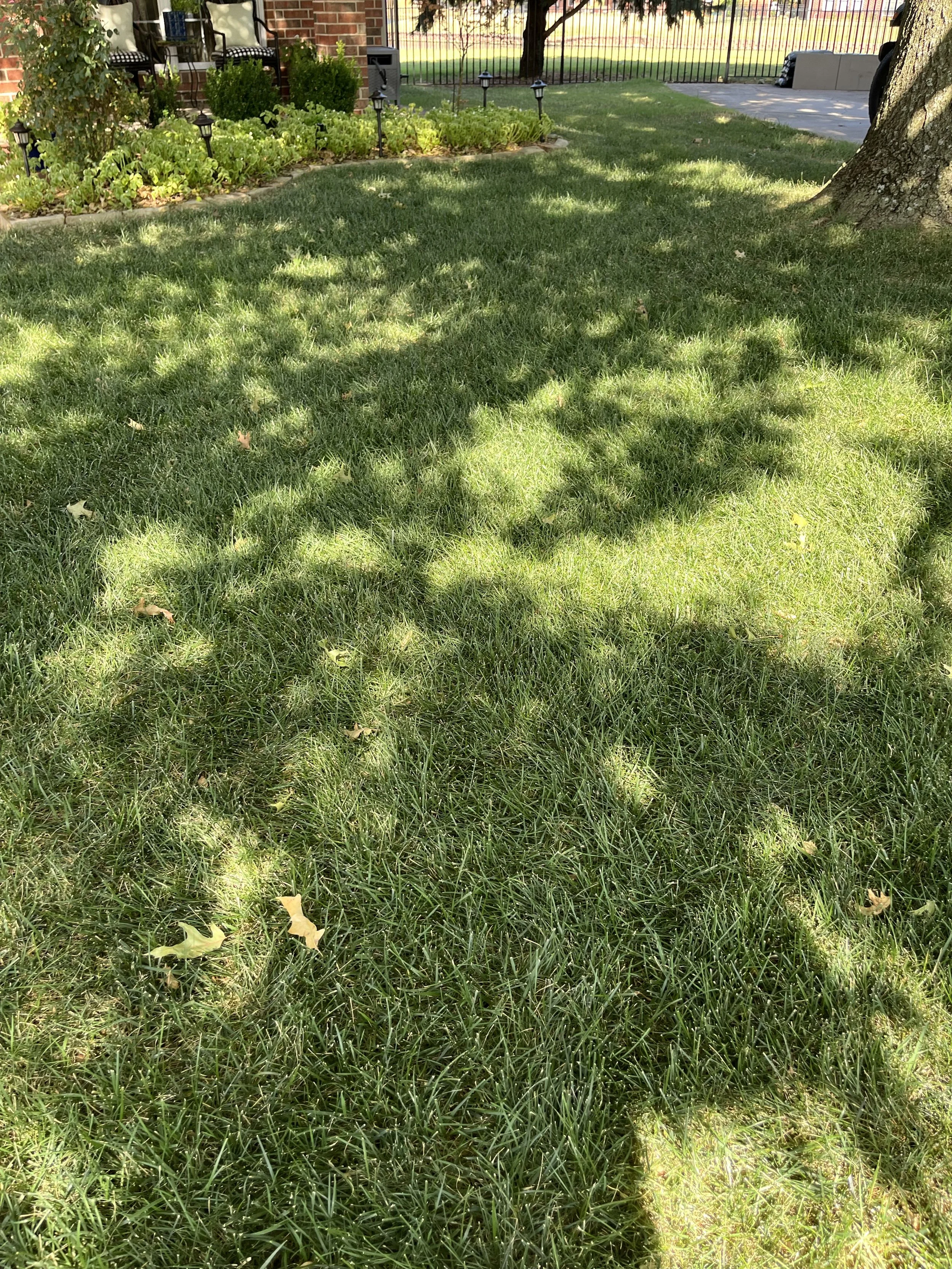
Fescue is the best turf grass for areas of your lawn that receive dappled sun. Bermuda needs at least 6 hours per day of direct sun light.

It has been a stressful summer for fescue. Fall is the best time to reclaim your fescue areas by overseeding.
Who should plan on overseeding with fescue this fall?
If you have areas of your lawn where the bermuda has thinned because of shade, you should seed this fall. Bermuda needs at least 6 hours of direct sunlight for the best performance. Less than 6 hours of direct sunlight and bermuda starts to thin. Fescue is the turfgrass option for shady areas of your lawn.
If you have fescue areas that have become thin because of brown patch earlier in the summer, or the heat and drought of the last 7 weeks, you should seed this fall.
If you just want to keep your fescue thick and healthy, you should seed this fall. Fescue doesn’t spread like bermuda with runners across the top of the soil. Fescue spreads through tillering through the soil and putting up new vertical shoots. Fescue spread is slow and often rare in the transition zone in which we live. To keep a fescue lawn at its best, adding more seed is common. Our best fescue lawns are overseeded every fall.
If you want to have a green lawn longer into the fall and earlier in the spring, you should seed this fall. Fescue is a cool season grass and stays green and active into early December and recovers from the winter in early March. With a fescue lawn, it is common to have a green lawn 10 out of 12 months.
For more information on using fescue in your lawn, visit our July 26th post: Bermuda vs Fescue – The Choice is Yours!

This fall is the best time to repair fescue areas that were damaged during this summer’s heat and drought.

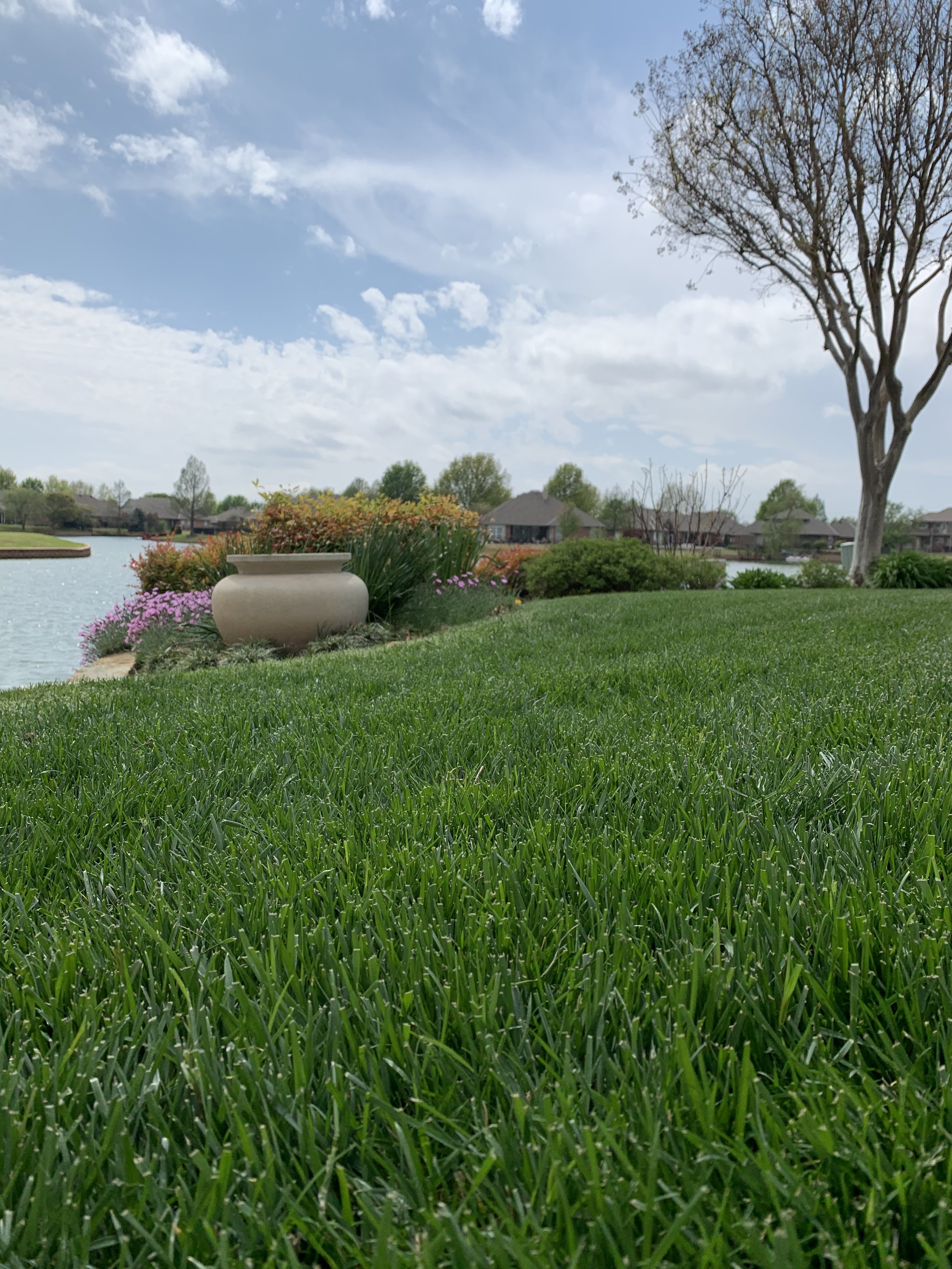
Fescue is commonly thought of as a shade grass. But fescue grown using the best maintenance and lawn care practices can thrive in full sun.

4 Best Practices for Successfully Establishing Fescue
Best Practice #1 – Seeding fescue in the fall.
Because fescue is a cool season grass, there are two times per year you can plant fescue seed; Fall (September through October) and Spring (March to early April).
If you wait until spring to seed fescue, you are seeding at the second-best time and there is an enormous chasm between the establishment of fescue now (the best time) and next spring (the second-best time).
Spring seeded fescue will come up great, but it rarely establishes enough root system to make it through the summer heat (fescue’s off season).
Fall seeded fescue has all fall, winter, and spring to establish a root system before enduring the heat of July and August.
Don’t fail at establishing fescue – seed in the fall, not the spring.
Best Practice #1 – Seeding fescue in the fall.
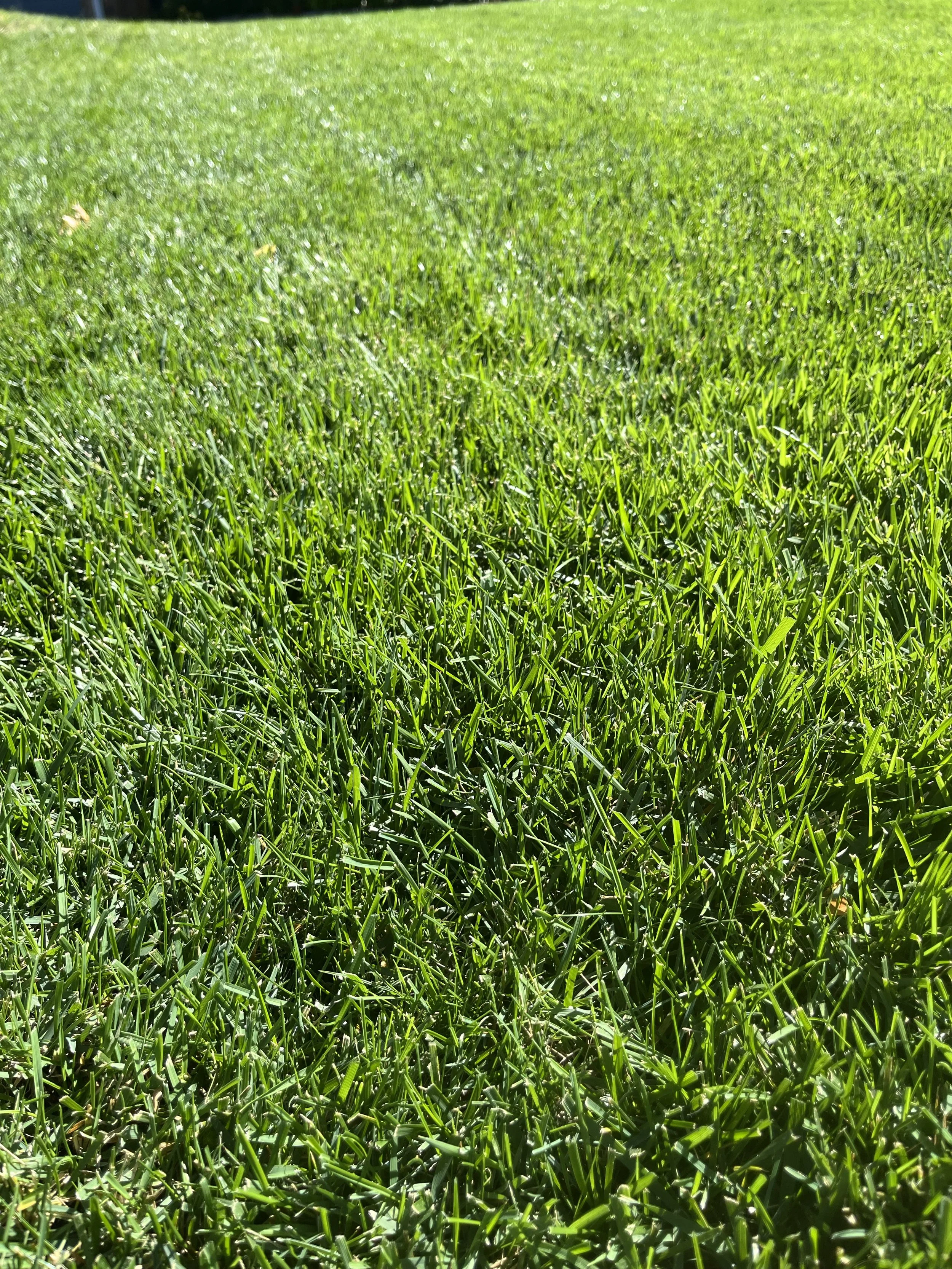
Fescue refreshed with a September overseeding will look like be full and a rich green color in October.

Best Practice #2 – Good Seed to Soil Contact
Good seed to soil contact is important. If you sow seed over the existing soil without some preparation, the chance of a successful seeding is greatly reduced. Research shows the percentage of germination decreases dramatically when seed is just sown on top of the ground.
You will have success if you start by cutting the existing turf short to remove excess grass. Then loosen the soil to create good seed to soil contact.
This bermuda lawn is being cut short in preparation of overseeding it with fescue for the first time.

The lawn was being maintained at 3”.

Cutting it to 2” will improve the seed to soil contact and increase the success of the first time overseed.

Aeration is an important step in establishing good seed to soil contact. Good seed to soil contact and keeping the area moist are two keys two keys to success seeding.
Aeration is the best method to loosen the soil and gain good seed to soil contact. Aerating also gives you the extra benefit of improving the soil structure, increasing water absorption, and developing deeper roots.
Give more attention to bare areas and the edges. Rough up the areas with a rake.
Rototilling isn’t necessary but breaking the surface of the soil in bare areas is needed.
In areas that are completely bare, spread a thin layer of peat moss over the surface after seeding to increase the seed to soil contact.
If overseeding an existing fescue area with a good stand of grass, spread seed at a rate of 6-8 pounds per 1,000 square feet.
If establishing a new fescue lawn, spread seed at a rate of 10-12 pounds per 1,000 square feet.
Best Practice #2 – Good Seed to Soil Contact
Best Practice #3 – Keep the Seed Tacky Moist Until It Germinates
The first two are very important, but this one is critical for success.
Nothing will deliver you a losing hand quicker than not keeping the seed moist. You can get the first two best practices correct and have complete failure if the seeded area is not kept moist until new grass is visible in the entire area.

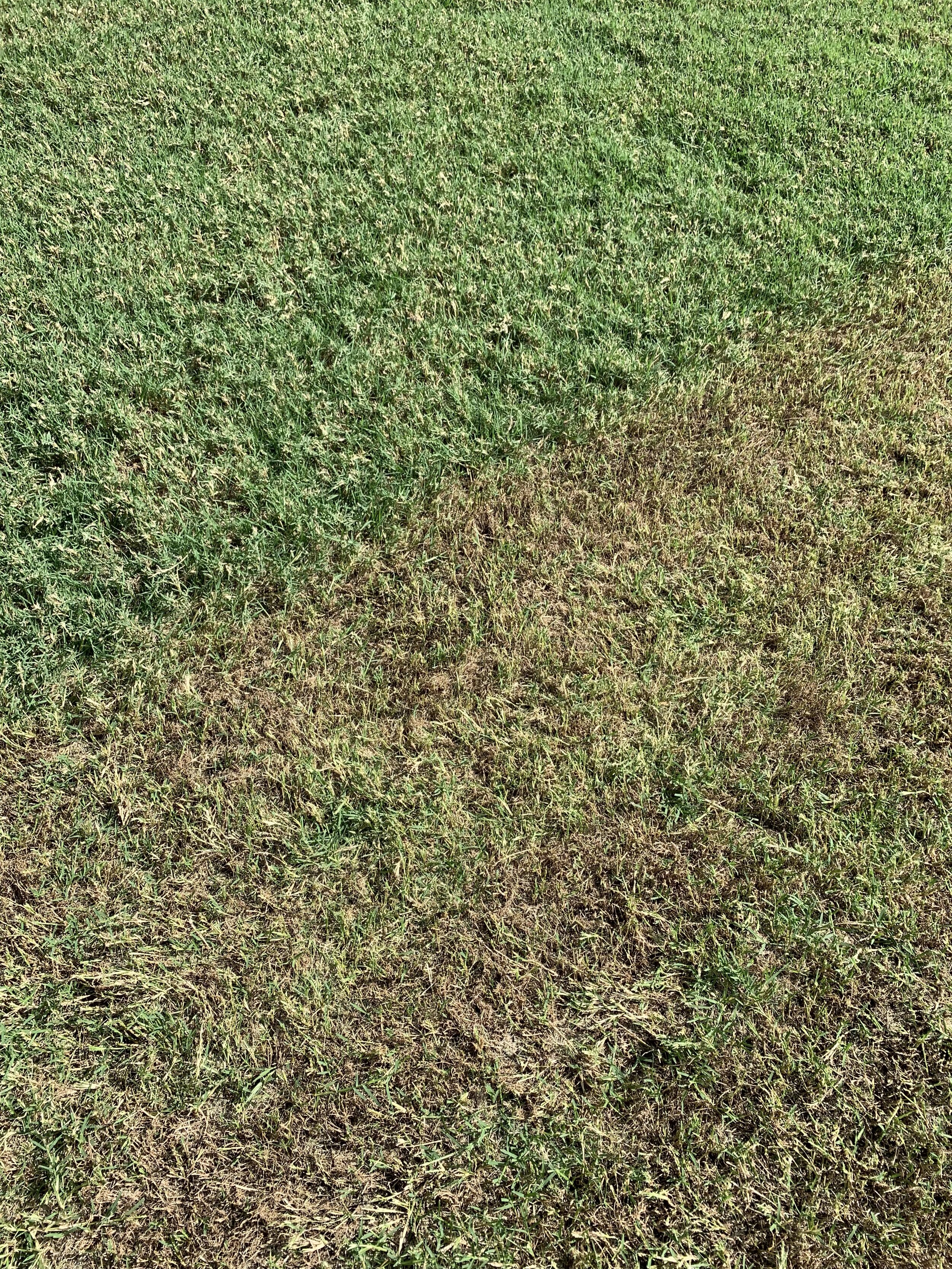
Even water distribution is important in keeping the seed tacky moist until it comes up. Check your system. Look for areas where there isn’t complete head to head coverage. The result will be poor germinate around the sprinkler head.

This picture 14 days after seeding demonstrates how critical moisture is to seed germination. The seed in the area where the irrigation does not reach has not germinated at all while the moist areas are nearly fully germinated.

When you keep the seeded area consistently tacky moist you will seed germination within 7-14 days. Best practice is to water the area 3 short cycles per day.
The worst thing you can do is water the seeded area, allow it to dry completely, water again, allow it to dry completely, repeat, repeat, repeat… After a couple of times of drying out completely, the seed will no longer be viable.
For the best success, set your irrigation to run 3 short cycles per day. Set spray type zones to run 3-5 minutes each time. Set rotor type zones to run 7-10 minutes each time. If possible, set the system to run early morning (4:00 AM), late morning (10:00 AM), and mid-afternoon (4:00 PM).
You don’t have to have an irrigation system to establish fescue. Just be diligent at keeping the seed moist with short waterings.
Best Practice #3 – Keep the Seed Tacky Moist Until It Germinates
Best Practice #4 – Invest in a Quality Seed
Fescue was first introduced in the US from Europe in the 1800s as pasture grass. Kentucky-31 Tall Fescue was developed in the 1940s as an improved pasture grass and introduced to the home turf market in the 1960s by Pennington Seed.
What is the point of the seed history lesson?
If you are buying Kentucky-31 Tall Fescue, you are buying an 80-year-old product when there are over 300 improved fescue varieties that offer darker green color, narrower blades, and improved tolerance to heat, cold, drought and disease. Kentucky-31 is marginally acceptable as a lawn grass that tends to become thin and clumpy.
No matter the name on the bag of the seed, any improved variety will outperform Kentucky-31.
We believe using a blend is best when seeding fescue. Blends are a combination of two or more varieties within the same species, such as two or more fescues in one mix. Blends are a combination of the best species, tested over time, for the best shade tolerance and disease resistance. The number one problem with fescue is brown patch disease. The best blends use fescue varieties that show strong resistance to brown patch. Also, some blends will contain bluegrass and, or rye for even more vibrant spring color.
Best Practice #4 – Invest in a Quality Seed

All seed grown in Oregon is certified. Buy it when possible.
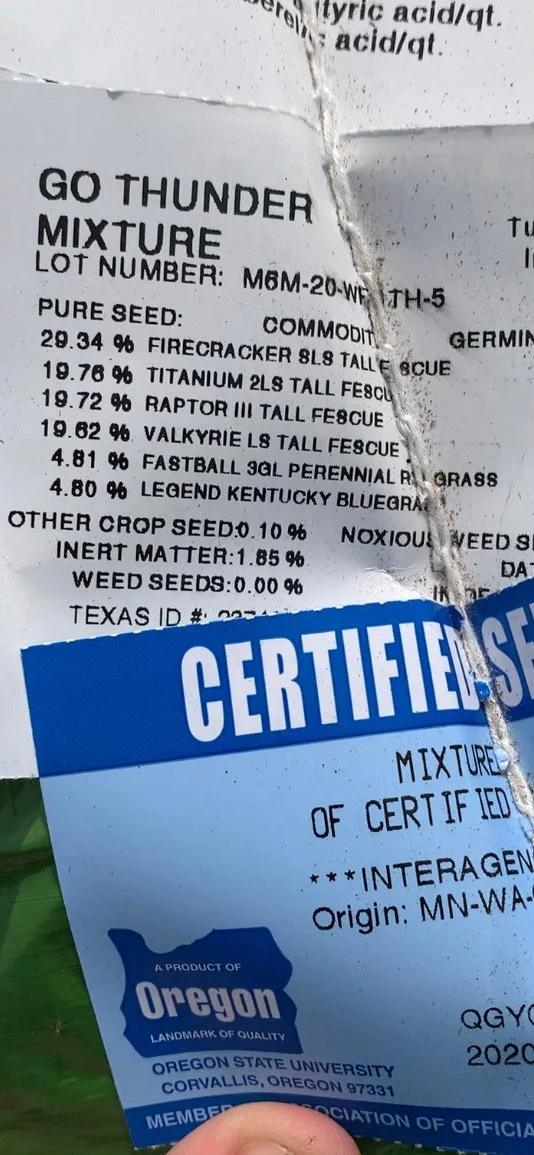
When purchasing seed look for a blend with fescue varieties that score high in the NTEP trials for heat, drought, and disease resistance.
Two things that will make a seed more expensive, but at the same time a great value, “0% Weed Seed” and “Treated with Gravity SL PGS”.
Gravity SL PGS is a growth stimulant that greatly increases germination rates and root development.
Fescue can be grown successfully in Oklahoma. Even during a hot and dry summer, there are examples of great fescue lawns in every neighborhood. And for the fescue lawns that showed stress this summer, surprisingly most will show signs of a rebound with slightly cooler temperatures and moisture.
Successful fescue lawns are the result of best seeding practices, best cool season turf maintenance practices, and persistence.
But, more importantly, they are a result of different thinking. Establishing and maintaining a fescue lawn requires a different approach.
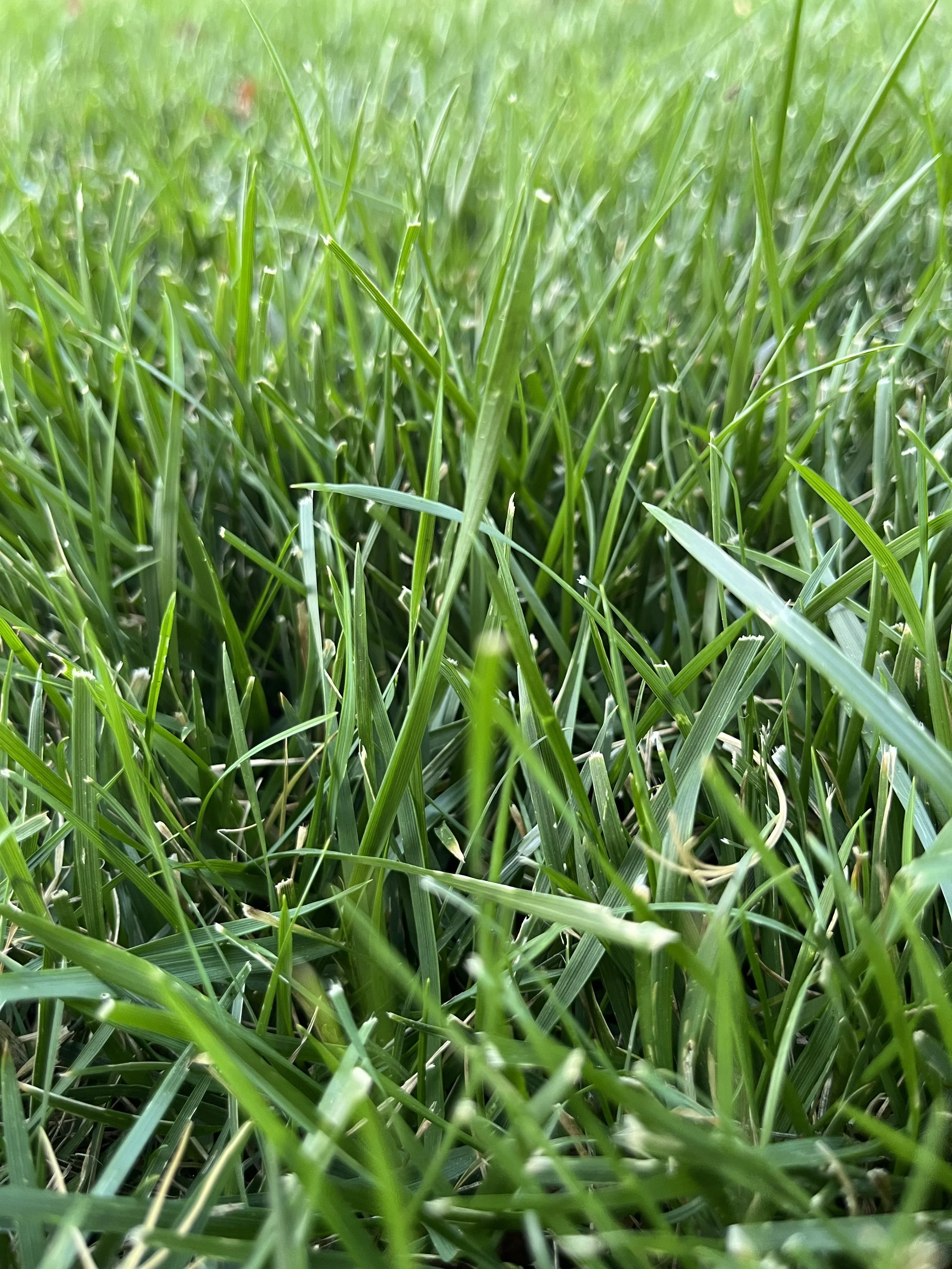
Even with the excessive heat and drought of this summer, mature fescue lawns with the best watering practices and healthy soil have survived.

Bonus Best Practice
Don’t apply a fall pre-emergent before seeding. The same pre-emergent herbicide that prevents weeds will prevent fescue from germinating. Wait until after the new fescue has been mowed 2-3 times before putting a pre-emergent on the lawn.
Special Note: DO NOT use pre-emergent herbicides now in
areas that are going to be seeded this fall.
If you need assistance in establishing a fescue lawn or have questions about fescue, give us a call…(405) 367-3873.
Lorne Hall
Hall | Stewart Lawn + Landscape
(405)367-3873
